
Introduction
Autumn can be a good time to assess acne scars, but it does not mean that all skin is ready for a procedure. The decisive thing is whether there is still active acne, what the scars are like, whether the skin retains a tan and whether you will be able to follow the aftercare.
Do we have to wait for the summer to end?
You don’t have to wait until autumn to ask for an assessment. The consultation serves to distinguish which lesions need treatment and plan it. To perform certain procedures, especially with lasers, the dermatologist will take into account recent sun exposure and the condition of the skin. Tanned or burned skin may force the session to be postponed.
It will also be necessary to protect the area from the sun after the treatment. The change of season can facilitate this care, but it does not replace it. Sun protection before and after the laser is essential to reduce complications.
What kind of sequelae has acne left behind?
After an acne outbreak, different alterations can persist. Post-inflammatory redness or erythema is related to the inflammatory and repair process, while pigmentation changes can leave darker or lighter areas.
Scars are caused by alterations in the amount and organization of collagen during skin repair. They can be depressed (atrophic scars) or have excess tissue, as occurs in hypertrophic scars and keloids.
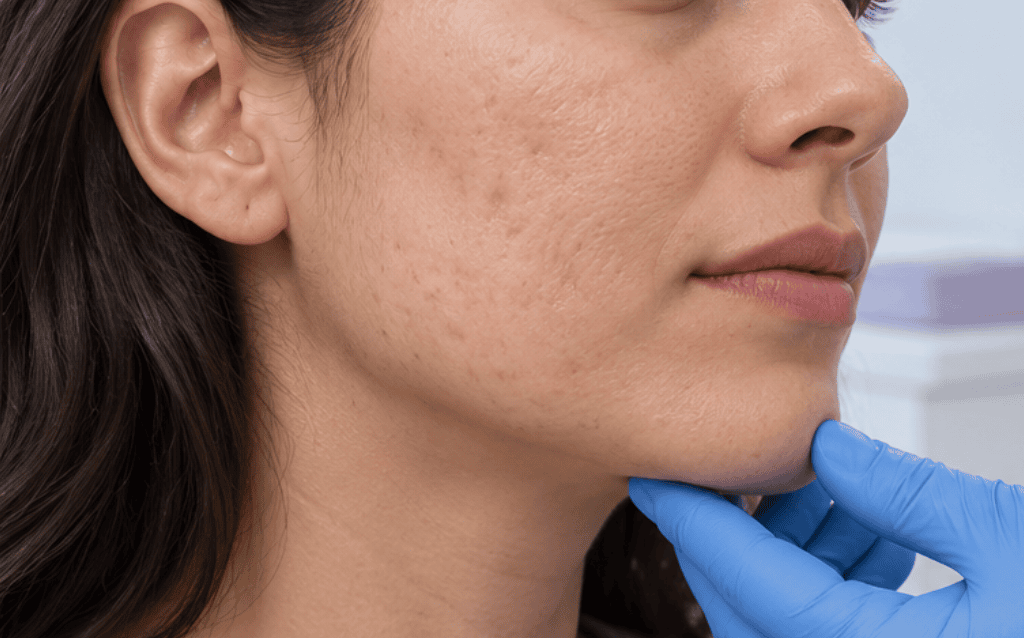
These alterations can coexist, so color alone does not allow you to determine if there is a scar. Dermatological assessment allows you to identify the sequelae and guide the treatment. You can find more information in our guide on the types of acne scars and marks.
What happens if pimples still appear?
If acne is still active, controlling it is usually a priority to avoid new lesions and scars. This does not prevent you from studying the existing sequelae. In the assessment, it is advisable to explain which treatments you are using or have used recently, because they can influence planning.
Are all scars treated with lasers?
No. Depressed scars can come in different shapes and depths; some require techniques such as subcision or spot procedures, and others may benefit from lasers. Raised scars and keloids need a different approach. In many cases, treatments are combined.
The choice depends on the examination, skin tone, available recovery time, and expectations. The goal is to improve the appearance of the scars; no procedure guarantees that they will disappear completely. You can learn more about the treatment of acne scars.
In short…
You can consult your scars at any time of the year. After the summer, the assessment allows you to decide whether it is advisable to start a treatment, control acne earlier or wait for the skin to recover from sun exposure. If you want to study your case, you can make an appointment at Corium Dermatology.
Do you want to make an appointment?
If you have questions about the treatment or want to book an appointment, you can:
Send an email to info@coriumdermatology.com
Call 93 715 56 08.
Send a WhatsApp message to 620 92 86 11.