What is CO2 laser?
It is a laser device that emits a light with a wavelength of 10,600 nm and whose impact target is the water in the tissues. Its application to the skin produces the instant elimination of tissue water and the fulguration of the impact area. It is usually used to eliminate exophytic skin lesions -which protrude- (seborrheic keratosis, fibroids, intradermal melanocytic nevus…) or to destroy intermediate-depth lesions (dermis), such as xanthelasmas, sebaceous hyperplasias or Fordyce points.
However, it has many other indications. Among them is the application of the “fractional” modality of the CO2 laser, which is used for skin rejuvenation and also for the treatment of scars (acne, burns or surgical). With the fractional modality, instead of emitting a single beam of light, it is divided into numerous beams that will impact the area to be treated, leaving columns of treated skin interspersed with columns of untreated skin. It resembles the way water comes out in a shower: when we turn the “shower head” of the faucet to one side, a single powerful jet of water comes out and, when we turn it to the other, the jet splits into many others that individually are weaker than the first. The fractionation of the laser makes it possible to increase the safety and convenience of the process while maintaining a high efficiency rate.
How does the CO2 laser work on acne marks?
Its basis is simple, since it simply “burns” the area where the light impacts due to water evaporation. On the contrary, the adjacent area where no light impacts remains in its basal state without being treated. This implies that in the skin columns where it acts, it causes a wound – of greater or lesser depth depending on the programmed parameters – coagulated by the same heat: where the CO2 laser is applied, a lesion will form that will re-epithelialize and form new skin once the scab is detached.
In addition to being able to eliminate skin lesions through this foundation, the healing process causes an important stimulus for the synthesis of new collagen. This characteristic is what explains why the CO2 laser is useful for treating certain alterations or defects of dermal collagen, such as acne scars or skin aging itself.
If a fractional CO2 laser field is applied, the re-epithelialization of the treated area is carried out from the columns of undamaged skin that have remained, so it is much faster, more effective and with a drastic reduction in discomfort and complications. The columns of impacted skin measure fractions of a millimeter.
Fractional CO2 laser is one of the most effective therapies to treat skin photoaging (hyper/hypopigmentation, wrinkles, sagging) and atrophic (acne) and hypertrophic scars (burns, surgeries).
It should be noted that there are histological studies where the manufacture of new collagen is observed up to 18 months after CO2 laser resurfacing, so the improvement experienced with the treatment is progressive throughout this period.
If CO2 laser is such an effective therapy for treating acne scars, is it always used?
No. Despite its effectiveness, the main drawback of the CO2 laser is the formation of wounds and scabs that will heal over a period of about two weeks. If a large area has to be treated, during this period of time the scabs are visible, extreme sun protection measures must be taken and dressings must usually be carried out with an antibiotic cream and oral anti-viral drugs to prevent the wounds from becoming superinfected by herpes simplex. Overall, it is not uncommon to opt for other less complex therapeutic alternatives depending on the lesions to be treated and the patient’s preferences.
How have CO2 lasers been used for facials?
When the first CO2 lasers appeared decades ago, they only existed in their classic modality: they shot over 100% of the area where they impacted without leaving points of unscathed skin around. In this way, extraordinary clinical results were obtained in a single session but the risk of adverse effects was also tremendously high. These adverse effects included persistent redness for up to 12 months (even irreversible cases); residual hypo or hyperpigmentation that could also be irreversible; or even the appearance of hypertrophic or keloid scars due to excess accumulated energy. The classic CO2 laser, therefore, is the most effective and efficient resurfacing modality, but also the one with the most risks. This is especially true if it is applied to very large areas, such as the entire face.
Subsequently, with the appearance of the fractional CO2 laser, the risk of adverse effects associated with the procedure was drastically reduced, although its effectiveness also decreased to a lesser extent. Fractionated CO2, by leaving parts of the skin untouched, allows the scabs to last less and the probability of side effects to be considerably lower.
How is the CO2 laser used to treat acne marks?
It is used in different ways:
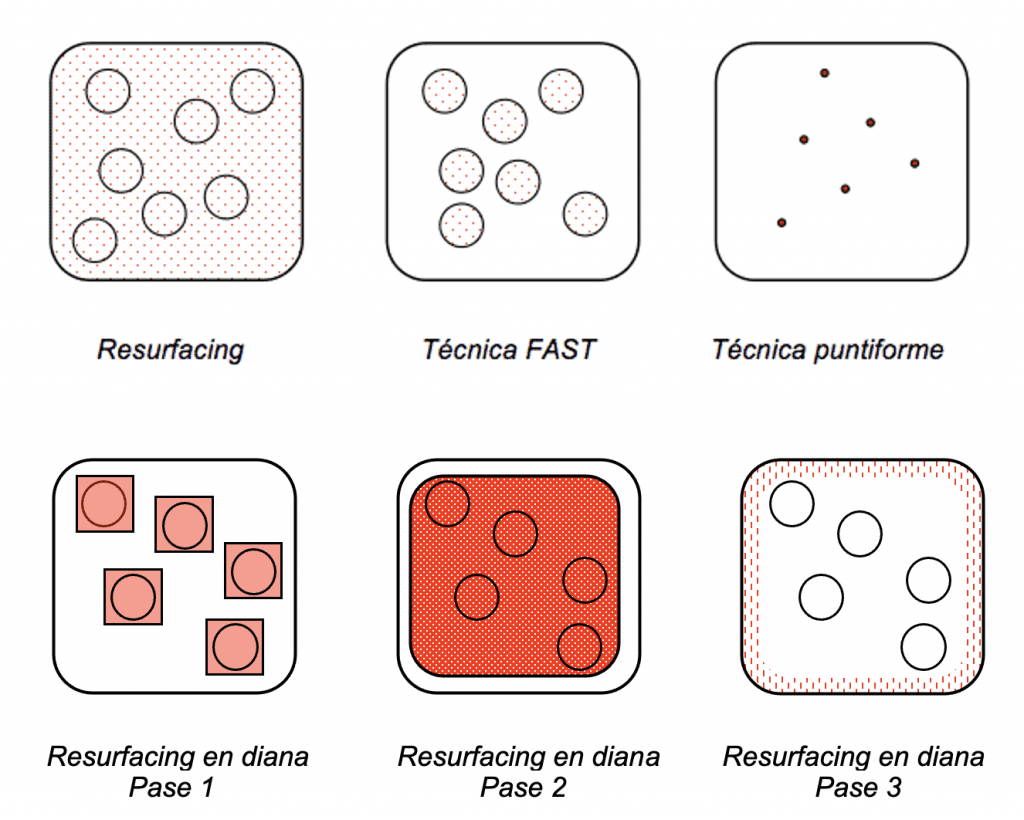
1. Standard fractional resurfacing. When there is a large area of scars to be treated, or the professional has little experience or knowledge, there is a tendency to perform a fractional resurfacing of the CO2 laser on the entire surface to be treated without changing its parameters. It is a relatively standardized treatment. However, if the parameters are very intense, the risk of complications is high. And vice versa, if you want to be very conservative in the face of the risks, the clinical result can be poor.
2. FAST technique. The “focal acne scar treatment” technique, described by Schweiger, consists of firing the fractional CO2 laser with intense parameters only on the deepest scars. Around the treated area, the non-ablative fractional laser can be used to complement the technique and improve the results. In this way, the desired effect is obtained on the treated marks without the need for the surrounding skin to undergo the healing process. It is used for acne scars of any type that are highly concentrated in a specific area.
3. Punctiform technique. With this technique, the CO2 laser is fired only at the bottom of the deepest and narrowest scars (icepick) with two objectives: to break the fibrous anchor that pulls deeply and also to coagulate the walls of the scar so that they coapt and close. This technique is ideal for icepick scars, as it is very effective and has an excellent safety and comfort profile: as the CO2 laser is used in a very limited way, the formation of wounds and scabs is minimal. It is unusual for the same patient to have a single type of scar on the face, so the punctiform technique is generally combined with others in the same session.
4. Target resurfacing. With this technique we perform a classic resurfacing on the most serious scars and 1 mm around them to have maximum efficiency in those that require it. On top of and on the periphery we do an aggressive fractional resurfacing to stimulate neocollagenogenesis of the entire affected area and, finally, around the treated area, we pass the fractional CO2 laser at low energy to make a blur and so that there is not too noticeable a change between the treated and untreated area. It can be used for ice-pick, boxcar and rolling scars. We have had the honour of inventing and publishing this technique.
What is the best laser to treat acne marks?
This question does not have a simple answer, since the choice of laser depends on several factors:
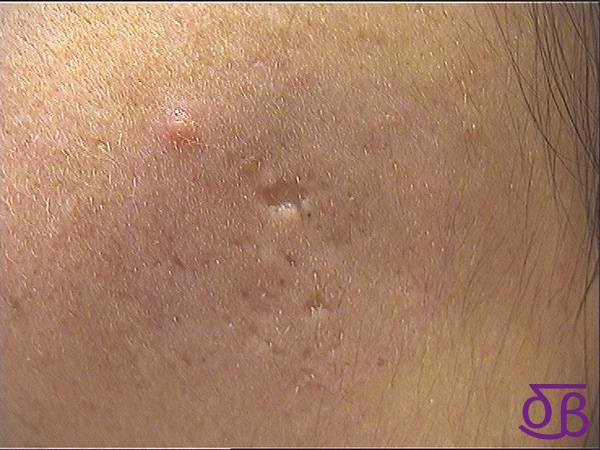
· Extent, location and type of acne scars . Some brands, such as icepicks, respond better to CO2 lasers with a punctiform technique or punch-excision. On the other hand, shallow rolling and boxcars are tributary to both CO2 and fractional non-ablative lasers, bipolar fractional radiofrequency needles or fractional picosecond lasers.
· Rhythm of the patient’s social life. If the patient can afford to be away from social life for a few days and wants the most efficient treatment, the CO2 laser is more efficient than the fractional non-ablative laser, radiofrequency or the fractional picosecond laser.
· Speed with which the results are to be obtained. For patients who are not in a hurry to obtain the result and want a treatment with which they can maintain their rhythm of social life without scabs being observed, the choice is the non-ablative fractional laser or fractional radiofrequency. If, on the other hand, the patient wants a faster (but more aggressive) result, the CO2 laser or the fractional picosecond laser can be chosen.
· Dermatologist’s expertise and laser devices. Depending on the dermatologist’s experience and skill in handling laser devices, more or less therapeutic options may be offered.
In general, the most effective and efficient option is usually the target technique with CO2 laser or through other techniques combined with other therapeutic tools mentioned.
What are the results of treating acne marks with the CO2 laser?
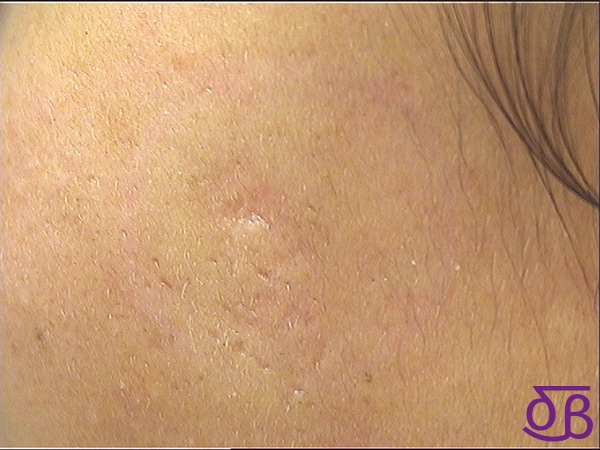
In studies where the fractional CO2 laser resurfacing technique has been used, with a single session moderate improvements have been obtained in 46% and marked improvements in 30% of cases (on a scale such as the following: no improvement, slight improvement, moderate improvement and marked improvement). Of course, the more treatments, the higher the response.
However, despite these excellent results per session, it should be borne in mind that CO2 treatment involves presenting wounds and scabs for a period of 2-3 weeks in the treated area (in addition, oral prophylaxis with antivirals must be done to avoid superinfection by the herpes simplex virus). Likewise, the more efficient the therapy, the more aggressive it is and therefore the more likely it is to complicate (pigmentation disorders, residual erythema lasting months). These are the reasons why there is currently a certain tendency to limit the use of CO2 to specific areas – deeper scars – and to add other energy-based devices in the rest, the result of which is practically the same at the end of the treatment (although slower). In this way, the recovery period is much faster, more comfortable and less accentuated from the outside. We should also bear in mind that effectiveness is greater when high powers are used with a low density of shots (points where the laser impacts as far apart as possible).
Is CO2 laser treatment standard in all acne scar patients?
No. Each patient has to be programmed a type of application: the parameters of power, firing frequency and shot density per treated area are modified. Likewise, once the parameters have been adjusted, it is necessary to decide whether to use one technique or another, as well as whether to combine the CO2 laser with other devices or not. To decide all the parameters of the CO2 laser, the aspects we have mentioned above must be taken into account: the type of brands and the patient’s preferences mainly. The dermatologist’s job is to expose the possible options and advise the patient.
Can CO2 laser be combined with other treatments for acne marks?
Yes. In the same session, the fractional non-ablative laser, the fractional radiofrequency and/or the fractional picosecond laser can be used. It is recommended to separate the peelings and the filler with hyaluronic acid for a few weeks (if the same area has to be treated). Another therapeutic option, especially indicated in rolling scars, is the combination of subcision (with or without radiofrequency) and CO2 laser in the same session.
What are the adverse effects of CO2 laser in the treatment of acne scars?
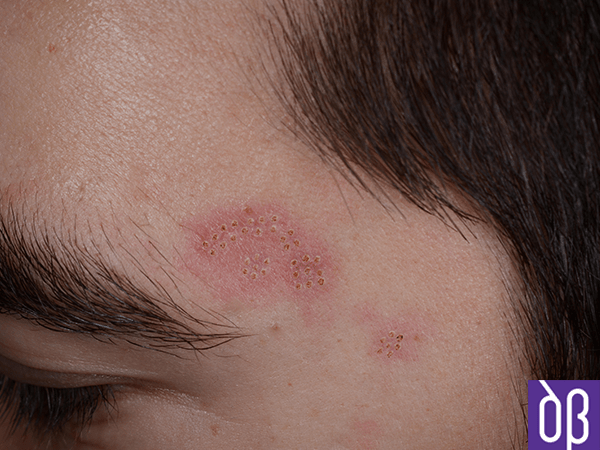
The CO2 laser, simply by the sudden evaporation of water from the tissue, causes erythema, edema and crusts on the skin. Erythema (redness) and edema (swelling) are not intense and usually last a few hours. More rarely, hypopigmentation, reactivation of herpes simplex, acneiform rash and itching occur. It is necessary to know that most complications are more frequent the larger the area to be treated and the power used, so they are exceptional if the FAST, punctiform or target techniques are used (in these cases, erythema and edema last a few hours and the scabs usually disappear in 4 – 7 days). Pigmentation disorders are not frequent, and are related to the use of resurfacing with a high density of shots per field as well as with little care or special predisposition on the part of the patient.
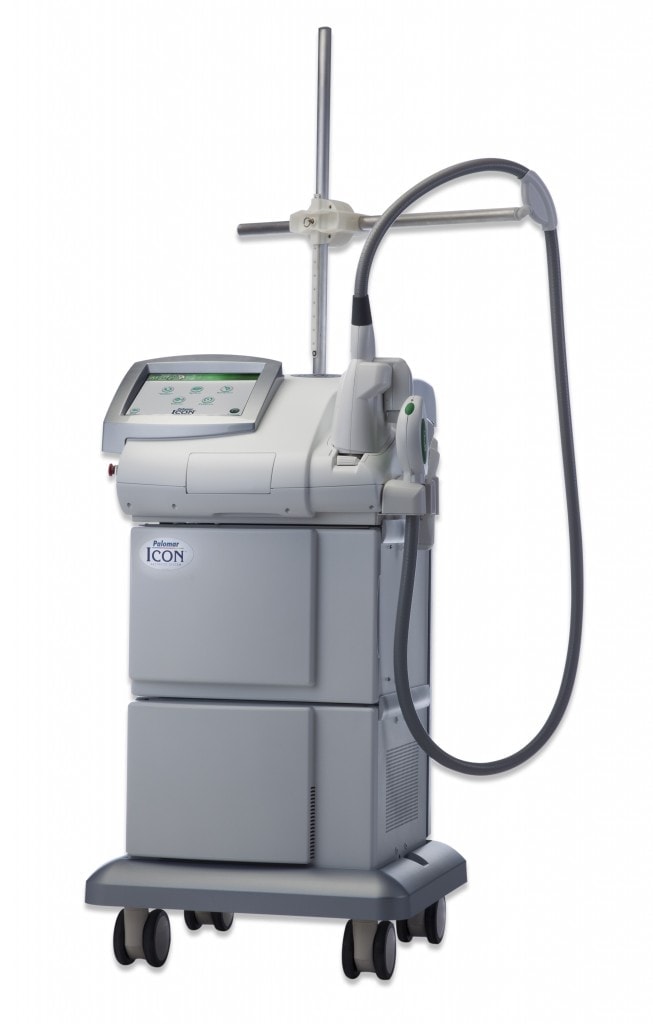
Click here to learn more about laser treatment of acne scars.

Click here to learn more about acne scar subcision .
Click here to learn more about treating acne scars with platelet-rich plasma.

Click here to find out what types of acne scars are there.
REFERENCES
· Schweiger ES, Sundick L. Focal Acne Scar Treatment (FAST), a new approach to atrophic acne scars: a case series. J Drugs Dermatol. 2013 Oct; 12(10):1163-7. PMID: 24085053.
· Kim S. Clinical trial of a pinpoint irradiation technique with the CO2 laser for the treatment of atrophic acne scars. J Cosmet Laser Ther. 2008 Sep; 10(3):177-80.
· Mohammed G. Randomized clinical trial of CO2 laser pinpoint irradiation technique with/without needling for ice pick acne scars. J Cosmet Laser Ther. 2013 Jun; 15(3):177-82.
· Ahmed R, Mohammed G, Ismail N, Elakhras A. Randomized clinical trial of CO₂ LASER pinpoint irradiation technique versus chemical reconstruction of skin scars (CROSS) in treating ice pick acne scars. J Cosmet Laser Ther. 2014 Jan; 16(1):8-13.
· Barco D, Del Barrio-Díaz P. Targetoid CO2 laser resurfacing: a novel and safe technique to treat ice-pick and boxcar acne scars. Lasers Med Sci. 2023 Feb 4; 38(1):63.