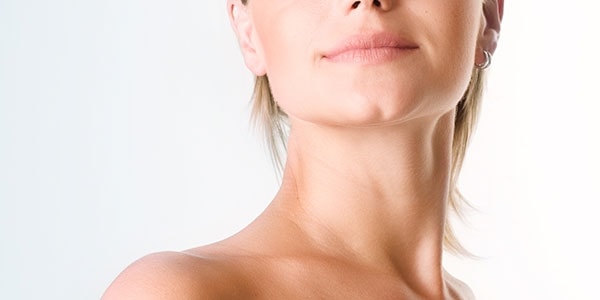
Why does an unsightly scar appear in the thyroid area?
The formation of a hypertrophic scar or keloid in the thyroid area after a total or partial thyroidectomy is relatively common. There are two main reasons: firstly, the neck and décolleté area in women has a very low density of hair follicles. Because these act as a reservoir for the cells that should form a physiological scar, as their number is smaller, the scarring capacity of that area is reduced. The second reason is that the neck is subjected to tensile forces due to its mobility . Overall, this means that after a thyroidectomy there is a significant probability of a hypertrophic scar forming.
Thyroidectomies are usually performed for the treatment of thyroid neoplasms and these usually affect young women. The resulting scar can be a very annoying aesthetic alteration, since it is located in a very exposed area in women of this age.
Thyroid scar: fractional laser treatment. How can hypertrophic scars or keloids in the thyroid area be treated after a thyroidectomy?
During the healing process, local care should be followed through the use of silicone patches to reduce the likelihood of a hypertrophic or keloid scar forming. Close monitoring during the first months of healing allows the identification of early signs of a hypertrophic or keloid scar and early treatment, which will improve its prognosis. Keloids and mild hypertrophic scars usually respond positively to cryotherapy (application of liquid nitrogen) and/or corticosteroid infiltration. In more notable cases, lasers are usually recommended.
Thyroid scar: fractional laser treatment: What type of lasers are used to treat thyroid scar?
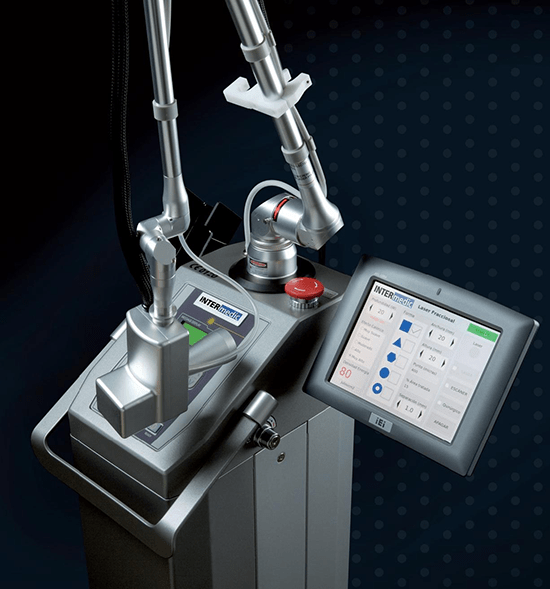
The most specific studies on laser treatment for thyroidectomy scars are with ablative and non-ablative fractional lasers . Fractional lasers aim to synthesize new collagen in the wound and rearrange it so that the scar improves its appearance. The non-ablative fractional laser simply heats the skin for a minimum period of time, thus stimulating collagen synthesis. From the outside, the resulting reaction observed is redness and swelling that lasts a few hours or a few days. The ablative fractional laser reaches directly into the dermis (middle layer of the skin where collagen is located) and remodels it while the heat impacts that area. The reaction observed from the outside is the formation of microcrusts joints less than a millimeter in diameter that will detach in a few days. In general, ablative lasers are clearly more effective than non-ablative lasers, but they require specific training for their use, as they can cause more adverse effects if not handled properly.
What results do fractional lasers offer in the treatment of thyroidectomy scar?
The goal of treating thyroid scars with fractional lasers is to reduce its volume and color so that it is less noticeable from the outside. In the study by Shin et al., in which half of the thyroidectomy scar is treated with ablative fractional laser and the other with non-ablative fractional laser, the results three months after completing treatment are very similar between the two devices. However, the non-ablative laser was more effective in reducing redness and the ablative laser was more effective in improving the volume and hardness of the scar.
What is the best laser to treat thyroid scar?
A combination of both fractional lasers is probably optimal, in order to achieve both beneficial effects: reduction of erythema and scar volume. Usually, the non-ablative laser needs numerous sessions to achieve the desired effect, unlike what happens with the ablative laser. Therefore, the combination of both – when necessary – will increase the efficiency of the treatment and reduce its duration.
When should thyroidectomy scar treatment begin?
In post-surgical scars, it is usually recommended to start laser treatment during the first six months after the intervention. If the period that has passed is longer (even years), it is likely that the ablative fractional laser is the most suitable to use, since it is more effective in treating volume, which is the most frequent permanent alteration.

Is it possible to use other lasers?
Yes. There are studies that demonstrate the effectiveness of pulsed dye and pulsed light in the treatment of hypertrophic scars and keloids. However, their power is focused only on the erythema of the scar and very little on the volume of the scar. Some comparative studies between pulsed dye and non-ablative fractional laser advocate for greater efficacy of the latter.
REFERENCES
· Jung U Shin, Dorjsuren Gantsetseg, Jin Young Jung, Inhee Jung, Sungsik Shin, Ju Hee Lee. Comparison of Non-Ablative and Ablative Fractional Laser Treatments in a Postoperative Scar Study. Lasers in Surgery and Medicine 46:741–749 (2014).