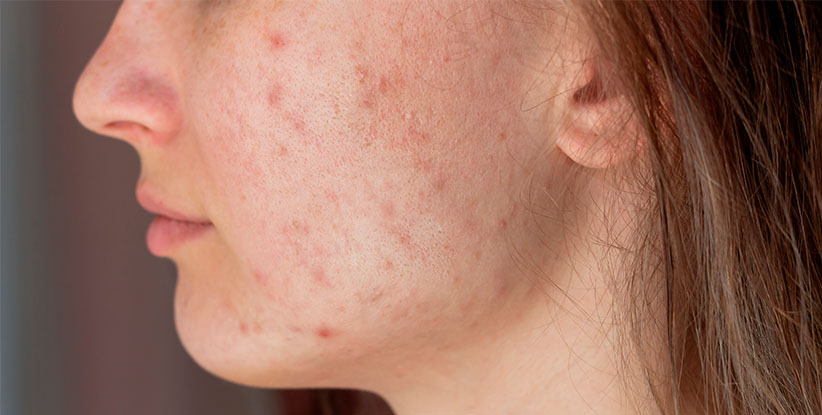
What is radiofrequency?
It is a device in which two or more electrodes form an electric field between them. This energy passes through different layers of the skin in order to heat the dermis and stimulate the formation of new collagen .
What types of radio frequency are there?
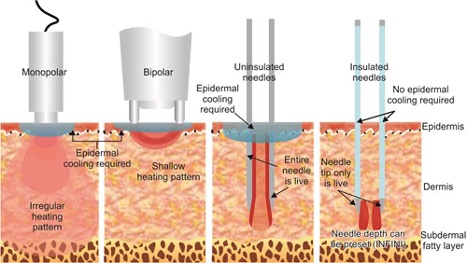
The different radio frequencies are mainly divided according to which are the energy emitting and receiving poles :
· Monopolar. The energy is emitted from the handpiece of the device and is collected by a patch with electrical properties, stuck in another area of the body. It is the type of radiofrequency that reaches deepest, but it is usually more painful and its action is not wide and more erratic, so it is usually used only for small treatment areas.
· Bipolar. The same handpiece of the device has two poles. Electrical energy flows between the two poles forming an electric arc. This is the most superficial and least effective modality. It is not uncommon for this type of radio frequency to associate a CO2 laser on the same handpiece to increase its efficiency.
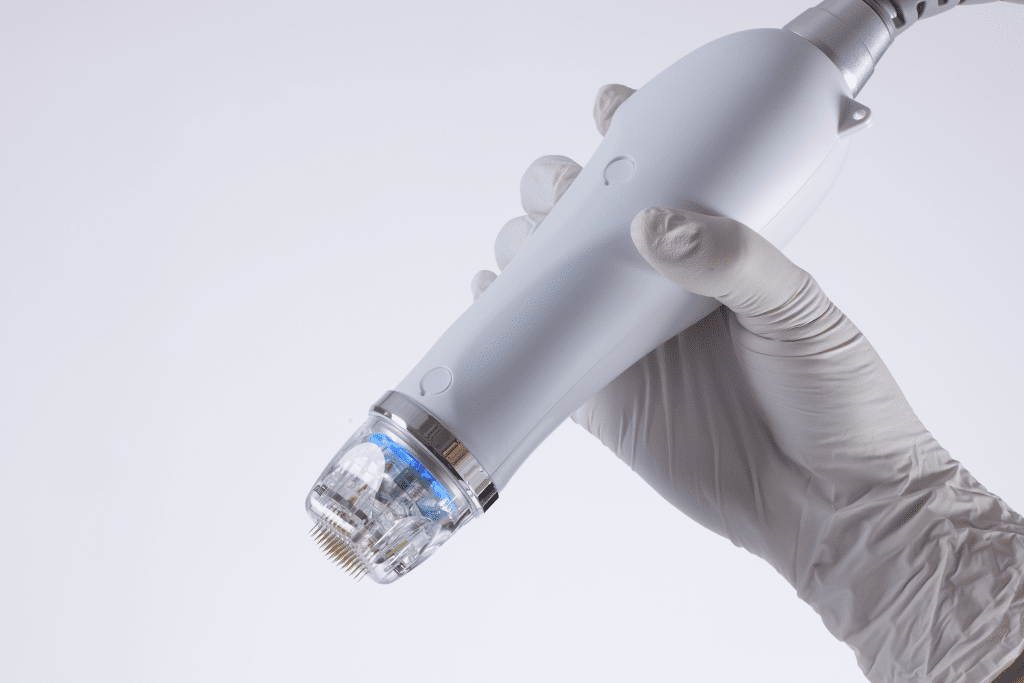
· Fractional bipolar needles. In this variety, the handheld device has a head that ends in a plate full of fine needles. These needles emit and receive arcs, and penetrate deep into the skin. It is considered to be the most effective variant of radiofrequency for skin tightening and for stimulating neocollagenogenesis. The different existing devices differ in certain characteristics such as the power emitted by the head, its number of needles, the depth to which they reach and the speed of penetration of the needles.
Another differential feature that deserves a separate mention is the isolation of the needles. They can be made of metal and transmit electrical energy – and heat – throughout their entire body, or they can be semi-insulated. Semi-insulated needles are covered with plastic in their proximal part and have a bare metal tip: this allows only the deepest part of the needle to be heated and the epidermis to be more conservative. Semi-isolated needles have a lower rate of complications (pigmentation disorders, risk of scarring, persistent redness), since they respect the superficial layers of the skin, and manage to reach a great depth, if necessary, varying the parameters of the device. In general terms, for acne scars, fractional bipolar radiofrequency of semi-isolated needles is used.
How is a radio frequency different from a laser?
They have in common the therapeutic purpose: to stimulate neocollagenogenesis. However, the mechanism of action is totally different. Lasers are based on the optical properties of a beam of light, capable of heating or destroying the skin from the outside. Ablative lasers, such as CO2 lasers, reach the dermis, delicately destroying the tissue in its path. Non-ablative lasers preserve the epidermis and heat the dermis. Radiofrequency stimulates the manufacture of new collagen through electrical energy and not light. Depending on the characteristics of its needles, if it is fractionally bipolar, it can do so while preserving or not preserving the epidermis (semi-isolated vs non-isolated needles).
Another differential characteristic is that the postoperative period of ablative lasers – by destroying the upper skin layers – is usually more spectacular than that of fractional radiofrequency of needles.
Can lasers and bipolar needle radiofrequency be combined in the treatment of acne scars?
Yes, depending on what you want to treat. Radiofrequency pursues neocollagenogenesis and is not operative to treat blemishes or to reduce blood vessels. In this sense, it can be combined with lasers against pigmented lesions and with vascular lasers, respectively. Also with a pulsed light, which can simultaneously treat pigmented and vascular lesions.
In the same way, to achieve a greater neocollagenogenic stimulus, we can use different ablative and non-ablative fractional lasers in the same session in combination with radiofrequency: using different stimulating mechanisms (photothermolysis in the case of lasers vs electrothermal in the case of radiofrequency) the efficiency of the session is greater. However, the probability of the adverse effects mentioned above is higher.
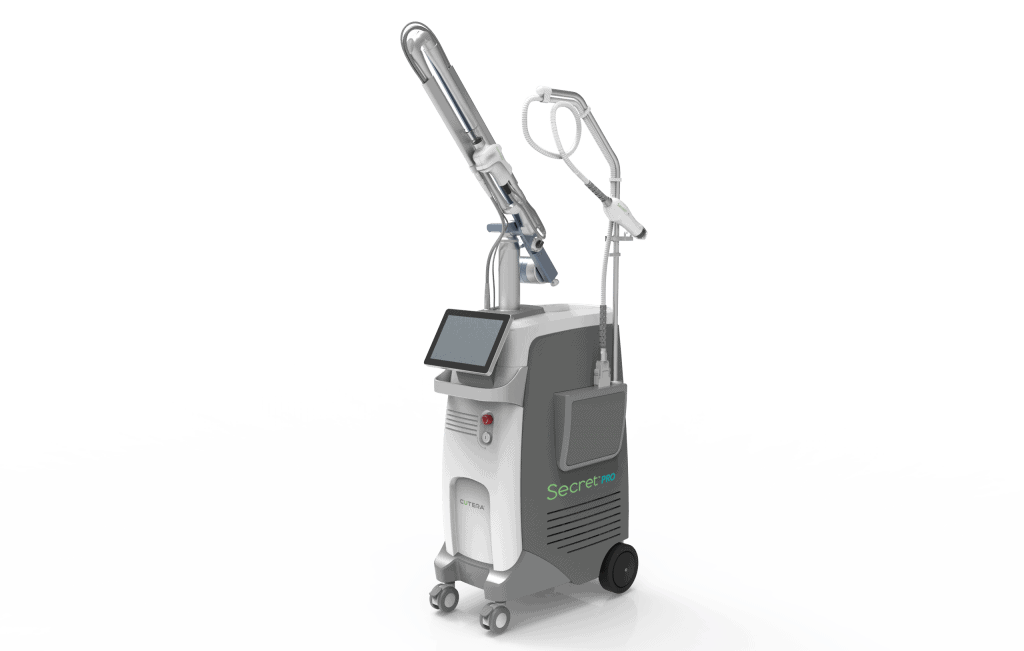
Some premium devices combine fractional bipolar radiofrequency with fractional CO2 laser, which are performed in the same session.
What type of acne scars is bipolar needle radiofrequency considered ideal for?
Since it is a device that allows you to reach deeply, it is considered that the most appropriate type of acne scars is rolling and deep ice-pick (more information on types of scars by clicking here).
For more superficial scars, the CO2 laser is usually chosen in the classic spot mode (target technique) or the trichloroacetic acid peeling with the CROSS technique.
Is radiofrequency useful for the treatment of active acne and the prevention of atrophic acne scars?
Yes. There are studies showing the efficacy of bipolar fractional radiofrequency with needles in the active acne, both for inflammatory and non-inflammatory lesions. Therefore, it also reduces the probability of the appearance of atrophic scars. This does not mean that active acne should be treated with radiofrequency: it will only be used in those cases where it is justified and there is no more effective and economical option.
Is bipolar needle radiofrequency or fractional CO2 laser more effective?
According to the studies published to date, fractional CO2 laser is slightly superior to bipolar radiofrequency with needles in the management of atrophic acne scars. It should be noted, however, that most studies do not break down the different types of atrophic scars, so it is considered that fractional radiofrequency with needles is more suitable for deep rolling scars (and also ice-pick), which are precisely the ones that respond least to fractional CO2 laser. Both devices are complementary and not necessarily exclusive: in the same or different sessions both can be used, focusing more on the superficial boxcar and ice-pick scars and the radiofrequency on those that are deeper.
REFERENCES
· Tan MG, Jo CE, Chapas A, Khetarpal S, Dover JS. Radiofrequency Microneedling: A Comprehensive and Critical Review. Dermatol Surg. 2021 Jun 1; 47(6):755-761.
· Cucu C et al. Benefits of fractional radiofrequency treatment in patients with atrophic acne scars – Literature … J Cosmet Dermatol. 2021 Feb; 20(2):381-385.
· Kaçar N et al. The early and late efficacy of single-pass fractional carbondioxide laser, fractional radiofrequency… Dermatol Ther. 2020 Nov; 33(6):E14444.
· Kwon HH et al. Combined Fractional Treatment of Acne Scars Involving Non-ablative 1,550-nm Erbium-glass…. Acta Derm Venereol. 2017 Aug 31; 97(8):947-951.