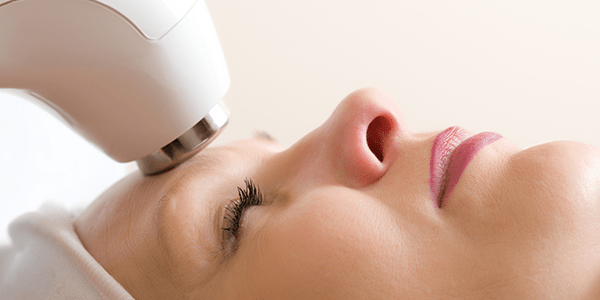
What are physical therapies for acne?
It is the use of electronic devices that take advantage of certain biochemical or biophysical characteristics of acne skin to modify the clinical course of this disorder. This group includes lasers, photodynamic therapy, blue and red lights, pulsed light, radiofrequency, photopneumatic therapy, biophotonic therapy, microdermabrasion and ultraviolet rays.
What effect do physical therapies have on acne?
Depending on their mechanism of action, they are sebum-regulating, antibacterial and/or anti-inflammatory. It should be noted that physical therapies are only useful during the time that the treatment is carried out and until a few weeks afterwards: their result is not definitive. However, they are a useful tool for patients who do not wish to undergo oral treatment (isotretinoin, contraceptives) and who respond insufficiently to topical therapies.
1. TREATMENTS WITH NON-LASER LIGHTING DEVICES
What are blue or red visible light therapies?
The target of visible light therapy lies in the characteristics of the most prominent bacteria in acne, Propionibacterium acnes. This microorganism is capable of synthesizing substances (porphyrins) that absorb a fraction of visible light. If these porphyrins are stimulated with certain types of lights, they release substances that are toxic (oxygen free radicals) to Propionibacterium acnes, which facilitates its elimination and, therefore, the clinical improvement of acne.
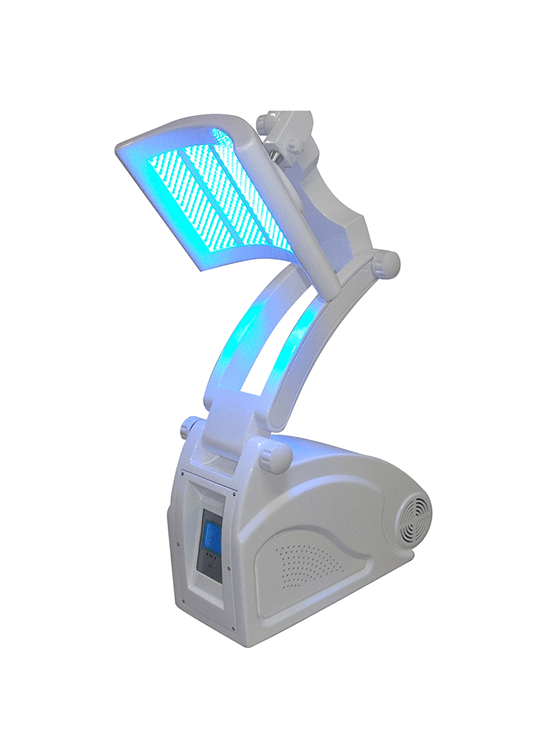
Visible blue light with a wavelength of 407-420 nm can be emitted from light devices in the doctor’s office. It is usually applied twice a week and improvement is observed from the first session. It is especially indicated for inflammatory acne (papules and pustules), and different studies show a reduction in lesions of up to 70%.
Red visible light (533, 660 nm), which can be combined with blue light, has a direct anti-inflammatory effect on the skin by reducing cytokines, and has greater penetrating power than blue light. It seems to be more effective the more severe the acne and, in combination with blue light, can reduce inflammatory lesions and retention lesions (comedones).
What is intense pulsed light and how does it work on acne?
Pulsed light is a high-intensity, non-coherent, polychromatic electromagnetic wave (therefore not a laser), with a wavelength of between 500 and 1200 nm, emitted by a medical device. Part of this light is absorbed by porphyrins manufactured by P. acnes, so it has an antibacterial effect. It also treats the blood vessels that supply the sebaceous glands, so it is sebum-regulating. Published studies show efficacy on inflammatory and non-inflammatory lesions.
2. TREATMENTS WITH LASER LIGHT DEVICES
What can pulsed dye laser offer in the treatment of acne?
The pulsed dye laser, from 585 to 595 nm, can be used to improve acne as it impacts the hemoglobin of dilated blood vessels in the area of inflammatory lesions. It also seems to have a certain role in remodeling collagen, so it can secondarily improve scars. The pulsed dye laser, according to published studies, offers more discreet results than other options, but more durable.
What action does the KTP laser have on acne?
The 532 nm KTP (potassium titanyl phosphate) laser acts on blood vessels and exerts a photodynamic effect on P. acnes and the sebaceous glands. Compared to other lasers, it has the advantage that it produces a minimal inflammatory reaction (clearly less than the pulsed dye) and that it is applied weekly, not twice a week.
How effective is diode laser in treating acne?
The 1450 nm diode laser has shown efficacy in the clinical control of acne for a period of up to twelve months, although it is the laser that causes the most pain to the patient.
How do erbium non-ablative lasers work to treat acne?
Non-ablative erbium lasers, 1450 and 1550 nm, can also give very sustained clinical responses (up to 73% at two years in some studies) due to a decrease in the size of the sebaceous glands. Responses are best with reminder sessions, for example every 3 – 6 months.
3. PHOTODYNAMIC THERAPY
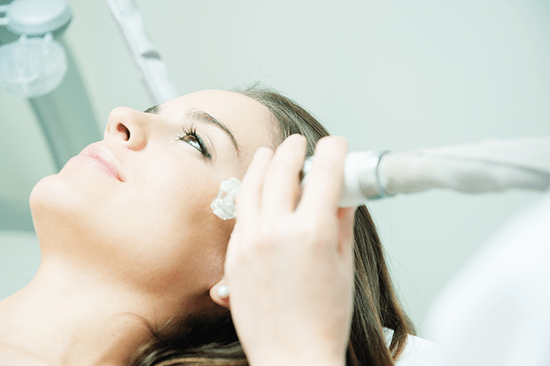
Photodynamic therapy combines the application of a photosensitizing cream that is left on for a few hours and then exposed it to a light source in the clinic. Although a red light lamp (550 – 700 nm) is usually used, it is possible to activate the photosensitizing drug with other light sources such as the pulsed dye laser or the KTP laser.
It is believed that the active ingredient in the cream impacts both P. acnes and the sebaceous glands, which exerts its action at the time of light exposure and afterwards. During the treatment, which lasts minutes, a burning sensation or pain is experienced. Clinical responses are usually maintained over a period of months. These are better if keratolysis (peeling, dermabrasion, photopneumatic therapy) has been performed before the application of the cream for photodynamic therapy, which will allow the former to penetrate more into the sebaceous structures.
4. RADIO FREQUENCY
Radiofrequency uses radio waves between 6 – 250 MHz to heat the dermis. The increase in temperature eliminates part of the bacteria and reduces the sebaceous glands. The tolerance of the treatment is usually excellent with the previous application of an anaesthetic cream; and there is no postoperative period of leave. There are publications that support the use of radiofrequency in the management of acne scars, although they are usually devices with needles and the results they offer are inferior to those obtained with fractional non-ablative erbium laser.
5. PHOTOPNEUMATIC THERAPY
It combines the application of a gentle suction device and illumination with visible light from 400 to 1200 nm. Therefore, it removes excess sebum and performs comedone extraction by pneumatic action and light reduces the amount of P. acnes by generating oxygen free radicals. It improves retention and inflammatory lesions. Adverse effects are minimal (redness, swelling) and lasting for hours.
6. MICRODERMABRASION
There are few published studies regarding the efficacy of microdermabrasion for the treatment of active acne. However, it appears that aluminum oxide crystals perform a gentle exfoliation of the epidermis, thus improving pore size and excess skin sebum.
ABSTRACT
| · Physical therapies usually improve active acne without the need for oral treatments such as contraceptives or isotretinoin.· They can be combined with topical therapies.· These are procedures with a high degree of safety and minimal adverse effects.· Although some physical therapies can give positive results that are maintained for months, it is common for treatments to be repeated periodically for a long time.· Physical therapies tend to have a lower cost/benefit ratio than other treatment options for acne, so their suitability must be assessed in each case: they are not a standard treatment. |
REFERENCES
· Nestor MS, Swenson N, Macri A. Physical Modalities (Devices) in the Management of Acne. Dermatol Clin. 2016 Apr; 34(2):215-23