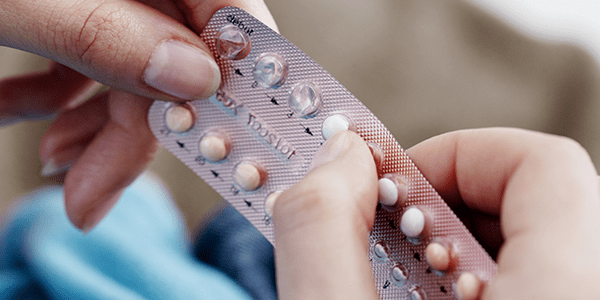
Why are contraceptives used in the treatment of acne?
The origin of acne is multifactorial, although there is one factor that is basic in its genesis: excess sebum formation. The production of sebum, in part, is regulated by androgens (male hormones), present in men and women. Because contraceptives are antiandrogenic, they have a beneficial effect on acne. This is especially true in women with hyperandrogenism (excess androgen function), the main representatives of which are polycystic ovary syndrome and SAHA syndrome.
What types of birth control are used for acne?
Contraceptives are a combination of ethinyl-estradiol (estrogen) plus a progestogen. There are many types of progestogens, some of which have antiandrogenic action. First- and second-generation progestogens, derived from testosterone (e.g., norethindrone, levonorgestrel), interact with progesterone receptors, androgens, mineralcorticoids, and glucocorticoids. Because of their low specificity, they may be associated with unwanted adverse effects. Third-generation progestogens (e.g., desogestrel, norgestimate, gestodene) are also derived from testosterone but have been modified to have a lower androgenic effect. Finally, fourth-generation steroids, such as drospirenone, only bind to progesterone receptors specifically without acting on any other steroid receptor, so they do not have androgenic adverse effects. In fact, drospirenone is antiandrogenic and antimineralcorticoid (reduces saline retention).
How do oral contraceptives work to improve acne?
They reduce androgen formation and activity through different mechanisms. They decrease the levels of androgen formation and ovulation stimulating hormones (gonadotropins: LH and FSH); they increase the synthesis of sex globulin carrier hormone (SHBG), thus reducing the amount of free testosterone that binds to receptors and that which can be transformed into dihydrotestosterone; and some progestogens decrease the conversion of testosterone to dihydrotestosterone by inhibiting 5 alpha reductase.

What are the best oral contraceptives for acne treatment?
Contraceptives approved by the FDA (Food and Drug Administration) to treat acne in women who also want contraception are those containing norgestimate, norethindrone acetate, and drospirenone.
In a Cochrane systematic review, contraceptives containing chlormanidone acetate or cyproterone acetate have been found to be more effective than levonorgestrel. Drospirenone has shown greater efficacy than norgestimate or nomegestrel acetate.
What benefits, in addition to improving acne, do oral contraceptives have?
· They regularize the menstrual cycle , the discomfort associated with menstruation (dysmenorrhea) and premenstrual dysphoria (mood alteration).
· They reduce other androgenic manifestations: seborrhea, hirsutism, androgenic alopecia.
· They reduce the risk of ectopic pregnancy, pelvic inflammatory disease, anemia, endometrial cancer (50%), ovarian cancer (40%), colon cancer and rectal cancer.
What are the risks of using oral contraceptives?
They can very slightly increase the risk of a cardiovascular event (venous thrombosis, myocardial infarction, stroke). The risk of venous thrombosis is lower with contraceptives containing levonorgestrel. Whatever the contraceptive, the probability of venous thrombosis is clearly lower than during normal pregnancy and postpartum . The risk of venous thrombosis during the consumption of oral contraceptives is higher in women who smoke, older than 35 years, those who undergo major surgeries, those who are immobilized by some ailment, those who have a previous history of venous thrombosis or pulmonary thromboembolism, those who have familial thrombophilias, inflammatory bowel disease, those who consume corticosteroids
It is not known for sure whether they influence the risk of cervical and breast cancer (there may appear to be a slight increase in risk, although women who take contraceptives are diagnosed at a less advanced stage than those who have never used contraception). Oral contraceptives increase the risk of liver cancer.
When are oral contraceptives indicated in the treatment of acne?
Because androgens play a primary role in acne and contraceptives are anti-androgenic, they may be indicated in women with acne and desire for contraception and who do not have any contraindications to taking them. They can also be used when the risk/benefit ratio is favorable even if contraception is not expressly desired.
It should be remembered that the cardiovascular risks associated with the consumption of oral contraceptives are lower than those of pregnancy; and that acne can be a disorder with a great social and psychological impact on the patient. All these factors must be addressed with the patient in order to proceed with one therapeutic choice or another.
Cases of acne that are associated with other hyperandrogenic manifestations (seborrhea, hirsutism, androgenic alopecia), dysmenorrhea or anovulation are usually the main indication for oral contraceptives, in addition to the patient’s express desire to take them.
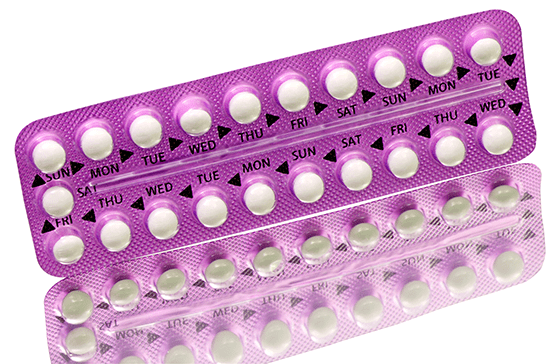
How long does it take for oral contraceptives to improve acne?
Usually, a minimum of three menstrual cycles. At 6 – 9 months after starting contraceptives, it is usual to be able to do the treatment in monotherapy, without the need for other topical or oral therapeutic options.
What are the contraindications of oral contraceptives?
There are different conditions that contraindicate the consumption of oral contraceptives:
· Pregnancy.
· Breastfeeding during the first 6 months postpartum.
· History of venous thrombosis, hypercholesterolemia, accident
cerebrovascular disease, ischemic heart disease, breast cancer, cirrhosis, hepatitis
viral tumor, benign or malignant liver tumor.
· Tobacco use in people over 35 years of age.
· History of migraine in people over 35 years of age (or younger but with
neurological focality).
· Uncontrolled high blood pressure.
· Diabetes in people over 35 years of age (or younger but with organ damage
caused by diabetes).
· Major surgery with recent prolonged immobilization.
REFERENCES
· Harper JC. Use of Oral Contraceptives for Management of Acne Vulgaris: Practical Considerations in Real World Practice. Dermatol Clin. 2016 Apr; 34(2):159-65.