What is KTP’s laser?
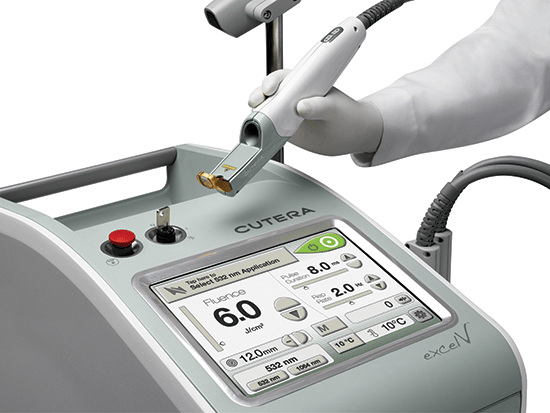
KTP’s laser has a wavelength of 532 nm and its therapeutic target is haemoglobin and melanin, so it is used to treat red (vascular origin) and flat brown (such as lentigines) skin lesions.
Why can KTP’s laser be useful for treating acne?
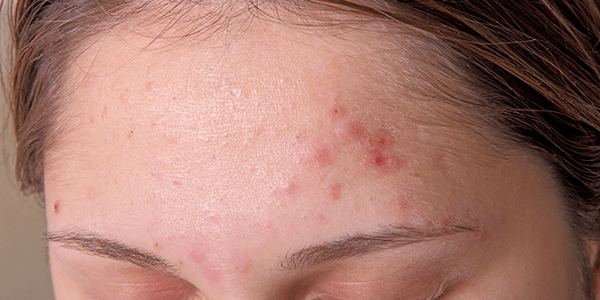
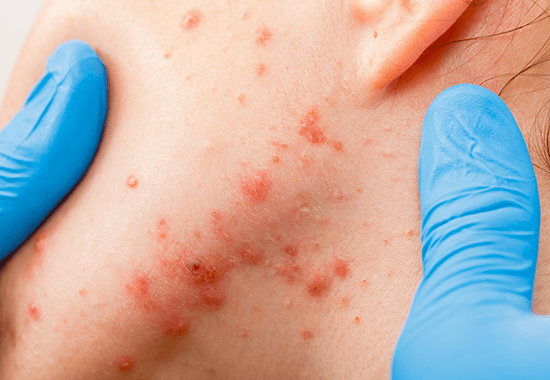
Acne is an inflammatory disorder and, as such, all its lesions, beyond comedones, are erythematous. Therefore, they can be targeted by the KTP laser. The advantage of laser acne treatment is that it can avoid the use of oral medications (antibiotics or isotretinoin). The KTP laser also activates the porphyrins secreted by Propionibacterium acnes, the bacteria most involved in the origin of acne. This light activation of the porphyrins reduces the formation of sebum by heating the sebaceous glands. The sessions are carried out weekly for a period of one or two months, usually.
Is laser a standard acne treatment?
No. It should only be reserved for those patients who do not want or have contraindications to oral and/or topical drugs, which have a more favorable benefit/cost ratio.
How effective is KTP’s laser in treating acne?
In the study carried out by Yilmaz et al., where 44 patients with an average age of 21 years participated, a single KTP laser session produced an average improvement of 40% in the score of acne lesions. There were no differences in those patients who received one or two treatments in the same week. According to other studies (Bowes et al. and Lee et al.) improvements can reach up to 70% after three months of treatment, even 90% in patients who also combine topical treatment.
What are the advantages of KTP laser acne treatment?
The main advantage is that the patient avoids the consumption of oral drugs for the treatment of acne: people who do not want to take contraceptives, antibiotics, isotretinoin or do not respond to topical treatment are the ideal profile to perform this therapy. There are also some diseases in which no drug indicated for the treatment of acne can be consumed (e.g., Kostmann syndrome).
Laser treatment does not produce bacterial resistance as can occur with taking antibiotics. Also, in addition to treating acne, the same session treats the marks caused by it.
KTP’s laser treatment for acne usually offers faster results than with any oral option, especially isotretinoin. It is also usually less prolonged (weeks) than with other alternatives (months or years).
And what are the drawbacks?
It is a treatment that can only be performed in the Dermatology consultation, and in those that have a KTP laser in their equipment of devices. This type of device is very specific and expensive, so it is not available in all dermatological centers. Also, the cost of each session is high (more than any oral and topical treatment), such as photodynamic therapy, pulsed light or other light devices.
In the postoperative period of the KTP laser, the patient may experience redness and swelling lasting 1-3 days.
The result obtained is not definitive, but maintenance sessions must be carried out every 1-3 months to achieve control of the disease.
REFERENCES
Yilmaz O, Senturk N, Yuksel EP, Aydin F, Ozden MG, Canturk T, Turanli A. Evaluation of 532-nm KTP laser treatment efficacy on acne vulgaris with once and twice weekly applications. J Cosmet Laser Ther. 2011 Dec; 13(6):303-7