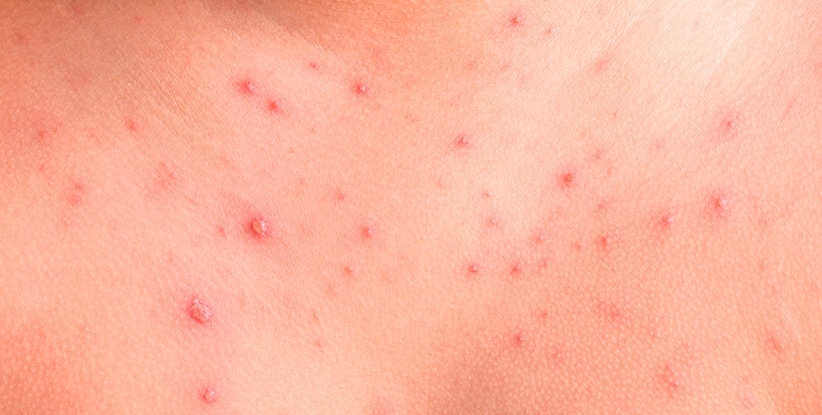
Atrophic (depressed) facial scars are common and have several underlying causes such as acne, trauma, or chickenpox. Numerous techniques have been described for the treatment of atrophic scars: the use of subcision, punch, ablative and non-ablative fractional lasers, or hyaluronic acid fillers.
For chickenpox scars, it has been described in a study by Lee et al. that the combination of subcision plus posterior ablative fractional laser offers very positive results.
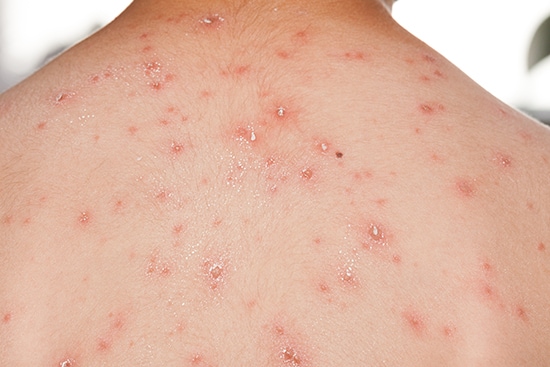
How is chickenpox scar treatment performed?
Subcision is performed under local anaesthesia. Once the area is asleep, an intramuscular or Nokor needle is inserted under the scar and moved in the shape of a fan. This allows the scar to be unanchored from the deep tissues, as fibrous tracts are ruptured. With the release of these fibrous tracts, a plug of blood rich in growth factors is released under the scar. For more information on subcision, click here.
One month after performing the subcision, the authors of the aforementioned work propose to perform a fractional ablative laser session, to increase collagen synthesis to further fill the scar defect. For more information about the ablative fractional laser you can click here.

What are the advantages of this combined technique in the treatment of chickenpox scars?
After inflammation of the vesicles caused by the chickenpox virus, atrophy and fibrosis of the middle layer of the skin (dermis) occurs. This fibrosis acts as an anchor that adheres the surface of the scar to the depth, pulling it deep. For this reason, without releasing this tension through subcision, the improvements in chickenpox scars are smaller. Since defects are also often seen on the surface of the skin, the approach with a subsequent session of ablative fractional laser seems the most complete, as it treats the scar defects in depth and on the surface. Therefore, the main advantage of this combined technique is the synergistic effect of both procedures.
The isolated use of ablative fractional laser can improve the surface of the scar and lift it slightly, but it is thanks to subcision that it is more level with the surrounding skin.
What are the drawbacks of this combined technique in the treatment of chickenpox scars?
Subcision is a painful process if performed without anesthesia, so it must be performed under local anesthesia. Likewise, the ablative fractional laser leaves punctiform crusts on the treated scar, which last about a week, and are cosmetically uncomfortable.
REFERENCES
· Lee SJ, Kim YK, Choi SY, Park KY, Seo SJ. Sequential treatment with intradermal incision (intracision) and 2,940-nm Er:YAG laser for chicken pox scars. Dermatol Ther. 2014 Jan-Feb; 27(1):24-7.