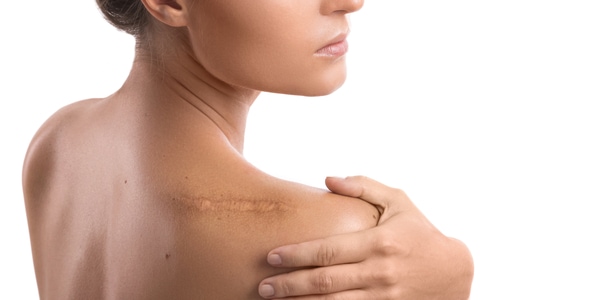
Scars have a general prevalence in the population of 4.5 – 16% and, depending on the degree of disfigurement they cause, they have a significant psychological impact on the patient. Depending on their location and tension, they can reduce functionality, mobility, and cause pain and pruritus.
Scars are formed by an excess or defect of collagen in the traumatized area. They are called hypertrophic and atrophic scars, respectively. Hypertrophic scars are usually the result of surgical procedures. Atrophic scars are usually caused by trauma or inflammatory skin diseases (e.g., acne).
The therapeutic approach to scars is very broad and not only depends on the type of scar but also on the time of its evolution. In this post you have more information about the therapeutic approach to scars. There are numerous treatment options for scars: cryotherapy, intralesional infiltration of drugs, lasers, radiotherapy…
What type of treatment is recommended for traumatic scars?
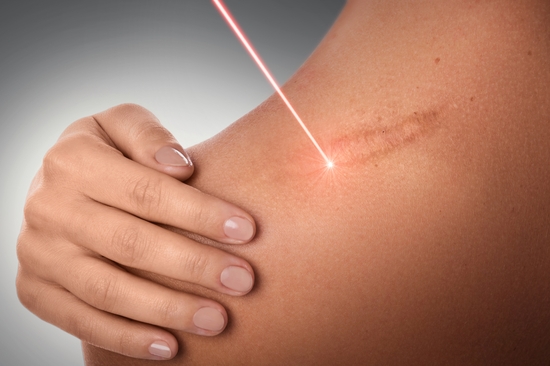
For old traumatic scars (more than one year of evolution), Ibrahim et al. have described the combination of CO2 laser applied with the pinpoint technique plus fractional non-ablative erbium laser.
With this technique, the CO2 laser is first passed in classic (non-fractional) mode over the most affected areas of the scar, with low power (1W) and at a fast firing rate (50 Hz). In a second moment, in the same session, field shots are made with the 1,540 nm non-ablative fractional laser at an intermediate power (15ms and 50 – 60 mJ/column).
How effective is the combination of classical and fractional non-ablative CO2 laser for traumatic scars?
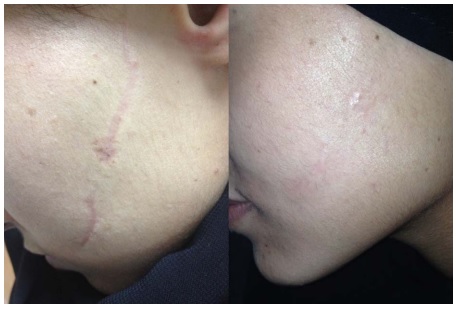
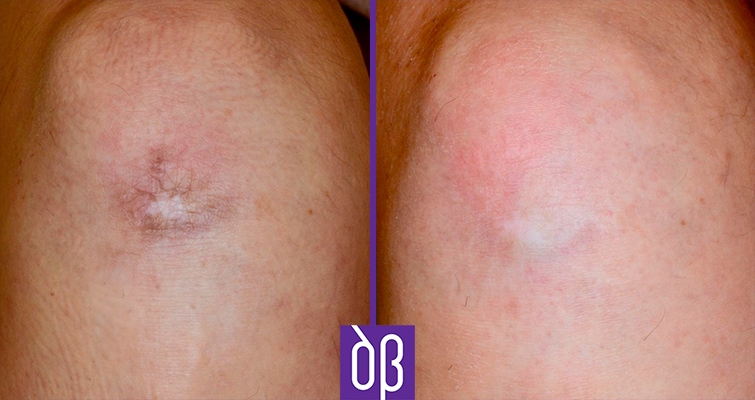
In the aforementioned study by Ibrahim, the efficacy of this technique on surgical and post-traumatic scars was evaluated in 13 patients with an average age of 24 years (4 women and 9 men). The improvement was evaluated using the Vancouver scale, which assesses the presence of capillaries in the scar, its pigmentation, hardness and height of the scar. Depending on the degree of each of these items, a score of “severity” of the scar is awarded. The mean score after the study varied by 41.5%, especially improving the pigmentation and height of the scars. The parameter that changed the least was the hardness of the scar. None of the patients worsened with the treatment, and 50% of the participants observed improvements of more than 50% in the appearance of the scar.
What are the adverse effects of this technique?
The CO2 laser causes inflammation (redness and burning sensation) lasting for hours, and subsequent appearance of fine crusts on the treated surface, which will take 7 – 15 days to detach. The non-ablative fractional laser usually causes redness and swelling of 8 – 72 hours.
What are the advantages of this combination technique?
The combination of two different lasers allows you to benefit from the two different mechanisms of action that the devices have, as well as to be able to use them at lower powers than if we were using them alone. Therefore, the efficiency of the treatment is increased and, a priori, the probability of suffering adverse effects is reduced. Probably, the only drawback of combined techniques is the increase in the cost of the procedure.
REFERENCES
· Ibrahim SM, Elsaie ML, Kamel MI, Mohammed EE. Successful treatment of traumatic scars with combined nonablative fractional laser and pinpoint technique of standard CO2 laser. Dermatol Ther. 2016 Jan-Feb; 29(1):52-7.