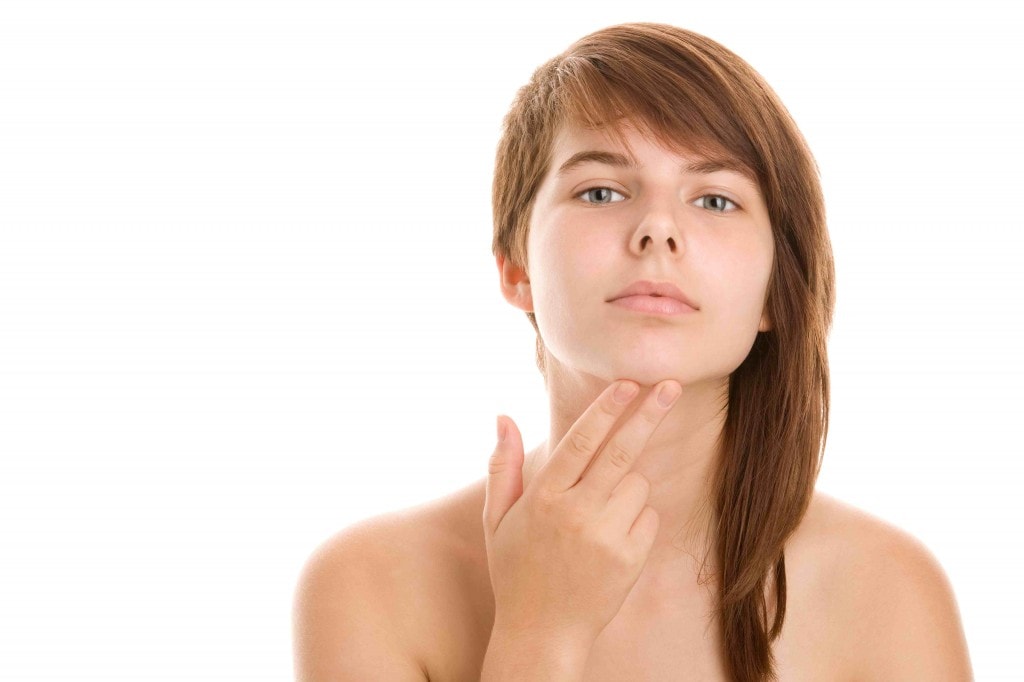
Acne, one of the most frequent reasons for consultation in dermatology, is a common inflammatory disease in the general population. The most common variant is vulgar or juvenile, although there are other types such as cosmetic acne or acne secondary to taking medication.
In this blog post, some popular culture myths about this disease, its treatment and the care of oily skin are discussed.
→ In acne there are a series of deep-rooted popular beliefs that are not based on any scientific evidence. Following the advice proposed by some of these beliefs can even worsen the disease, so it is necessary to deny the following points:
– Skin hygiene improves acne. Excessive hygiene can irritate the skin and worsen acne lesions. Although it is true that there are comedones (pimples) and excess sebum in the disease, it is not necessary to vigorously wash the affected skin. It is sufficient to use running water or a mild soap a maximum of twice a day.
– Moisturisers cannot be used if you suffer from acne. Although acneic skin is generally oily, it is possible that you may experience a certain feeling of dryness or tightness after hygiene or with the use of some treatments. In these cases, any moisturiser that is specific for acne-prone skin (oil free or non-comedogenic) can be used without complications.
– If you suffer from acne, you should not use sunscreens. The sun has an anti-inflammatory effect on skin diseases, but this does not justify stopping the use of sunscreens. Using oil-free gels or creams will obtain the desired anti-inflammatory effect without increasing the risk of skin cancer, which is considerably more harmful to health than acne.
– Healing oils should be used for acne. Although rosehip oil may have certain anti-inflammatory and healing properties, the excipient of the active ingredient is very greasy and is not suitable for acne. In fact, the use of rosehip oil as an anti-aging cosmetic can cause acne due to occlusion of the hair follicles.
– Diets high in fats or sweets worsen acne. There is no scientific study that has managed to find any relationship between food and acne: there is no data to support that chocolate, sausages, spicy foods or any other food causes or worsens acne. It is clear that a balanced diet is beneficial for health in general terms, but for acne it is not necessary to exclude any specific food.
– Acne disappears on its own and does not require treatment. It is true that during adolescence up to 80% of people suffer from acne, but for this reason it should not be experienced as something natural that does not require intervention. Although acne is in most cases a disease with exclusively aesthetic alterations, it is preferable to carry out the earliest and simplest treatment to avoid the appearance of scars that can remain for the rest of life.
– Squeezing the lesions favors their healing. The extrusion of the ‘pimples’ allows the pus content they contain to be evacuated, although the maneuver results in damage to the dermis of the skin that causes, most of the time, an irreversible scar. It is preferable to use an anti-inflammatory treatment to make the ‘pimple’ fade without manipulating it to avoid undesirable consequences.
– Acne scars have no treatment. Nowadays there are several methods available to eliminate or improve most scars caused by acne, whether atrophic (depressed) or hypotrophic (protruding). Chemical peels and lasers, among other procedures, can be used for this purpose.