Phototherapy in dermatology
What is phototherapy?
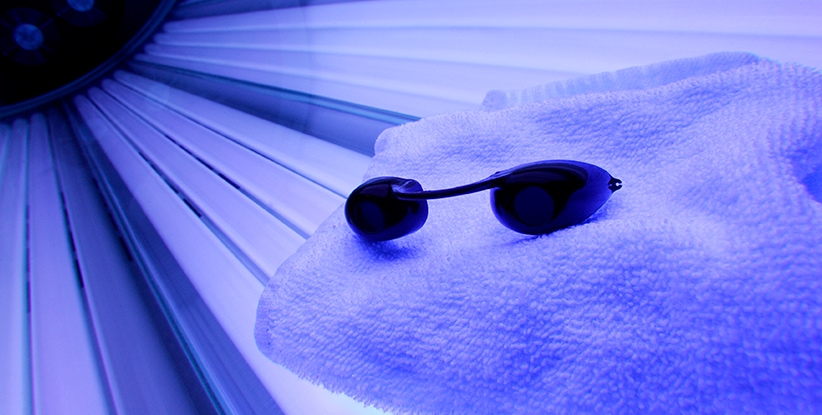
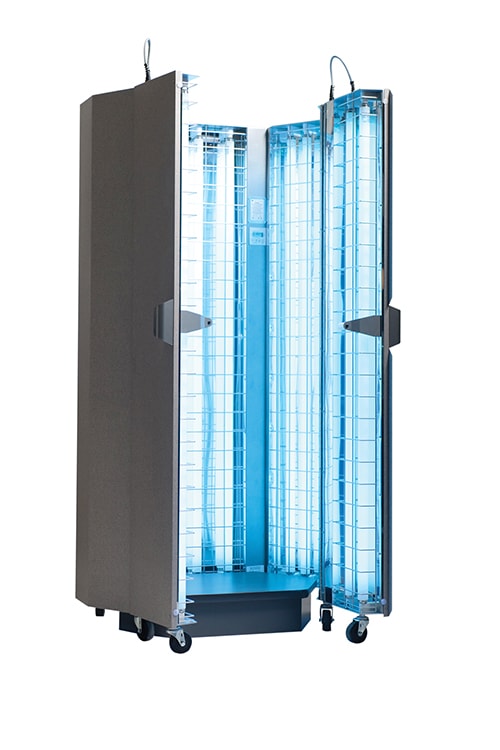
Phototherapy is a type of medical treatment that uses ultraviolet (UV) type A (UVA) or type B (UVB) radiation to improve several skin diseases that have in common an inflammatory, autoimmune and/or tumour origin. This UV radiation is generated in approved electrical devices (cabins or mobile units) that have the ability to emit one or more types of UV radiation.
What type of ultraviolet radiation does phototherapy use?
UV radiation is classified according to a parameter called wavelength (speed at which it travels a distance, measured in nanometers). For practical purposes, wavelength is used in dermatology to predict the depth of penetration of radiation and also to know which target this wave will impact, which determines the indication to apply it.
In dermatology, UVA-1 radiation (340-400 nm), broadband UVB (290 – 320 nm) and narrowband UVB (UVB-NB, 311-313 nm) are used. These radiations, especially UVA-1, can be combined with the oral or topical administration of photosensitizing drugs (psoralens), which increase the biological efficacy of the therapy. When we combine psoralenes plus UVA radiation, the phototherapy variant is called PUVA.
This type of UV radiation is not exactly the same as that emitted by commercial tanning booths, but follows different controls and approvals.
What action does phototherapy have on skin diseases?
On the skin, UV radiation reduces the number of cells of the immune system (lymphocytes, Langerhans cells…), the communication between them that favours inflammation (they alter the cytokine pattern), is mutagenic (causes errors in the DNA of the nucleus of the cells) and also reduces the rate of division of the cells present in the skin (keratinocytes, lymphocytes, Langerhans cells…).
For these reasons, it may be beneficial to reduce the degree of inflammation (psoriasis, atopic dermatitis), excess autoimmune activity (vitiligo, alopecia areata) and to reduce the degree of replication of certain tumours (e.g. cutaneous lymphomas).
So, is ultraviolet radiation positive for healthy skin?
Absolutely not. Ultraviolet radiation, as we have seen, is immunosuppressive, mutagenic and reduces the rate of cell division in healthy skin.
However, these characteristics are “exploited” for skin diseases in which there is an excess of immune activity (inflammatory dermatoses) or cell replication (inflammatory and tumor dermatoses). The only beneficial effect of type B UV radiation is the activation of vitamin D (read more details here). Remember that UVA radiation (that of tanning booths) has no role in the synthesis of vitamin D.
What diseases is phototherapy useful for?
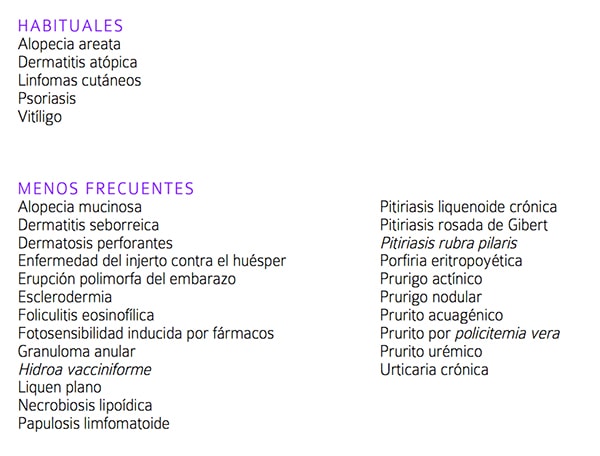
Phototherapy has been and continues to be a fundamental pillar in the treatment of dermatology. The most common diseases that can benefit from phototherapy are the following:
How is phototherapy performed?
Firstly, in a healthcare setting and under the supervision of dermatologists and/or nurses specialising in photomedicine. Phototherapy is carried out using mobile devices or cabins that emit UV radiation type A, B or both.
The patient simply has to expose himself to radiation in a relaxed way (standing, lying down or sitting depending on the device) for a few minutes under the parameters indicated for his disease. It is not a painful or annoying therapy. It is necessary to protect the eyes with approved blocking glasses and cover (if necessary and under dermatological indication) body areas that cannot be exposed to UV radiation.
In the case of psoralen phototherapy (PUVA), 2 hours before the UV radiation session, the patient will take the tablets of this drug according to the dose indicated by their dermatologist.
Phototherapy is based on the application of UV radiation for a limited period of time in different sessions, which can be more or less frequent and prolonged in time depending on the type of disease the subject has.
What are the adverse effects of phototherapy?
There is the possibility of acute adverse effects (erythema due to burning, pruritus, gastrointestinal intolerance to psoralens, keratoconjunctivitis if the eyes are not protected) or long-term adverse effects (skin aging, wrinkles, sun spots and increased risk of skin tumors if a large number of sessions are performed). For these reasons, it should always be performed under dermatological indication and with periodic check-ups with your nurse and dermatologist.
What ultraviolet radiation does the Sun emit? And the tanning booths? Behind the glass do I receive UV radiation?
The sun emits UVA, UVB and UVC radiation. Commercial tanning booths emit only UVA 95% of the time. UVA radiation is received behind a sunny glass , UVB is blocked by the glass: therefore, behind a glass we can tan, rarely burn (erythema) and we do not help in the synthesis of vitamin D. Remember that UVA radiation contributes to skin photoaging and skin cancer, so we are not exempt from these effects either.
REFERENCES
· Bulat V, Situm M, Dediol I, Ljubicić I, Bradić L. The mechanisms of action of phototherapy in the treatment of the most common dermatoses. Coll Antropol. 2011 Sep; 35 Suppl 2:147-51.
· Carrascosa JM, Gardeazábal J, Pérez-Ferriols A, Alomar A, Manrique P, Jones-Caballero M, Lecha M, Aguilera J, de la Cuadra J; Spanish Photobiology Group. Consensus document on phototherapy: PUVA therapy and narrow-band UVB therapy. Actas Dermosifiliogr. 2005 Dec; 96(10):635-58.