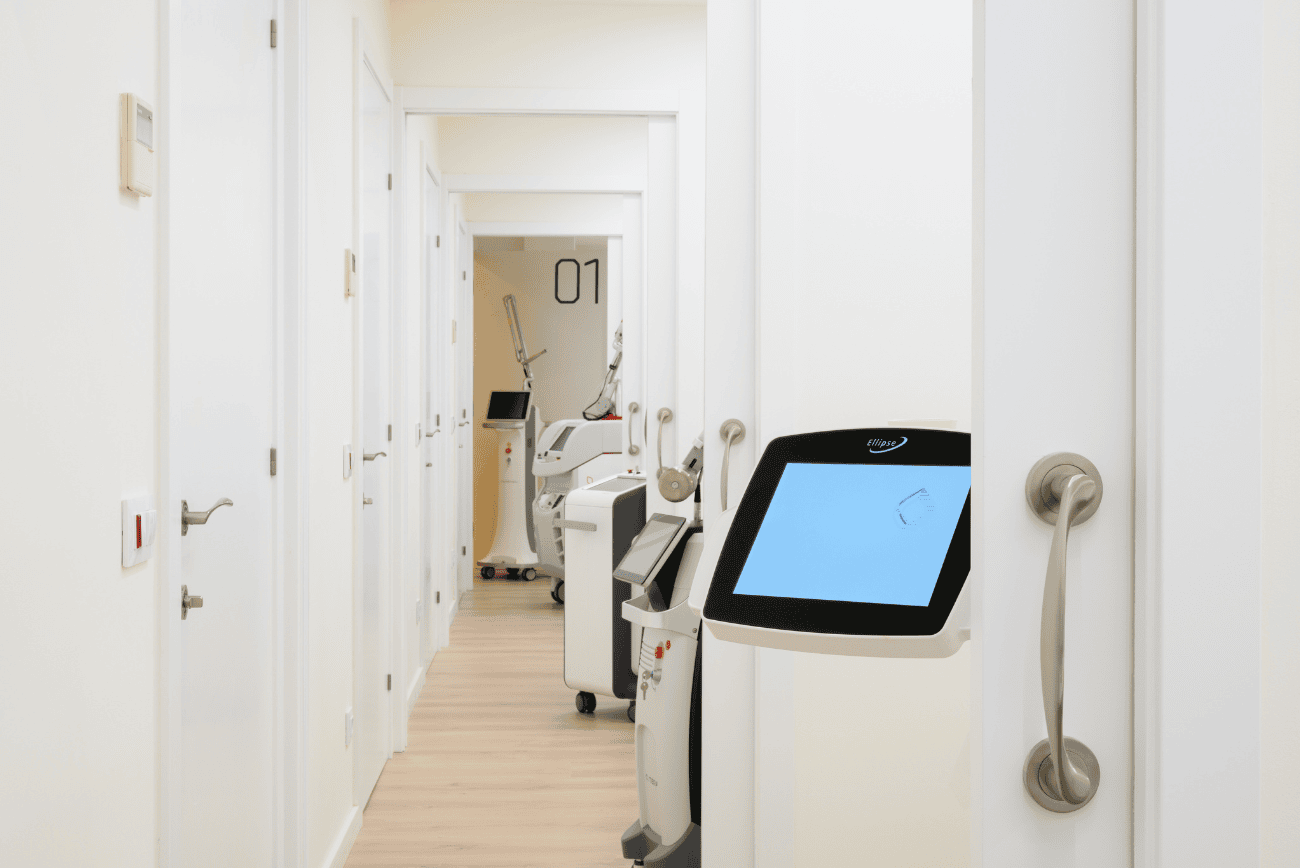
The laser used for a scar depends on what we want to improve: redness, sag, thickness or texture. Vascular lasers can act on redness; fractional CO2 and other fractional technologies can improve certain textural alterations. When there are adhesions or excess scar tissue, it may be necessary to combine the laser with other procedures.
Therefore, an acne scar, a keloid and a surgical scar are not necessarily approached in the same way. Even the same scar may require several techniques. This guide explains how the choice is oriented and what aspects the dermatologist should assess.
How do we choose the laser for a scar?
The origin of the scar provides information, but it is not enough to choose the treatment. In the consultation, its depth, relief, color, consistency and possible adhesions are examined. Its location, age, evolution, skin phototype and previous treatments are also important.
The following table summarises possible treatment targets. It is indicative: it does not replace examination nor does it mean that a technology is suitable for all people with this type of scar.
| Predominant | Options that can be | What to consider |
|---|---|---|
| Redness and vascularization | Vascular laser, such as pulsed | You can treat the red component without resolving the volume or adhesions on its own. |
| Uneven texture or sunken | Fractionated CO2 and other fractionated | Depth and adhesions may require complementary techniques. |
| Thickness or excessive | Combined treatment, which may include laser | A distinction must be made between hypertrophic and keloid scars. |
| Pigmentation | Specific assessment of pigment and phototype | Not every spot on a scar has the same cause or requires a laser. |
What laser is used for acne scars?
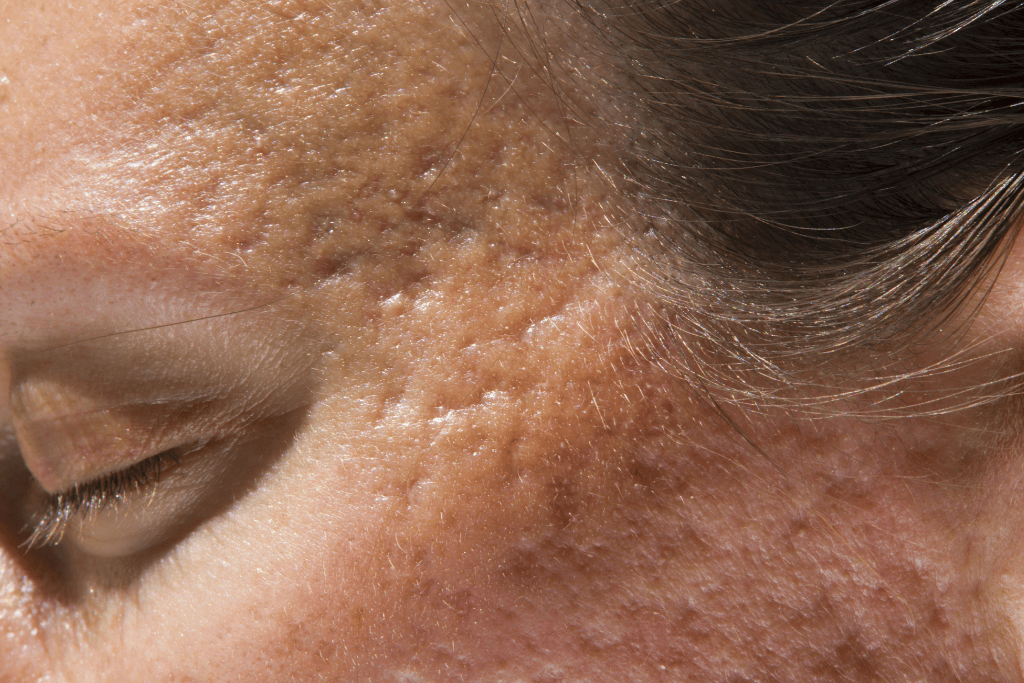
Atrophic acne scars are sunken scars. They are usually described as ice pick, narrow and deep; boxcar, with more defined edges; or rolling, wavy in appearance and which may have adhesions. It is common for several types to coexist in the same area.
Fractional CO2 laser can improve texture and certain atrophic scars by remodeling collagen. However, treating the entire surface with the same procedure does not always resolve the differences between scars.
An adhered rolling scar may need subcision to release the bands that hold it sunk. Some deep, well-defined scars may require focal techniques such as micropunch. The laser can be incorporated into the plan to work on other components of the scar.
The fractional picosecond laser can work on the texture and, in certain cases, the pigmentation of the scar. Its usefulness depends on the equipment, the head and the characteristics of the skin. In the blog we explain in more detail its applications and how it can be combined with other techniques. Learn about the scar treatment with fractional picosecond laser.
The American Academy of Dermatology highlights that the treatment of acne scars is tailored to the type of scar and can combine procedures. If there are still breakouts, controlling acne helps prevent new scars.
What laser is used for keloids and hypertrophic scars?
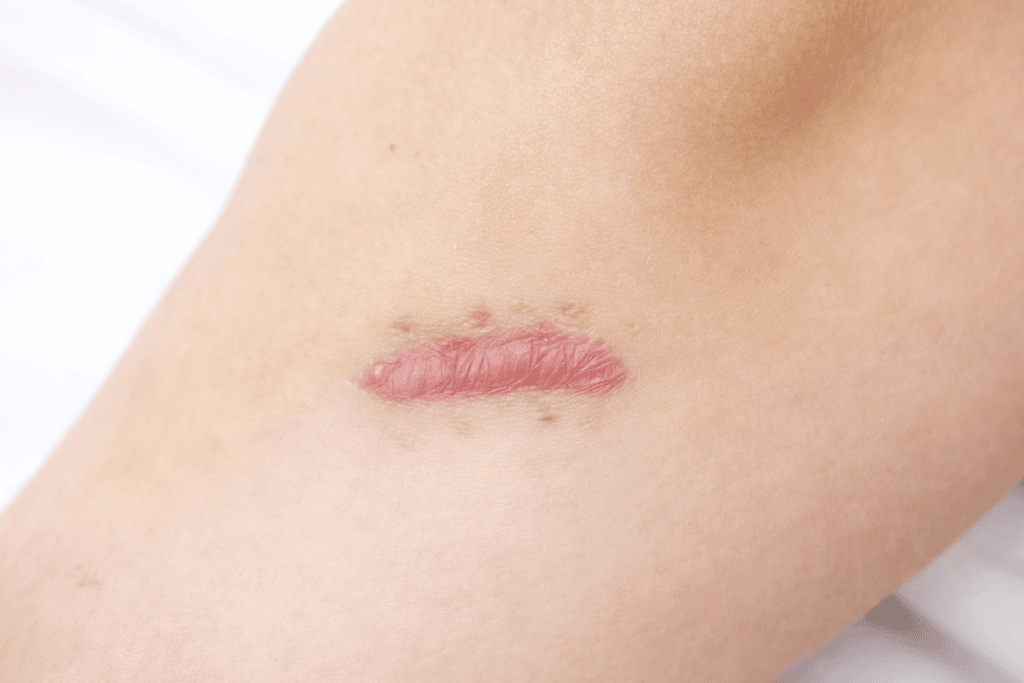
A keloid grows beyond the boundaries of the lesion that originated it. A hypertrophic scar has excess tissue, but stays within those limits. Both can be raised and accompanied by redness, itching, or pain.
When redness predominates, vascular lasers, such as pulsed dye, may be assessed. If there is also a lot of scar volume or activity, treatment may include intralesional infiltrations, cryotherapy, or other procedures. Laser is often not the only tool in the plan.
The choice and order of techniques depend on the location, evolution, and previous response. Reducing redness does not necessarily equate to correcting the entire thickness, and improving the appearance does not guarantee that a keloid will not grow back.
What laser is used for a surgical scar?
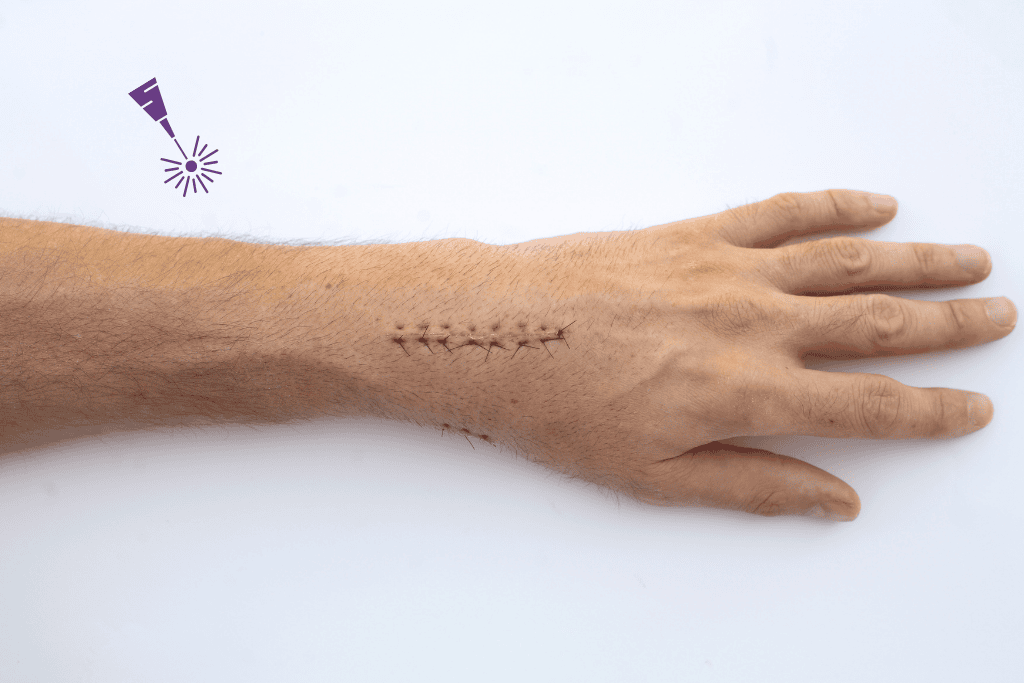
A surgical scar can be red, raised, depressed, widened or have pigmentation changes. Each characteristic poses a different objective.
If redness predominates, a vascular laser may be assessed. If there are irregularities in texture or relief, fractional systems may play a role. When the scar is raised, it is necessary to determine whether it is a hypertrophic scar or a keloid. If pigmentation is present, its cause and the risk of color changes associated with the treatment must be studied.
Therefore, the name of the procedure that caused the scar does not in itself determine which laser to use. It is its current state, together with the characteristics of the skin, that guides the decision.
What are the differences between CO2 and vascular laser?
Fractionated CO2 creates small treatment areas that promote tissue remodeling. It is used to work on certain textural alterations and atrophic scars. Vascular lasers, on the other hand, act on components of the blood in the vessels and can help when the scar is red.
These designations describe different aspects of the technology. CO2 identifies a type of laser; vascular indicates its target; and picoseconds refers to the duration of the pulse. To assess an indication, the wavelength, the mode of application, and the selected parameters also matter.
Why do we combine different treatments?
A scar may be sunken, adhered and have an irregular surface texture. Releasing the adhesion by subcision and then working the texture with a fractional technology allows different components to be addressed. It is a guideline example, not a guideline applicable to all acne scars.
The same reasoning applies to a raised, red scar: acting on its vascularization may be only part of the treatment. The combination is decided according to what the scar needs, not by accumulating procedures.
How many sessions are needed and what results can we expect?
There is no valid number of sessions for all patients. The depth or thickness, age, technology used and individual response have an influence. In addition, tissue remodeling is progressive and some results take time to be appreciated.
The aim is to improve the scar: to make it less visible, to soften its texture or to reduce certain symptoms. It cannot be guaranteed that it will disappear completely. The initial assessment should include expectations, limitations and necessary follow-up.
Frequently Asked Questions About Laser and Scars
How long does the treatment take to recover?
It depends on the technology, the intensity and the extent of the treated area. There may be redness, inflammation or scabs. Before the session, it is advisable to know the aftercare and the expected recovery time to organize the usual activities.
What are the risks of laser scarring?
The risks vary depending on the procedure and the patient’s skin. Pigmentation changes, burns, infection or new scars may appear. Dermatological assessment, the choice of parameters and the indicated care help to reduce them.
When to consult for a surgical scar?
It is advisable to consult during the evolution of the scar to assess the care and the appropriate time for a possible intervention. It is not always necessary to wait for it to mature: in certain recent scars, early treatment may be considered when the wound is properly closed. If it grows, hurts, itches or changes persistently, it should be examined by a professional. More information about early treatment with pulsed dye laser.
Is CO2 always the best choice for acne scars?
It can be useful for certain scars and textural alterations, but adhesions or deep, delimited scars may require other techniques. The choice begins by identifying what types of scar are on the skin.
Scar assessment with Dr. Didac Barco in Barcelona
Dr. Didac Barco, a dermatologist in Barcelona, is particularly dedicated to the treatment of scars and the use of dermatological lasers. At Corium Dermatology, he carries out an individualized assessment to determine what characteristics each scar has and which technology or combination of treatments may be most appropriate.
If you want to know the options for an acne scar, keloid or surgical scar, you can request a dermatological evaluation. The consultation allows you to define what can be improved and set realistic expectations before starting treatment.
Do you want to make an appointment?
If you have questions about the treatment or want to book an appointment, you can:
Send an email to info@coriumdermatology.com
Call 93 715 56 08.
Send a WhatsApp message to 620 92 86 11.