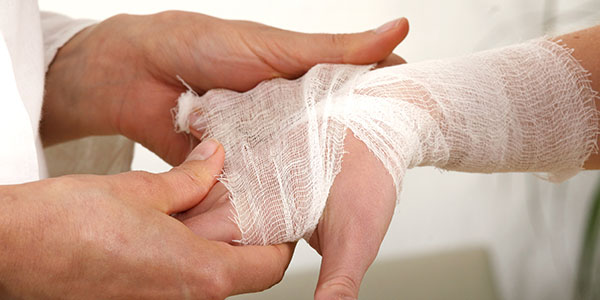
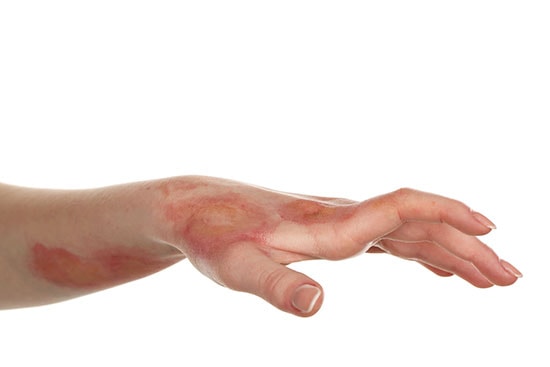
Second-degree or higher burns, by damaging at least the middle layer of the skin (dermis), can leave a secondary scar. It is common that, when there is a destruction of the pilosebaceous units of the dermis, from which the skin is re-epithelialized, hypertrophic and/or keloid scars are formed. Classically, burn scars have been treated with silicone patches, emollients, cryotherapy, corticosteroid injections or even surgical excision. However, in recent years, treatment using laser devices (pulsed dye, non-ablative fractional laser, ablative fractional laser, etc.) has emerged, which have been associated with excellent aesthetic and functional responses (increasing the mobility and extensibility of the tissue affected by the burn) with a very high safety profile. Some studies even indicate that early laser treatment shortly after the burn can prevent the formation of a hypertrophic scar or keloid.
When should you start laser treating a burn scar?
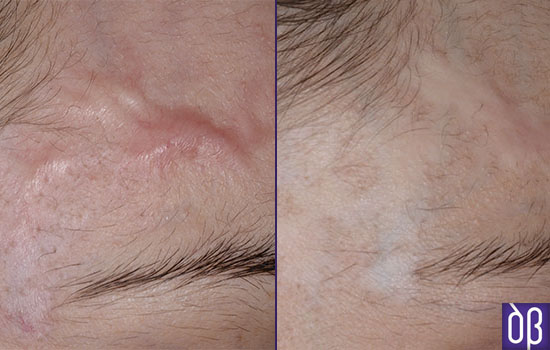
The largest studies recommend starting laser treatment at 6 months after the burn, without this eliminating the need for topical conservative treatments and/or dressings. During these first six months the scar tissue is forming and with close medical monitoring it is possible to observe the tendency it will or will not have to form a hypertrophic scar or a keloid and decide at the appropriate time whether to start laser treatment, since not all burns leave a scar of this type nor do they all require treatment with light sources. It has been observed that burn scars that are treated with lasers before 18 months after the accident respond clearly better than those that are treated after this time limit.
What lasers are used to treat burn scars?
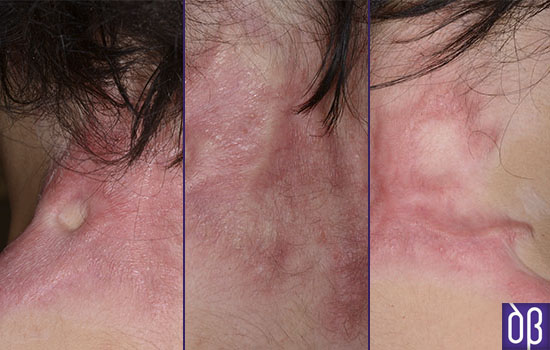
In the initial stages, when the scar tissue is immature, there is still some inflammation and the formation of vascular structures (capillaries) that will feed the cells involved in an excessive scar. This immaturity and inflammation usually give an erythematous (pinkish red) appearance to the scar, and it is even possible to observe capillaries on its surface, directly or through the dermatoscope. In these initial phases, it is advisable to use pulsed dye laser or pulsed light to avoid the formation of excessive vascularization that would facilitate the formation of abnormal scarring. This type of light system has a preventive potential for the volume of the scar and also reduces reddish coloration.

However, when the scar is already fully formed, its erythematous colour is attenuated or disappears and there is excess volume, this type of light system provides little benefit. At this time, the aim is to increase the reorganisation capacity of the scar’s collagen to improve its thickness, surface and texture. The lasers that act in this process are fractional non-ablative and ablative lasers. The use of one or the other device depends on the scar, the patient’s preferences and the treatments previously used. In general, in very thick, rigid or extensive scars, the ablative system tends to be used, as it is more efficient and powerful. It is also possible to combine both types of fractional lasers.
How does laser treatment (or combinations) improve burn scars?
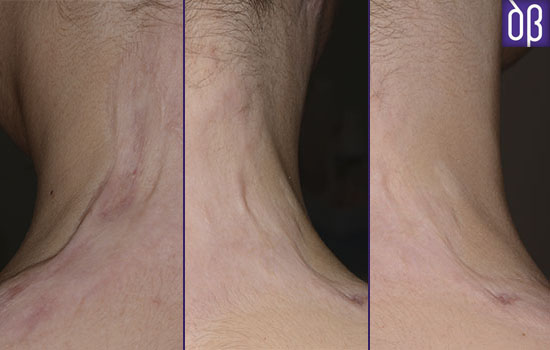
The aforementioned lasers, either alone or in combination, manage to improve the following aspects of the scar: coloration, presence of capillaries, stiffness, thickness, itching and limitation of mobility. Overall, the improvements observed in the largest studies are approximately 50% 6 months after the end of treatment.
How many sessions should be done and how often?
The recommended number of sessions is the one after which no improvement is observed. The average number of sessions required in published studies is between 4 and 8 (mean of 5), always depending on the characteristics of the scars and the devices used. For example, with abaltive fractional laser, fewer sessions are usually required than with non-ablative laser. The usual time interval between sessions is usually 4 – 6 weeks, also variable according to the parameters discussed.

What are the adverse effects of lasers?
In general, these are very safe systems. The incidence of adverse effects in the treatment of burn scars is very low (3.9%) and these are mild and temporary in the vast majority of cases. The most common light systems that can cause undesirable effects are pulsed dye lasers (purple or superficial bruises) and pulsed light (blisters). Ablative fractional lasers form small scabs in the area where they impact, although this is not an adverse effect but a characteristic of their mechanism of action. In general, these microscabs are spontaneously detached in about a week.
REFERENCES
· Hultman CS, Friedstat J, Edkins RE, Cairns BA, Meyer AA. Laser Resurfacing and Remodeling of Hypertrophic Burn Scars: The Results of a Large, Prospective, Before After Cohort Study, With Long-term Follow-up. Annals of Surgery, Volume 260, Number 3, September 2014.


