
Myth 1. Acne is caused or worsened by diet.
False. No rigorous study has managed to link a type of food with the worsening or appearance of acne: sausages, fats or chocolate. Obviously, excessive consumption of these foods has other consequences for health. It is possible that there is a certain relationship with the consumption of skimmed cow’s milk and with a high consumption of sweet foods in a short space of time (glycemic overload), although the data are not firm. For this reason, beyond the advice of a healthy diet, it is not necessary to make any specific restrictions.
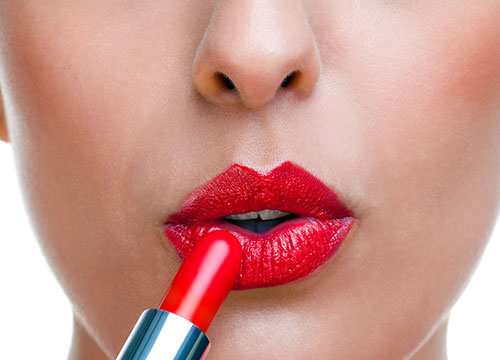
Myth 2. Acne can be caused by makeup.
True. The use of make-up and cosmetics that are not for oily skin can obstruct the exit of the hair follicle and promote the appearance of comedones (pimples) and, therefore, acne. The person with acne tendency should bear in mind that any preparation that is applied to their face (makeup, moisturizing cream, regenerating, sunscreen…) must be with an oil-free base for acne-prone skin (“non-comedogenic”). You must make sure that all the products you use are labeled in this way and it is specified that they do not worsen or cause acne. If it is not specified, it is recommended to use another product that does indicate it.
Myth 3. Rosehip oil improves acne.
False. The little anti-inflammatory power that rosehip possesses is eclipsed by the excipient of the preparations, which is an oil and therefore worsens acne lesions.
Myth 4. If I have acne, it is essential that I wash my face with soap every day.
False. No rigorous study has yielded data on the effectiveness of the use of cleansing soaps: it has been observed that their effect is minimal and that most of the time their use does not have a favorable cost/benefit ratio. Nor has it been proven that excessive hygiene worsens acne due to an overproduction of compensatory sebum.
Myth 5. If I have acne I can’t use moisturizers.
False. You can use them as long as they are oil free (for acne-prone or “non-comedogenic” skin).
Myth 6. Acne goes away on its own and doesn’t require treatment.
False. It is true that during adolescence up to 80% of people suffer from acne, but this is not why it should be experienced as something natural that does not require intervention. Although acne is in most cases a disease with exclusively aesthetic alterations, it is preferable to carry out the earliest and simplest treatment to avoid the appearance of scars that can remain for the rest of life.
Myth 7. Treatment with the old “Roacután” causes your skin to fall and your lips to open. It is a “very strong” and dangerous treatment.
False. These adverse effects do not have to occur if the treatment is done at an appropriate dose and under control with your dermatologist. Its safety profile is high and the vast majority of adverse effects that it may present are known and detectable by a blood test. You can read more details about isotretinoin here.
Myth 8. Squeezing and bending pimples causes scarring.
True. If the lesion is very inflammatory, it already has a risk of leaving a scar, and if it is manipulated, the dermis is further traumatized. In this way, the risk of the lesion resolving leaving a mark increases.
Myth 9. Acne appears because I have a “dirty” liver and it needs to be detoxified.
False. To date, no study or observation has found any relationship between liver disease and acne.
Myth 10. Acne scars have no treatment.
False. There are currently several methods available to remove or improve most scars caused by acne, whether atrophic (depressed) or hypotrophic (protruding). Chemical peels and lasers, among other procedures, can be used for this purpose. Click here for more information on this topic.

