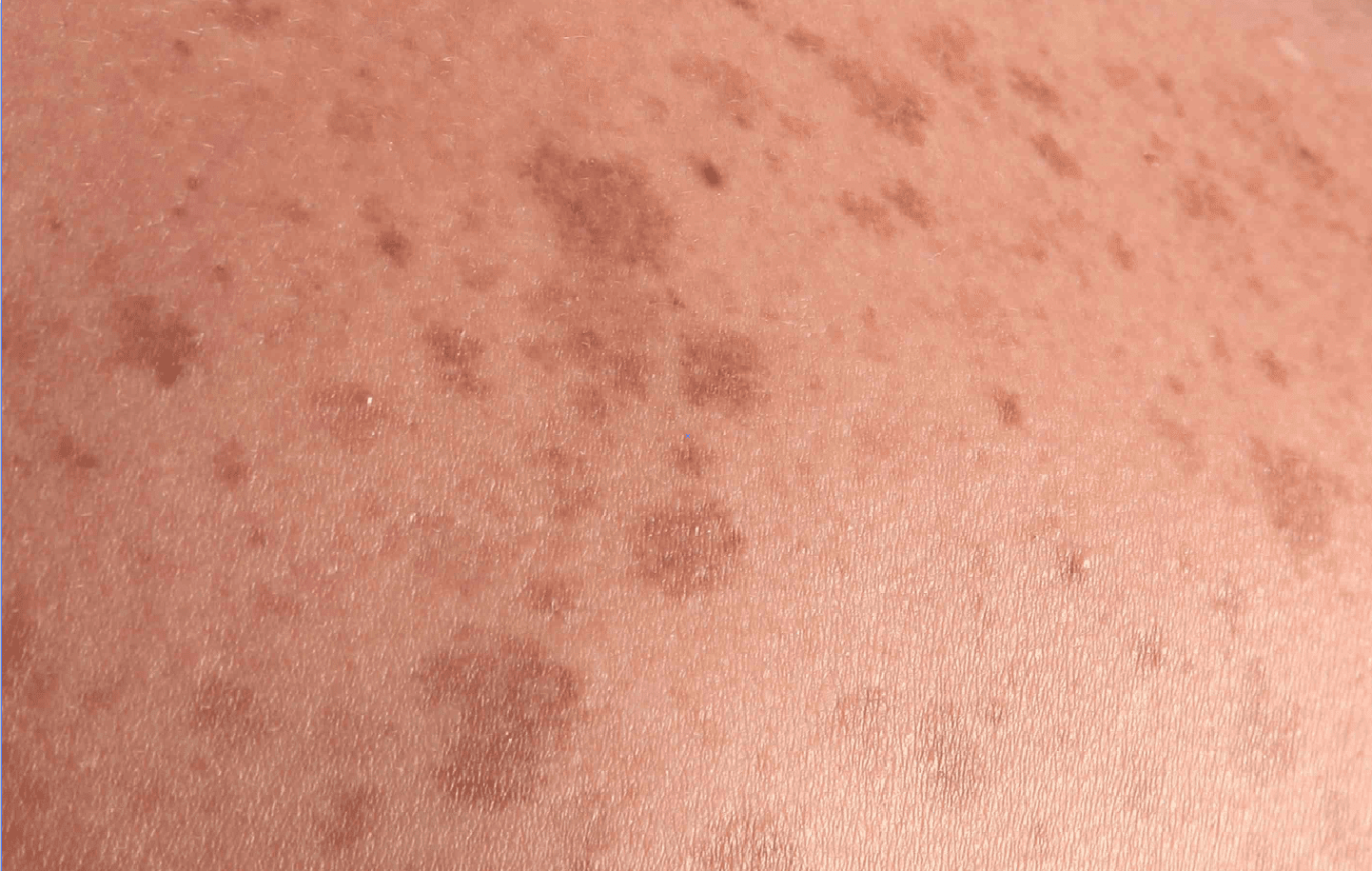
What are solar lentigines?
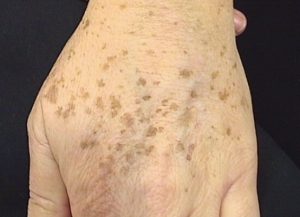
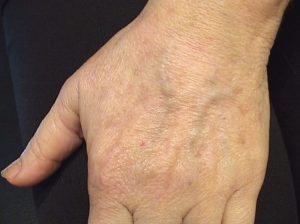
Solar lentigines, senile or actinic, consist of small, well-defined brown macules (spots) located in areas chronically exposed to the sun, especially on the face, the backs of the hands, the upper back and the décolleté. For this reason, they are also popularly called “sunspots” or “old age spots”.
They appear due to the accumulation of ultraviolet radiation throughout life, and histologically they manifest as an increase in the pigmentation of the basal layer of the epidermis, the most superficial layer of the skin. There may be an increase in the number of melanocytes (the cells that give color to the skin), but they do not form nests as happens in moles -melanocytic nevus-. They are completely benign lesions, although they mean that the skin has suffered a high exposure to ultraviolet radiation, so their presence indicates an increased risk of skin cancer.
It is also possible to observe them in young people, especially in the upper back, grouped together and in large numbers as a result of acute sunburns during childhood or adolescence. This clinical sign is important to retain, since acute sunburns in childhood are related to an increased risk of melanoma in the future.
What do solar lentigines look like?
They appear as very well defined, round or star-shaped brown spots , with perfectly healthy skin around them, and of a very variable size: from 1-2mm to several centimeters. They tend to grow very slowly over the years, although some lesions appear suddenly, and others can coalesce and form larger spots.
How are actinic lentigines diagnosed?
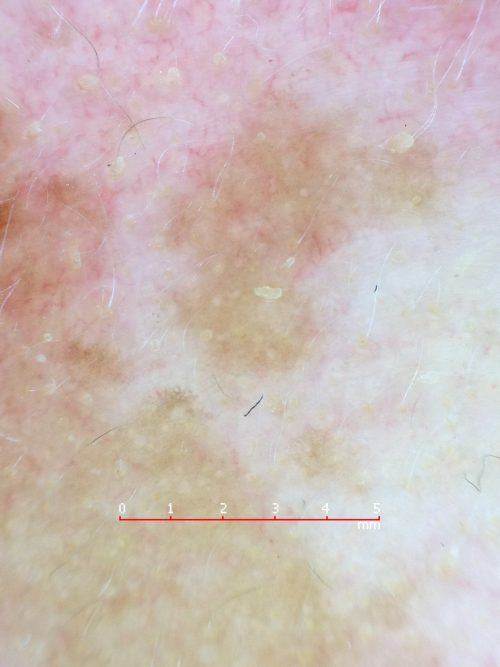
The diagnosis is usually made visually by the dermatologist. However, it is possible to use dermoscopy, a tool that increases diagnostic accuracy. In this, the appearance of the lentigines consists of a well-defined brown spot, with a weak pigmented reticulum, with homogeneous pigmentation or with fingerprint structures. In case of diagnostic doubt, a skin biopsy can be performed, although it is not often necessary.
How are lentigines treated?
Whether or not to treat lentigines is optional, since they do not imply any health problem, but rather an aesthetic one. If you wish to remove them, there are different therapeutic options: peels (for example, trichloroacetic acid), cryotherapy with liquid nitrogen and removal using laser systems. The option to choose depends on the number, location and size of the lesions, as well as the patient’s preferences. Both cryotherapy and trichloroacetic acid peels have a risk of causing residual hypo or hyperpigmentation in the area of the lesion and its surroundings, so their practice requires some expertise and awareness that this complication can occur.
In the author’s opinion, the therapeutic option with the best risk/benefit ratio is laser: this therapy has a high rate of effectiveness, an excellent safety profile in terms of adverse effects, and a very high acceptance by the patient.
What type of laser treats solar lentigines?
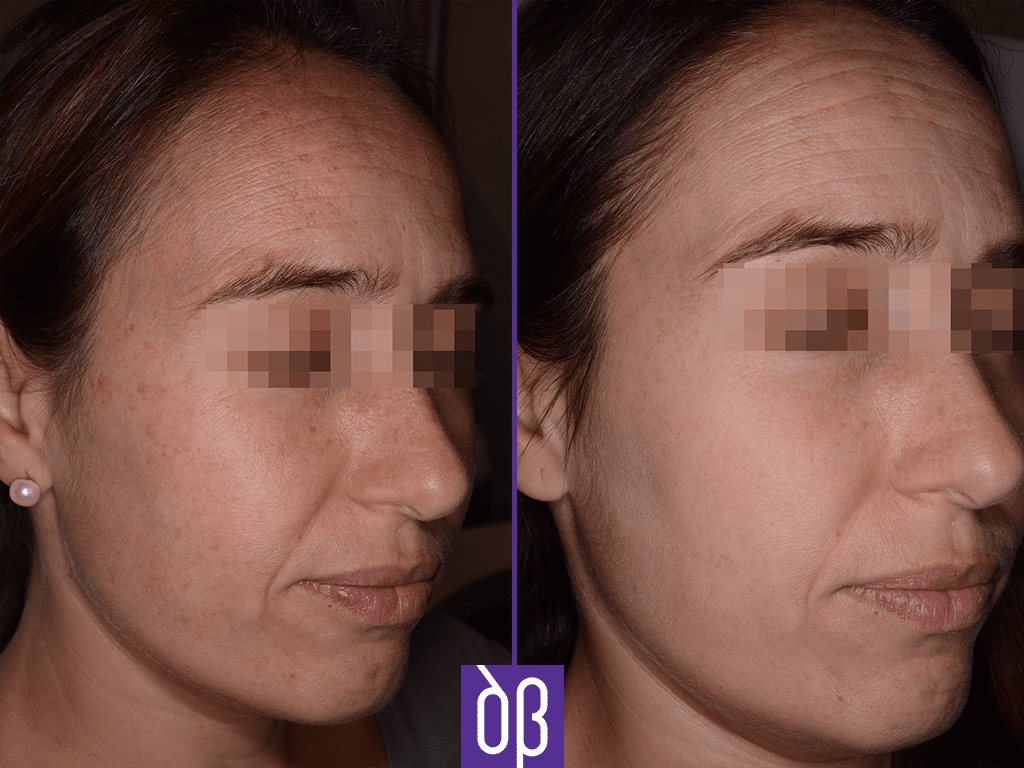
There are different types of devices useful for treating actinic lentigines: theCO2 laser, the argon device, the Nd:YAG 532 nm Q switched laser or the long-pulse Alexandrite device, among others. Currently, the most commonly used systems are the Nd:YAG Q switched laser and pulsed light systems, as they have a high efficiency rate with the best safety profile. Initially, Q switched laser systems were clearly superior to pulsed light systems, but today they obtain very similar results. In favour of pulsed light, it should be said that it allows other signs of photoageing to be treated simultaneously, such as the presence of telangiectasias (capillaries).
RESULT WITH PULSED LIGHT
FREQUENTLY ASKED QUESTIONS
Are solar lentigines skin cancer?
No. Actinic lentigines are benign lesions that do not evolve into skin cancer, although their existence means that the skin has received high exposure to ultraviolet radiation throughout life. For this reason, it is common for other clinical signs of skin ageing to appear in skin with a lot of lentigines and for skin cancers to be more common in them.
Can solar lentigines be transformed into skin cancer?
No. Actinic lentigines are benign lesions.
There is a special type of lentigo, called malignant lentigo – melanoma or Dubreuilah’s disease, which is, in fact, a type of skin cancer (melanoma) that is slowly progressing. It consists of a specific pigmented lesion that is different from the usual solar lentigines, so they are not evolutionarily related.
However, as solar lentigines appear due to a chronic load of ultraviolet radiation, it is common for them to coexist with other types of skin cancer (such as basal cell carcinoma or squamous cell carcinoma), and their presence advises a skin examination in search of pre-malignant or malignant lesions.
What can be done to prevent the appearance of actinic lentigines?
The best therapeutic measure is preventive: avoid intense sun exposure, the use of UVA radiation and use physical sun protection and/or sunscreens with SPF greater than 30 on a regular basis.
Are depigmenting creams useful for removing solar lentigines?
The most effective ones contain hydroquinone and tretinoin, although they require use for months and only manage to clear the lesions, their complete resolution being exceptional. Likewise, it is not uncommon to present local irritation as a side effect of these preparations. In general, the response obtained with the use of depigmenting cream is poor, the treatment requires many weeks and has some irritative potential, so it is not usually recommended overall.
What does laser treatment of solar lentigines consist of?
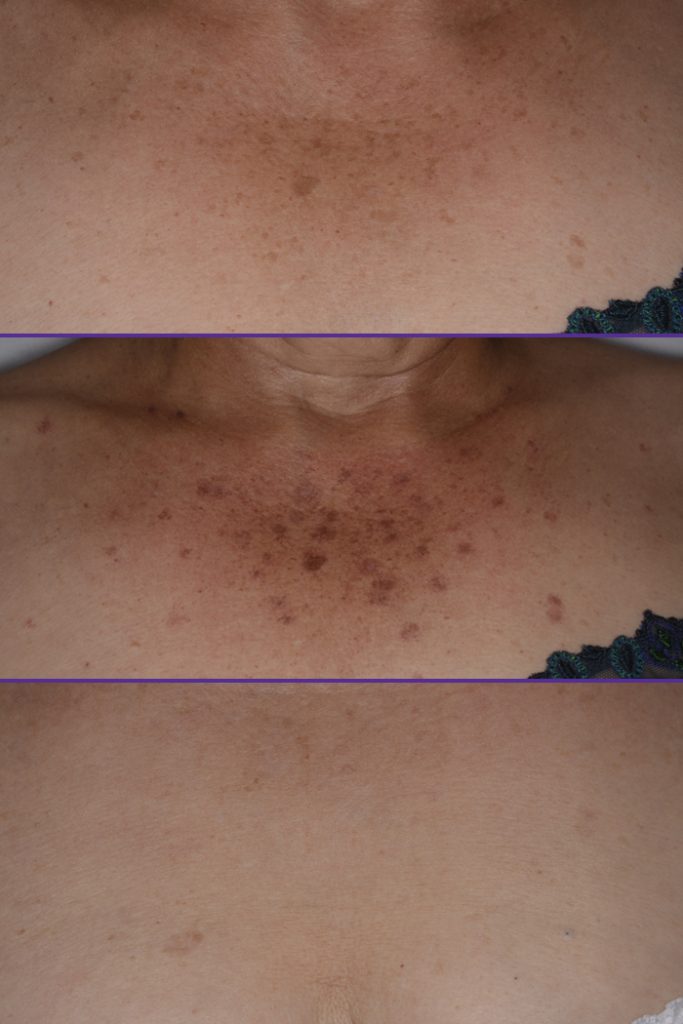
Whether the Nd:YAG switched Q laser is used or a pulsed light system is used, the treatment consists of applying the head of the device to the skin with lentigines. The lesions usually disappear, depending on their number, depth and type of the patient’s skin, after 1-3 sessions. The procedure of removing lentigines is not painful and does not involve the use of anesthesia. In case of having to make more than one lesion, or usually, it is usual to separate them for a minimum period of one month.
Laser or pulsed light systems specifically impact pigmented lesions and these flake off the skin a few days after the sessions (forming a minimal crust or flaking that can be concealed by using moisturizer and/or makeup). Lentigin removal therapy does not require taking time off work and is compatible with the patient’s normal lifestyle. It is strictly necessary to use sun protection for a few weeks after it is performed.
Can laser treatment of solar lentigines be done at any time?
It is recommended that it be performed during the less sunny months, as ultraviolet radiation increases the risk of residual hyperpigmentation in the treated lesions. Sessions are usually practiced during the months of October – March.
Is laser a definitive treatment for solar lentigines?
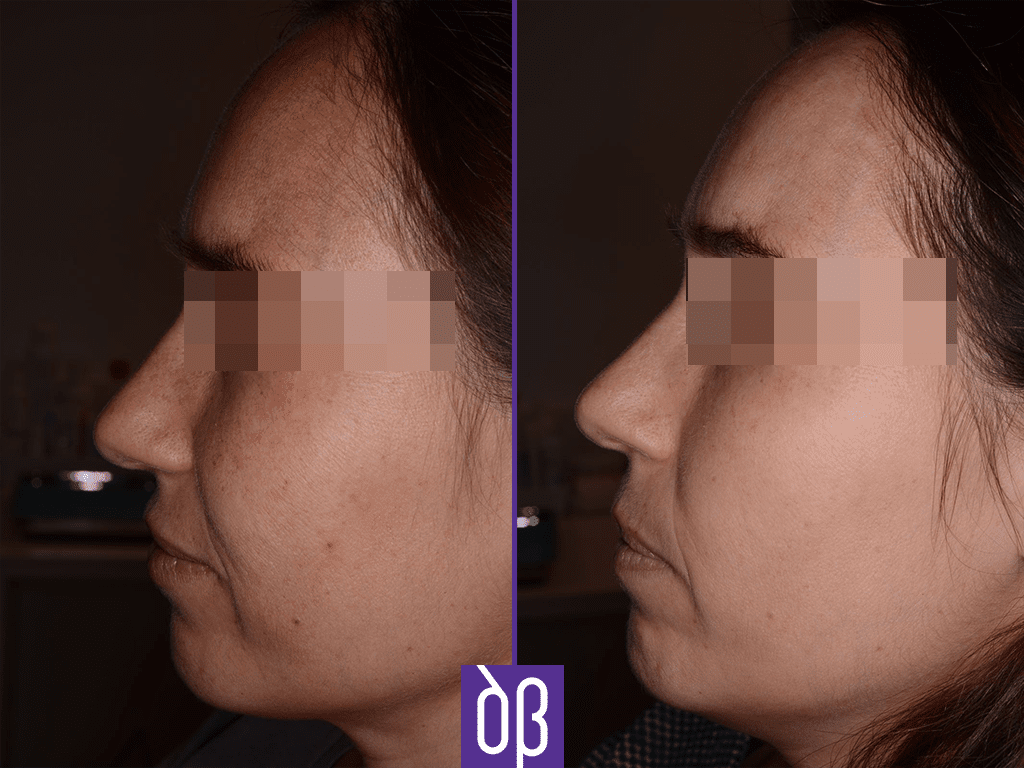
Laser and pulsed light systems eliminate the vast majority of lentigines completely and definitively. However, as lentigines are a consequence of accumulated solar radiation and skin damage already caused, it does not prevent new lesions from appearing after a few years. For this reason, it is imperative to use sun protection and avoid excess ultraviolet radiation.
REFERENCES
· Polder KD, Landau JM, Vergilis-Kalner IJ, Goldberg LH, Friedman PM, Bruce S. Laser eradication of pigmented lesions: a review. Dermatol Surg. 2011 May; 37(5):572-95.