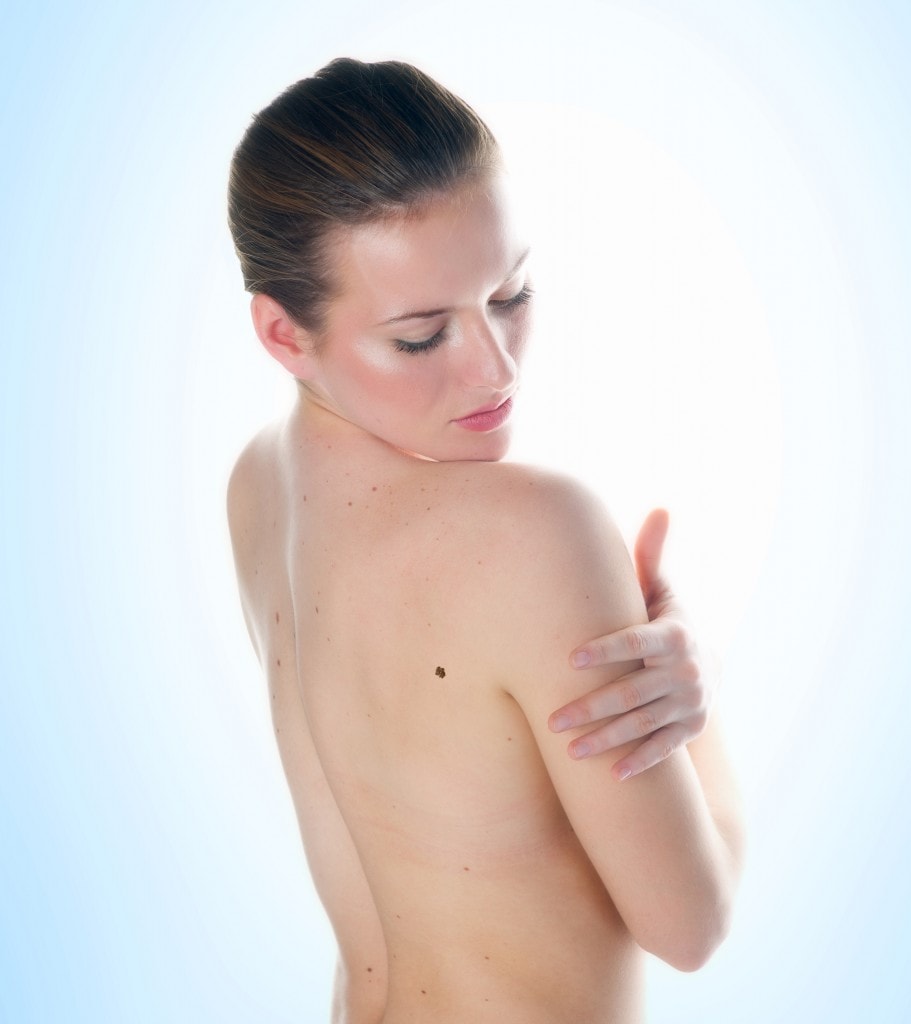
According to the World Health Organization (WHO), skin cancer is the most common cancer in humans.
There are different types of skin cancer, and among the malignant cancers the most common are: basal cell carcinoma, squamous cell carcinoma and melanoma. The latter is one of the most aggressive cancers that exists in men and women, with a high risk of spreading to other organs. For this reason, we must direct all efforts to early diagnosis of it to improve its prognosis and achieve the maximum number of complete cures.
Melanoma derives from melanocytes, the cells that give skin color, and usually manifests as an irregular mole.
WHEN SHOULD YOU SEE A DERMATOLOGIST?
To diagnose melanoma early, the ABCDE algorithm is traditionally used to evaluate moles or freckles.
If any of the following signs are present, you should consult a dermatologist to evaluate the mole:
• A for asymmetry. Those moles that have an irregular morphology, referring to shape, color or surface, meet criteria suggestive of malignancy and should be consulted with a dermatologist for examination.
• B for edges. When the contours of a mole are irregular or poorly defined, there is a possibility that it is malignant.
• C for color. Moles or freckles that are different colors or are very black could correspond to melanoma.
• D in diameter. A size greater than 5-6mm in a mole is a sign of alarm, and therefore it is advisable to consult for a dermatologist to evaluate it.
• E for evolution. Moles that have recently appeared or changed have to be evaluated by the dermatologist.
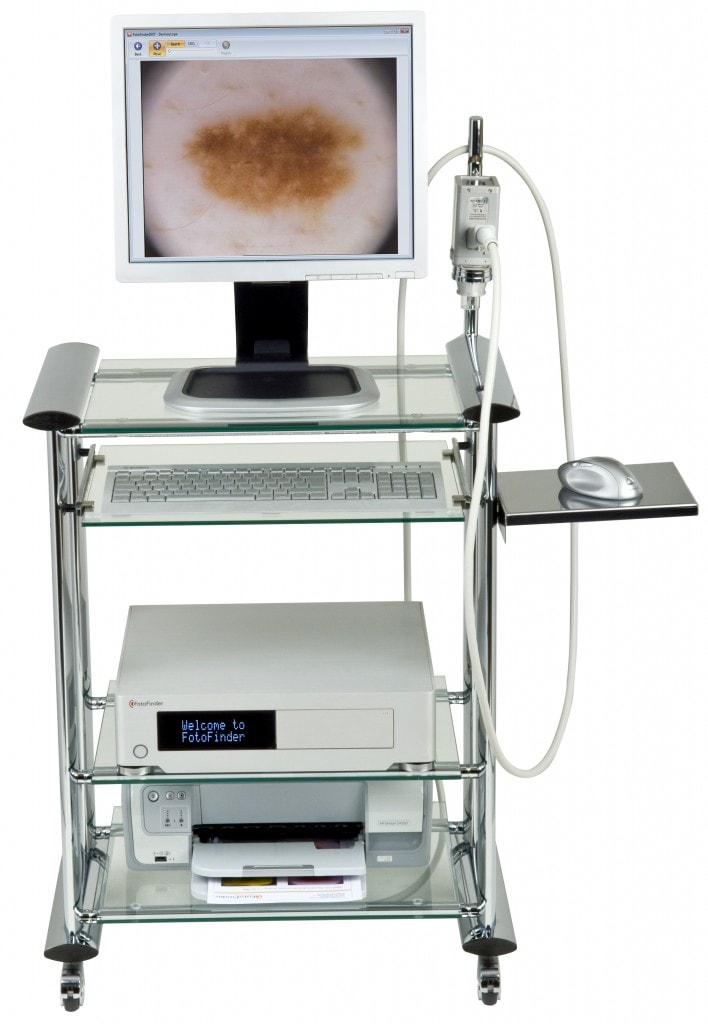
Lesions suggestive of malignancy have to be evaluated by DERMOSCOPY, a completely harmless test for the patient and that allows increasing diagnostic accuracy.
Dermoscopy consists of observing lesions using a magnifying glass with polarized light, connected or not to a computer. Through this, the structure of the lesion and the distribution of pigment can be studied. This tool increases the sensitivity of early diagnosis of skin cancer and improves its prognosis .
In conclusion:
→ Whenever an irregular, black or changing skin lesion is observed, a dermatologist should be consulted.
→ The use of dermoscopy increases sensitivity for the early diagnosis of skin cancer.
→ Early diagnosis of skin cancer allows it to be treated quickly and improves the morbidity and mortality associated with it.