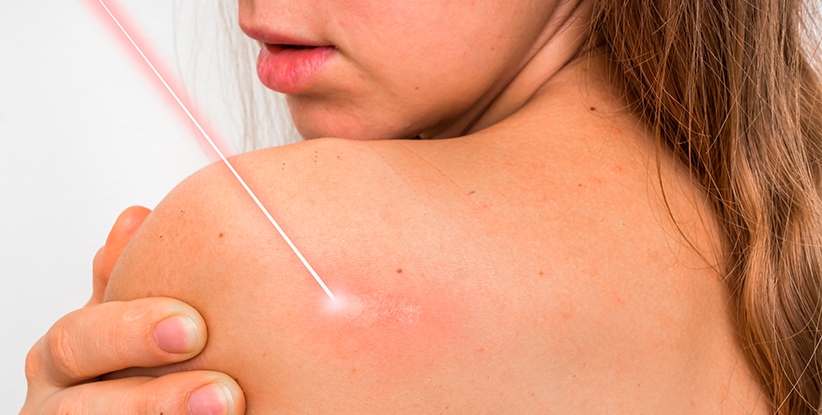
What do we mean by an immature scar?
These are those scars that have not yet expressed their physical characteristics due to the little temporal evolution they have. In general, scars that have not completely passed the remodeling phase, which lasts up to 6 weeks, are considered immature.
What is the interest in treating immature scars?
It has been proven that the application of vascular lasers (pulsed dye or KTP) on the same day as the removal of the stitches improves the aesthetic prognosis of a surgical scar. For this reason, patients with a tendency to hypertrophic scar or keloid scar can benefit from early laser treatment to reduce the risk of their appearance.
When should you start treating a scar?
In the past, it was believed that you should wait 6-12 months after its appearance to perform the revision of the scar, once the healing process is well advanced. This approach is currently considered wrong, since action from the first moment allows inflammatory and scarring phenomena to be redirected to reduce the risk of the appearance of hypertrophic and/or keloid scars. Today there is no doubt that early care (photoprotection, silicone preparations, lasers, cryotherapy) improves the prognosis of a scar. It is currently accepted that treatment should begin during the remodeling phase (normally, the first 6 weeks).
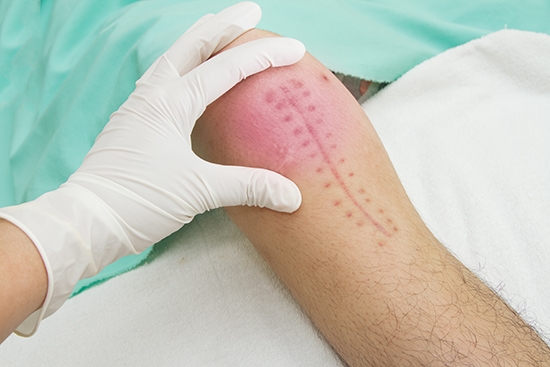
What is the recommended treatment for an immature scar?
Given that it is known that the presence of blood vessels and how collagen is arranged is essential in the initial stages of healing, the use of vascular lasers and those that act on the latter is becoming increasingly important. Vascular lasers reduce the excess of blood vessels that nourish the scar and increase the risk of producing hypertrophy or keloid. Among the vascular lasers, the KTP (532 nm), the pulsed dye (585 -595 nm), and the Nd:YAG (1,064 nm) long or short pulse laser stand out. The main lasers that act on collagen are the ablative fractionated (CO2) and the non-ablative (erbium) lasers, which allow the disposition of this protein to be improved through heat.
According to a 2017 review by Lee and Kim, the optimal option is a combination of vascular laser plus non-ablative erbium laser on the same day as the removal of the stitches and subsequent sessions of the same therapy.
What laser protocol is recommended for immature scars?
Starting on the same day as the removal of the stitches, it is considered that the most appropriate option is to use a vascular laser every two weeks and then a fractional non-ablative erbium laser every three weeks.
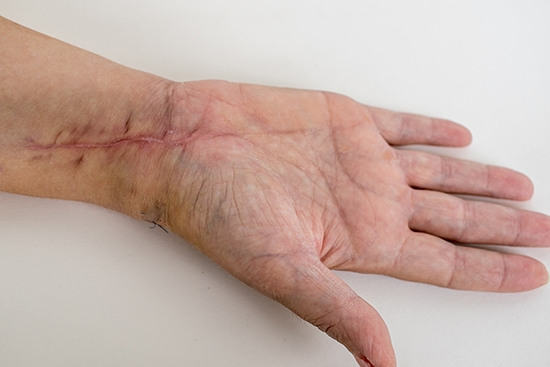
What are the results of combining vascular laser and non-ablative fractional laser in immature scars?
According to Lee and Kim’s 2017 study, 33 immature scars treated with the pulsed dye laser or KTP plus fractional non-ablative laser protocol were analyzed with the aforementioned periodicity. Improvement was scored from 0 (no improvement) to 100 (imperceptible scar compared to normal skin). The mean score was 87.98. 51.5% of the scars reached a score of 100 (complete disappearance).
Regarding influencing variables in the study, facial scars compared to body scars and age less than 15 years were shown as factors with better response. No differences were observed between pulsed dye or KTP lasers.
The number of days between the removal of stitches and the start of treatment has a negative correlation with the response: the earlier the laser treatment, the better the aesthetic prognosis of the scar.
A curious fact is that this study does not detail the average number of sessions to which patients were subjected.
Why does it seem better to combine two types of lasers than to perform scar treatment with a single laser?
There are two crucial phenomena in the mechanism of scar formation: the initial generation of blood vessels and then the formation and placement of collagen. If either or both of these cases occur abnormally, the probability of the formation of a hypertrophic scar or keloid increases. The application of vascular laser regulates the first phenomenon, and the use of non-ablative fractional laser, the second.
REFERENCES
· Lee Y, Kim W. Combination laser treatment for immediate post-surgical scars: a retrospective analysis of 33 immature scars. Lasers Med Sci. 2017 Jul; 32(5):1111-1119.