Part 1: GENERAL INFORMATION AND ROUTE OF TRANSMISSION
What are genital warts?
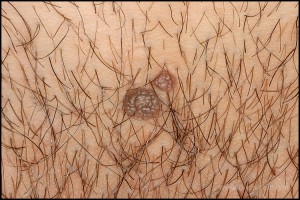
Genital warts, called condylomas acuminata, are the product of infection with the human papillomavirus (HPV), and are perceived as keratotic papules in the shape of a small cauliflower or with a threadlike appearance, which protrude from the skin of the genitals or around them (pubis, perineum, perianal and anal area). Rarely, they can also settle in the oral mucosa. They have the color of the skin or may be whitish or browner.
Why do genital warts appear?
Condylomas are the consequence of infection by the human papillomavirus, which is acquired through sexual intercourse with contact with the mucous membranes (oral, genital or anal) and the skin.
What is the most important thing to know about papillomavirus (HPV) infection?
The most important point to take into account about HPV infection is to know that some of the causative viruses, called high-risk serotypes, have oncogenic potential (they promote the appearance of cancer in the infected region). This is particularly important in the case of women (since HPV is the main risk factor for cervical cancer) and in immunocompromised homosexual men (HPV, rarely, can also cause anal or rectal cancer).
Women infected with HPV have to undergo a gynecological check-up and a cytology to check if there is involvement of the cervix. As for people with infection around or in the anus, it is advisable to undergo an examination of the anus and rectum (rectoscopy) to determine if there are condylomas in the distal part of the colon.
What else should you know about this infection?
HPV infection is the most common sexually transmitted disease today, and it is believed that up to 80% of the general population has come into contact with this virus.
The vast majority (90%) of people who come into contact with the virus manage to eliminate the infection naturally and will never manifest the disease. The remaining 10% who contact the virus become infected and will develop warts. Most condylomas are caused by viruses with NO oncogenic potential (low-risk serotypes), which only cause warts without there being a risk of degeneration to cancer. In conclusion, the risk of this infection leading to cancer is low. However, it is necessary to consult a dermatologist and undergo treatment.
How is HPV spread?
The human papillomavirus is transmitted sexually: during intercourse, the skin and mucous membranes (oral, genital, anal) of a person are exposed to the skin and mucous membranes of another person, which may have a sufficient amount of HPV to spread the infection to the former. Contagion occurs through physical contact, since this virus does not circulate in the blood or in the semen.
Up to 70% of subjects who contact an infected person will manifest genital warts. To be infected, it is not necessary for the infecting subject to have visible warts: the most frequent is the asymptomatic HPV carrier status (without visible lesions).
Rarely, they can be transmitted from mother to child at the time of delivery, or by self-inoculation by the same subject.
How long does it take for warts to appear after infection?
The fact of suffering from HPV infection does not necessarily imply having condylomas: it is possible to be a carrier of the virus and never have had any manifestation in the form of warts. In fact, this is the most frequent situation.
In the same way, it is impossible to predict the incubation time between the risk contact and the appearance of warts, since this period is very variable between people and is influenced by many factors: the amount and aggressiveness of the virus subtype, the subject’s immune response, genetic factors, age, gender, suffering from other diseases…
It is impossible or very difficult to establish a chronological relationship between sexual contact and the appearance of warts.
Is it a dangerous disease?
In the vast majority of cases, it has no effect on the person’s health. Up to 90% of the infected population does not show any symptoms, does not have condylomas, or does not require any treatment. However, some subtypes of viruses do have a risk of causing cancer in the area where they settle. This means that, if a genital wart is detected, a dermatologist must be consulted for diagnosis and treatment.
You can watch this video, where Dr. Dídac Barco explains more details about HPV infection:
→ Click here to learn how condylomas are diagnosed and treated.
REFERENCES
· Scheinfeld N, Lehman DS. An evidence-based review of medical and surgical treatments of genital warts. Dermatol Online J. 2006 Mar 30; 12(3):5.
· Tchernev G. Sexually transmitted papillomavirus infections: epidemiology pathogenesis, clinic, morphology, important differential diagnostic aspects, current diagnostic and treatment options. An Bras Dermatol. 2009 Aug; 84(4):377-89.
Acknowledgements
To Dr. Leo Barco for the clinical image. Check out his online Dermatology Atlas at www.dermafoto.com.