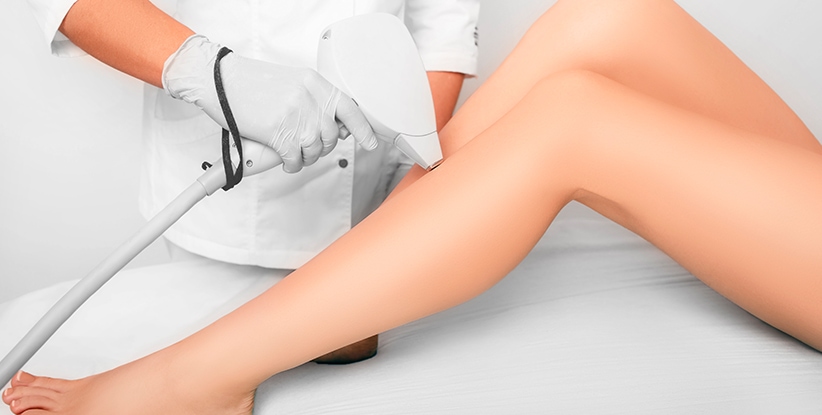
I’ve had a laser hair removal and I’ve seen that the moles have been burned, they’re darker. Is that bad?
Both the Alexandrite and diode laser systems and the pulsed light aim to impact melanin, which is the natural pigment of the skin. This is especially concentrated in hair follicles (hair and hair) and also in moles or freckles (melanocytic nevus).
When the laser hits melanin, it destroys the structure that contains it: in the case of hair removal, the hair. If by accident the laser head is passed over moles, they can be destroyed by the action of light on the large amount of pigment they contain.
The removal of moles during laser hair removal is not recommended in any case. Although this does not imply the malignancy of a melanocytic nevus, it is possible to mistakenly destroy a part of a malignant or pre-malignant pigmented lesion , thus hindering its early diagnosis and therefore worsening its prognosis. Cases have been described in which a melanoma (cancer derived from melanocytes) has been accidentally destroyed, masking its early diagnosis until the presentation of metastasis (expansion to other organs) by it.
For these reasons, it is never recommended to remove a flat melanocytic nevus with an Alexandrite laser, diode or pulsed light. We will only use theCO2 laser in case of an intradermal melanocytic nevus (confirmed with biopsy or dermoscopy) to remove the base of the nevus.
To avoid the accidental destruction of moles with hair removal, it is absolutely essential to protect them during the session, either with a small dressing or by painting them with white pigment to shield the underlying melanin.
Before removing a pigmented skin lesion, consult with a dermatologist to confirm what type of lesion it is and what the best option is to perform it.