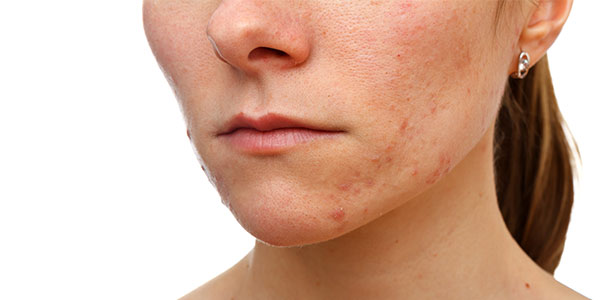
Treating acne scars with radiofrequency or laser
In recent years, there has been a growing interest in devices and techniques that allow a quick and discreet recovery after the medical procedure. In 2004, non-ablative fractional lasers were introduced, which allow increasing collagen synthesis in acne scarring defects without the formation of the crusts and erosions associated with the CO2 ablative fractional laser. However, although recovery after a non-ablative laser session usually lasts only a few hours (in which redness and slight swelling are observed), it is true that it is a less efficient device than the ablative laser. For this reason, new technologies have been appearing that try to maintain a comfortable postoperative period and high efficiency. Among these technologies is radiofrequency.
Are radiofrequency and fractional non-ablative laser effective in treating acne scars?
Yes, without a doubt. There are countless scientific publications that endorse the effectiveness of both systems in this indication. Its reason for being is the convenience of the treatment and the short recovery period needed after either of these two procedures (usually hours). However, it is true that today the best treatment that exists for acne scars in terms of effectiveness and efficiency is the fractional CO2 laser: it is still the gold standard with which all other therapies are compared. However, the fact that after a session a re-epithelialization period of 7 – 14 days is necessary is a drawback to be kept in mind, and that motivates the search for other alternatives.
Are there any comparative studies between radiofrequency and non-ablative fractional laser for the treatment of acne scars?
Yes. In the most important study, by Chae et al., the results of four sessions of radiofrequency with needles and non-ablative fractional laser were compared in forty subjects separated by four weeks. The evaluation of effectiveness was carried out two months after the end of the treatment.
Which treatment is more effective for acne scars, radiofrequency, or fractional non-ablative laser?
In the aforementioned study, the improvement achieved in the group treated with non-ablative fractional laser was 25%; in the group treated with radiofrequency with needles it was 18.6%. Boxcar scars and rolling scars were the ones that experienced the greatest improvement. Icepick scars did not show any improvement in both groups. However, fewer adverse effects were observed in the radiofrequency group than in the non-ablative fractional laser group (adverse effects being understood as temporary redness and swelling).
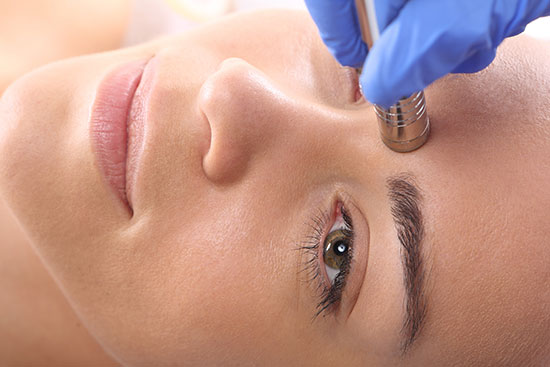
Based on these studies, when is radiofrequency indicated in the treatment of acne scars?
In those mild cases where it is not necessary to use more effective and efficient techniques, and where a very comfortable postoperative period prevails. In patients with moderate or severe acne scars or that combine lesions on ice picks or in a large van (most cases), radiofrequency will be insufficient and the use of fractional lasers (ablative or non-ablative depending on each case) would be chosen.
REFERENCES
· Woong Suk Chae, Jun Young Seong, Ha Na Jung, Sook Hyun Kong, Min Ho Kim, Ho Seok Suh, Yu Sung Choi. Comparative study on efficacy and safety of 1550 nm Er:Glass fractional laser and fractional radiofrequency microneedle device for facial atrophic acne scar. Journal of Cosmetic Dermatology, 14, 100-106.