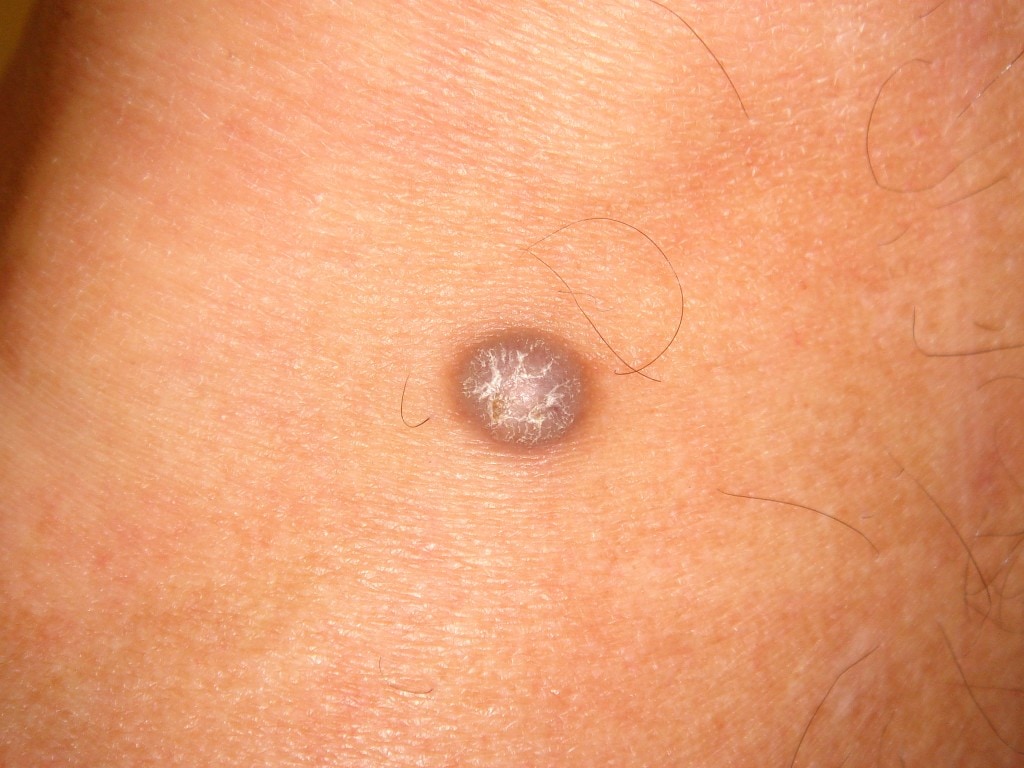
What is a dermatofibroma?
Dermatofibroma (or benign fibrous histiocytoma) is a benign skin tumour caused by an excessive proliferation of fibrous tissue in the dermis, the middle layer of the skin.
Is it dangerous?
No. Common dermatofibromas do not have the potential for malignancy and are not contagious.
What does it look like?
They usually manifest as macules (spots), papules (palpable lesion) or nodules (lesion under the skin) of a brown or purplish color, 0.5-1 cm in diameter, set in the skin. It is characteristic that they are indurated to the touch and that they are included within the skin: when pinched they usually go inwards and form a visible depression (“hojal sign“).
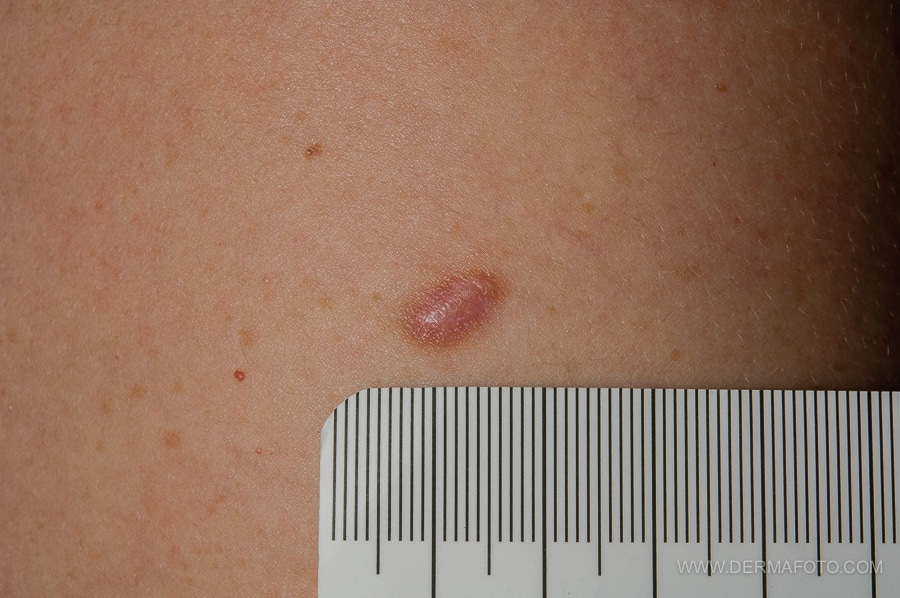
What symptoms does a dermatofibroma cause?
In general, they are asymptomatic lesions, although occasionally they can cause pain or itching. If they settle on the legs, they may cause discomfort with waxing, they may become irritated and even bleed.
How has it evolved?
They usually remain static for many years and their growth rate is very slow or non-existent. However, there are some rare variants that can grow rapidly without this implying malignancy of the lesion.
Where do dermatofibromas appear?
The most common area of settlement is the lower extremity, although they can be located anywhere on the body where there is skin.
Who can have it?
Dermatofibroma is a very common lesion in the general population. They usually appear in young girls and are frequently located in the lower limbs. The frequency of occurrence ratio between men and women is 1:4.
Why do dermatofibromas appear?
The reason why they appear is unknown, although it is considered that it could have a traumatic origin, such as an insect bite or the formation of a small cyst from a hair follicle.
How is it diagnosed?
The experienced dermatologist is usually able to diagnose it by visual examination and palpation of the lesion (hojal sign). In recent years, dermoscopy has provided a great increase in diagnostic accuracy, since the typical dermatofibroma has a characteristic appearance that the professional knows how to interpret, a thin peripheral dark reticulum with central sclerosis. In case of diagnostic doubts, it is possible to perform a skin biopsy under local anesthesia for examination under a microscope, although this maneuver is not usually necessary the vast majority of cases.
What is the treatment for dermatofibromas? Do they need to be treated?
It is not strictly necessary to treat dermatofibromas, as they do not cause health problems beyond the unsightly appearance they may have or the itching or pain they rarely cause.
The most effective and only recommended treatment is extraction by outpatient surgery under local anesthesia.
Do dermatofibromas involve any kind of health problem?
The vast majority of cases have not. Classically, they have been associated with systemic lupus erythematosus, HIV infection or other rare diseases when they are very numerous and appear suddenly and progressively. At present, this phenomenon is exceptional and generally has no implications for the patient’s health.
Can dermatofibromas disappear spontaneously?
Very rarely. They usually remain stable or grow slowly, and it is anecdotal that they disappear without treatment.
REFERENCES
• Pierson, J. “Dermatofibroma”. Emedicine: http://emedicine.medscape.com/article/1056742-overview
ACKNOWLEDGEMENTS
To Dr. Leo Barco for the second clinical image. Check out Dermafoto, the online dermatology atlas.