What is necrobiosis lipoid?
What is necrobiosis lipoida and why does it appear?
It is a chronic inflammatory disorder of the dermis, the intermediate part of the skin. It is of unknown cause, although it is known that granulomas form at its inflammatory base, degenerate dermal collagen and thicken the walls of the blood vessels of the skin. It is also known that it can be associated with some internal diseases, mainly diabetes mellitus (especially insulin-dependent diabetes). Other less frequent associations of necrobiosis lipoids are sarcoidosis, inflammatory bowel disease, autoimmune thyroiditis, rheumatoid arthritis or monoclonal gammopathy.
Why does necrobiosis lipoida appear?
The exact reason is unknown , although it is believed that there is an underlying cutaneous microangiopathy (alteration of the small blood vessels) resulting from the deposit of glycoproteins in the vascular walls.
What does necrobiosis lipoida look like?
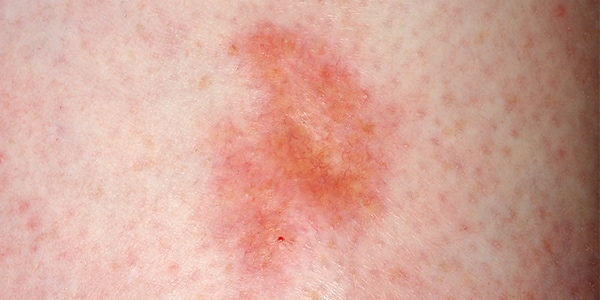
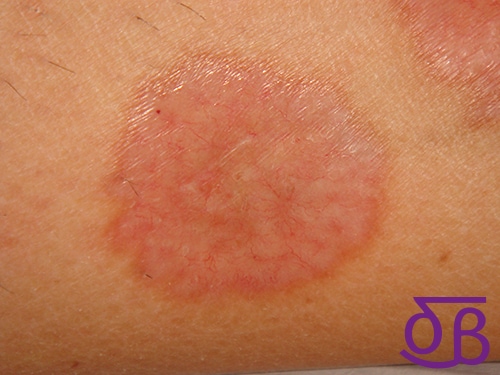
It consists of the appearance of yellow-orange papules and plaques that coalesce to form larger lesions. Its edges are more active, with greater erythema, and the center has an atrophic appearance reminiscent of wax. Inside it is possible to see, by transparency, telangiectasias (blood vessels). The typical area of appearance is the pretibial region of the legs, although it is possible to observe the lesions in other areas. In general, necrobiosis lipoidic is asymptomatic, although up to 25% of patients suffer from pain, especially if the lesions ulcerate. The appearance of ulcers occurs in up to 35% of cases and they are resistant to healing.
How is necrobiosis lipoida diagnosed?
Clinical diagnosis (observation and examination) by the dermatologist is usually sufficient. If in doubt, a skin biopsy can be performed under local anaesthesia, although caution should be exercised as the wound caused by the procedure may be particularly stubborn in healing.
Is it very common? Is it always associated with diabetes?
No. Classically, it is related to diabetes up to 60% of the time. However, only diabetes has an incidence of 0.3 – 1.2% in patients with diabetes. It usually appears around the third decade of life in patients with type I diabetes and in the fourth decade in cases of type II diabetes. It is more common in women.
Does necrobiosis lipoidic usually appear before or after the diagnosis of diabetes in associated cases?
Necrobiosis lipoids precede the diagnosis of diabetes in 14% of cases, are diagnosed simultaneously in 24% and after the diagnosis of diabetes up to 62% of the time.
What is the relationship between glucose levels in diabetic patients and the course of necrobiosis lipoid?
Although the relationship between the control of diabetic patients’ glycemic levels and the course of lipoid necrobiosis was previously considered very relevant, this proportional relationship cannot be assured. However, although it is not an essential factor for the course of lipoid necrobiosis, glycemic control must still be strict in diabetic patients to reduce the risk that hyperglycemia poses to metabolic and cardiovascular health.
Is there a genetic predisposition to necrobiosis lipoid?
No study has been able to find a genetic predisposition for this skin disease.
Is necrobiosis lipoidic related to skin cancer?
No. However, cases of degeneration to cutaneous squamous cell carcinoma have been described in cases of uncontrolled long-term lipoid necrobiosis. This eventuality, however, is exceptional.
How is necrobiosis lipoida treated?
It is a disorder that is difficult to treat, as there are no large studies that clearly support a therapeutic approach. However, the cornerstone in the initial treatment of necrobiosis lipoids are topical, intralesional (injection) and/or oral corticosteroids . The use of corticosteroids should be carried out exclusively by dermatological prescription, as caution should be exercised because of the possible worsening of the skin atrophy they can cause. If it is considered that topical corticosteroids are not indicated, calcineurin inhibitors (tacrolimus or pimecrolimus) and/or tretinoin can be used.
Other immunomodulators that have shown efficacy are cyclosporine and mycophenolate mofetil.
Phototherapy with psoralenes and ultraviolet A radiation (PUVA) seems to be a safe and effective therapeutic option, and is especially useful in patients with extensive lesions. There are specific cases successfully treated with pulsed dye laser and fractional CO2 laser , although caution is recommended in its use. Other options based on light therapy, such as photodynamic therapy, have not shown efficacy.
Anecdotally, other oral drugs such as stanozolol, ticlopidine, pentoxifylline and clofacimin have been used successfully. Among the second-line options, etanercept, thalidomide or intralesional infliximab stand out. Some antiplatelet agents such as acetylsalicylic acid and dipyridamole have not demonstrated efficacy.
REFERENCES
Reid SD, Ladizinski B, Lee K, Baibergenova A, Alavi A. Update on necrobiosis lipoidica: a review of etiology, diagnosis, and treatment options. J Am Acad Dermatol. 2013 Nov; 69(5):783-91.