
What is it?
Seborrheic keratosis is a benign proliferation of cells in the epidermis, the outermost layer of the skin. It is part of the normal process of skin aging and does not pose any risk to the patient.
What does it look like?
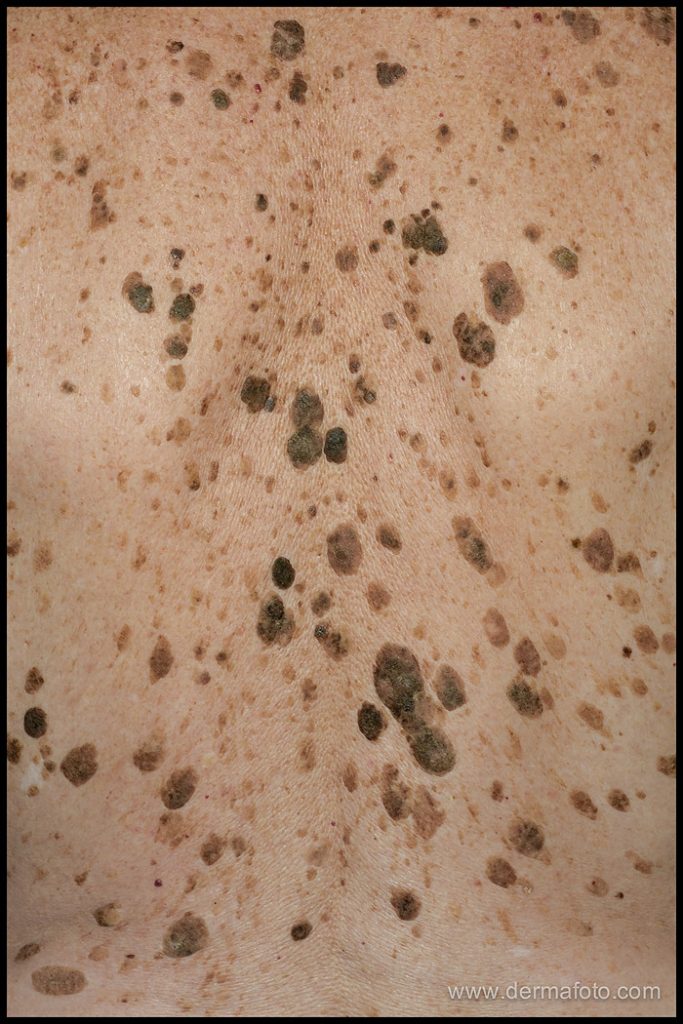
It consists of a brown macula or papule (raised spot or lesion, respectively), with well-defined edges and a rough or verrucated surface. They usually appear to be attached to the skin, which gives them an appearance reminiscent of dry mud. The size of each of the lesions is very variable, although they usually move between 5 and 10 mm. Although the appearance described is the most frequent, they can take on a more yellowish, reddish or completely black tint; and they can appear with flaking or pedicles.
Where do they appear?
Seborrheic keratosis can appear anywhere on the body that has skin, except on the palms and soles. It should be noted that those located on the mucous membranes (oral, genital, ocular) are exceptional. They are often located on the face, scalp and trunk. They can appear in isolation, although it is common for several to be observed simultaneously in the same patient.
Who can have it?
Some studies have observed that 100% of the subjects included have some seborrheic keratosis, as they are part of normal skin aging. They are usually more frequent after the age of 50 and increase in incidence as age advances. Black individuals may present with a specific variant called “papulosa nigra dermatosis”, in which multiple black seborrheic keratoses, 1-5 mm, appear grouped on the face, neck and/or upper trunk.
Why do they appear?
In principle, it is accepted that the main risk factor is the passage of time, although it seems that they may also be related to sun exposure and a genetic predisposition.
How is it diagnosed?
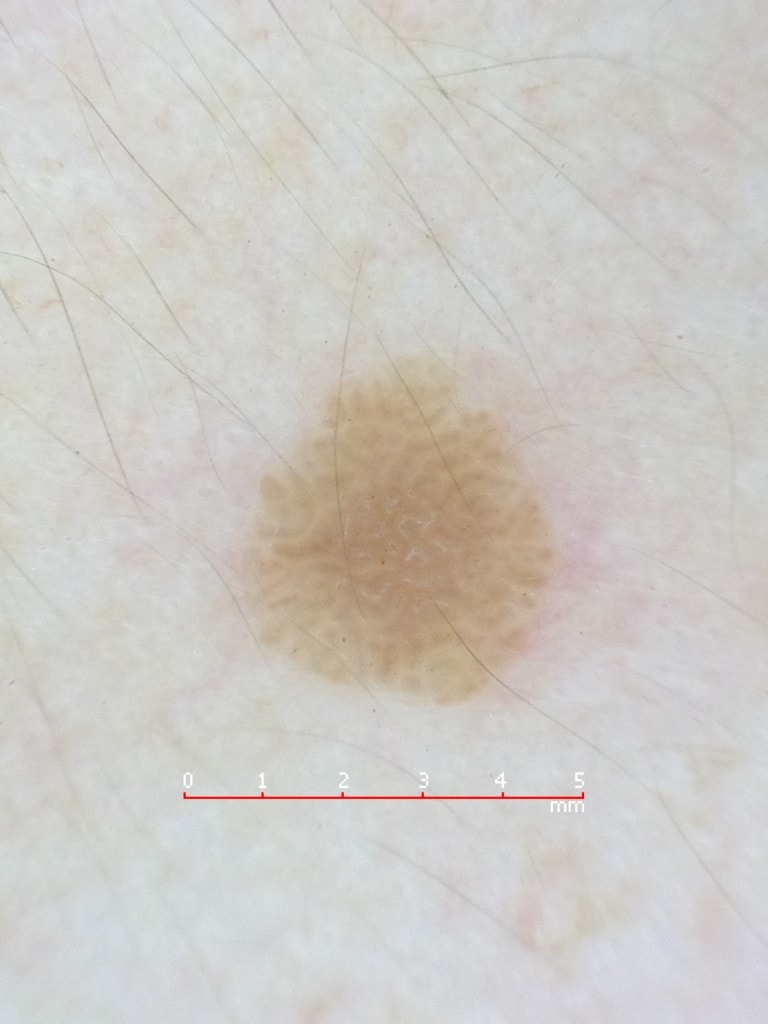
Usually the diagnosis is visual, since the usual dermatologist is able to recognize the lesion immediately. In cases of doubt, the observation of Dermoscopy or Epiluminescence allows the diagnosis to be precise in most cases, since seborrheic keratoses present very characteristic signs. In rare cases, a biopsy is necessary to reach an accurate diagnosis.


How are they treated?
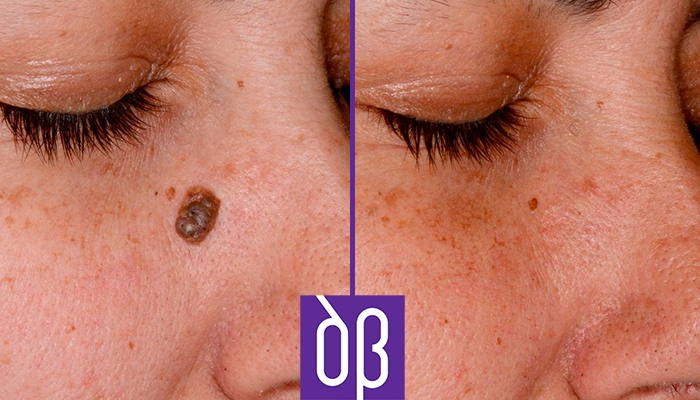
The treatment is not mandatory, as they do not cause any alteration in the patient’s health. They are usually removed for aesthetic reasons or minor discomfort (itching or rubbing against a piece of clothing). There are numerous methods available for the elimination of seborrheic keratoses, including destruction by liquid nitrogen (cryotherapy) or electroscalpel, curettage with a spoon and vaporization by laser of CO2 or YAG, among the most common and which yield more favorable aesthetic results. All of them obtain a similar final response. Whatever the procedure chosen, it is necessary to be cautious to avoid scarring and hyperpigmentation in the treated area, especially if they are treated in patients with dark skin (phototypes III or higher).
The author of the article recommends removal by cryotherapy with a contact tip or 1mm spout, or using the CO2 laser for particularly delicate areas. The preference has to aim for an excellent aesthetic result with minimal discomfort for the patient. Regardless of the method used, sun protection with SPF above 30 is strictly mandatory in exposed areas in sunny months.
FREQUENTLY ASKED QUESTIONS
Are seborrheic keratoses warts?
Although other names are ‘senile wart’ or ‘seborrheic wart’, this terminology leads to confusion. A wart is a skin lesion resulting from infection by the human papillomavirus, and seborrheic keratoses have no such origin or relationship with this virus. Strictly speaking, we must say that they are not warts as such.
Are they bad?
No. These are benign skin tumors, with no potential to degenerate into skin cancer. The only problem they provide is aesthetic, or they can cause itching when irritated.
Do they spread to other people?
No, since they are not caused by any infectious agent.
Do they need to be treated?
No, it is not necessary. However, the vast majority of people feel more comfortable removing them so that they do not cause any aesthetic alteration.
Do they disappear on their own spontaneously?
Occasionally, yes. It may be that they come off due to the friction itself, or it may be that they become inflamed and the patient’s own immune system eliminates them (when this phenomenon occurs they are called “benign liqenoid keratoses”). In these cases, it is normal for them to become reddish and cause itching for a few days before disappearing.
What is its relationship with cancer?
Very rarely, the sudden onset of numerous seborrheic keratoses in an extensive manner has been linked as a reflection of an underlying cancer (paraneoplastic syndrome). This phenomenon, called the Leser-Trelat sign, is exceptionally rare, and can be seen in neoplasms of the digestive tract and in some lymphomas.
Is it possible for them to appear on the genitals?
Yes. In fact, it is not an area where they rarely appear, and sometimes it is a diagnostic challenge as they can be easily confused with genital warts caused by the human papillomavirus (HPV). In these cases, when in doubt, it is advisable to perform a histological study (biopsy) of the doubtful lesion in order to proceed with the most appropriate treatment. It should be remembered that condylomas are contagious and have a minimal risk of degeneration to cancer – especially in women – things that do not occur in the case of seborrheic keratosis.
REFERENCES
· Hafner C, Vogt T. Seborrheic keratosis. J Dtsch Dermatol Ges. 2008 Aug; 6(8):664-77.
ACKNOWLEDGEMENTS
To Dr. Leo Barco for the clinical images, extracted from the Dermafoto online Dermatology atlas.