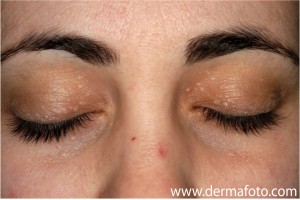
What are syringomas?
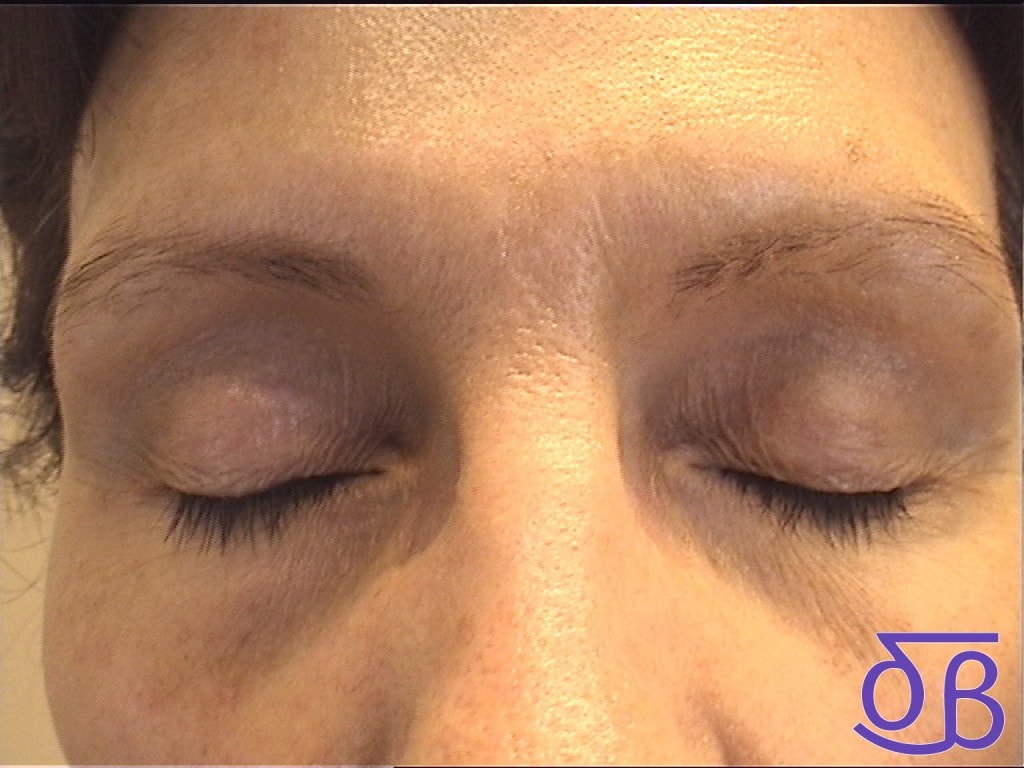
They are benign proliferations of the eccrine glands of the skin. They are often located around the eyes, in variable numbers, in the form of small whitish papules (“pimples”) 1-3mm in diameter.

Where do they appear?
The most common site is around the eyes: on the eyelids and just below, although they can rarely also be found on the scalp, forehead, cheeks, armpits and genitals. In other areas they are stranger.
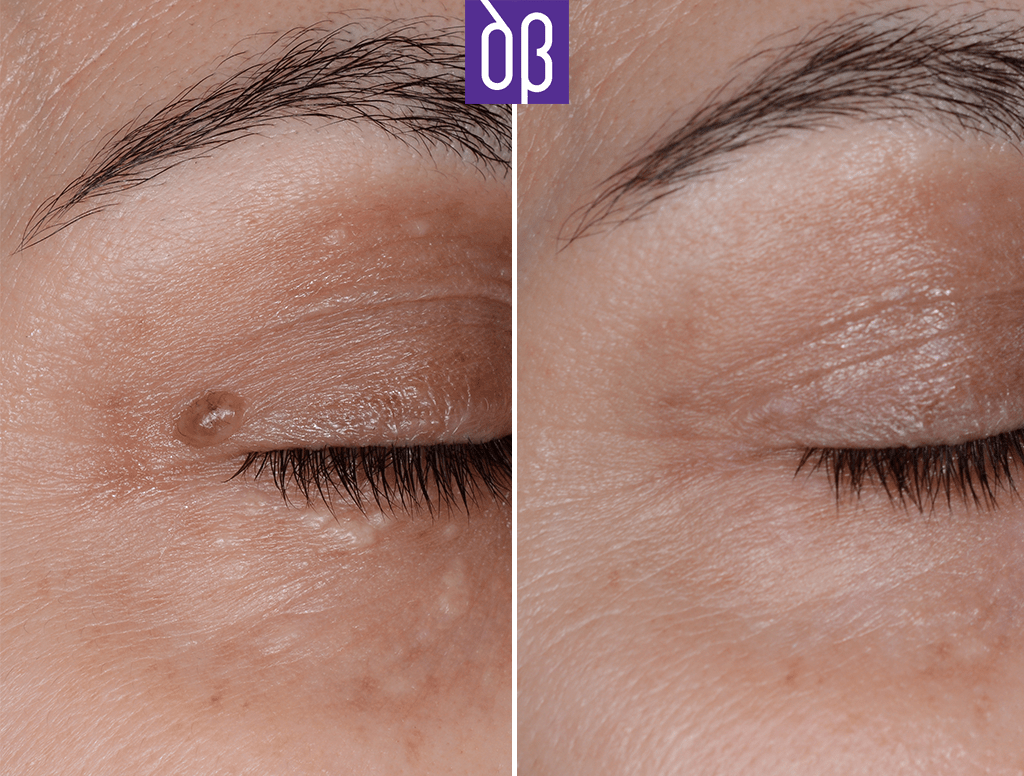
Do they have evil potential?
No. Syringomas are benign lesions and do not evolve into any type of neoplasm. They are an aesthetic problem exclusively, so they can be eliminated or not.
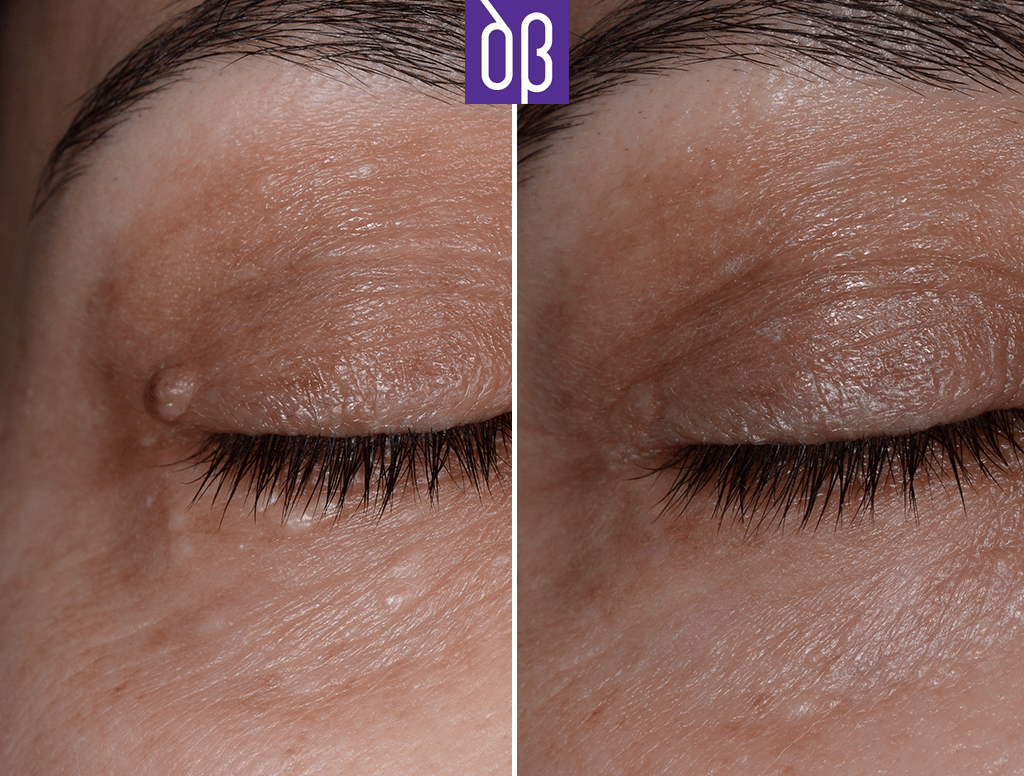
How do you remove syringomas?
Syringomas should be treated at the dermatologist’s office. Their extraction can be performed with different methods: surgery, electrocoagulation, dermabrasion, curettage and vaporization withCO2 laser. The technique that offers the best aesthetic results is the superpulsed CO2 laser, since it is highly precise, sends only the minimum amount of energy necessary on the skin and the removal of the lesion causes practically no injury to the healthy epithelium. Precisely for these reasons, it does not require the application of local anesthesia as is mandatory with other techniques. The application of an anesthetic cream is enough. In this way, the patient is spared pain from the injection of anesthesia and the risk of bruising from the procedure is minimized.
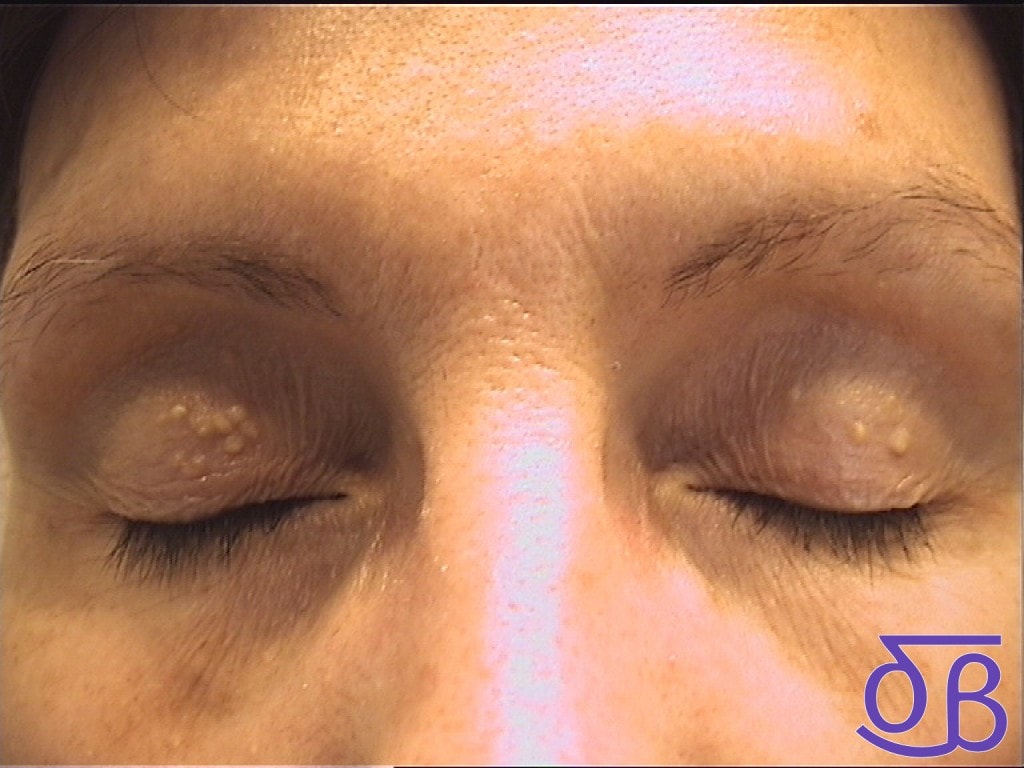
What happens after laser syringomas are removed?
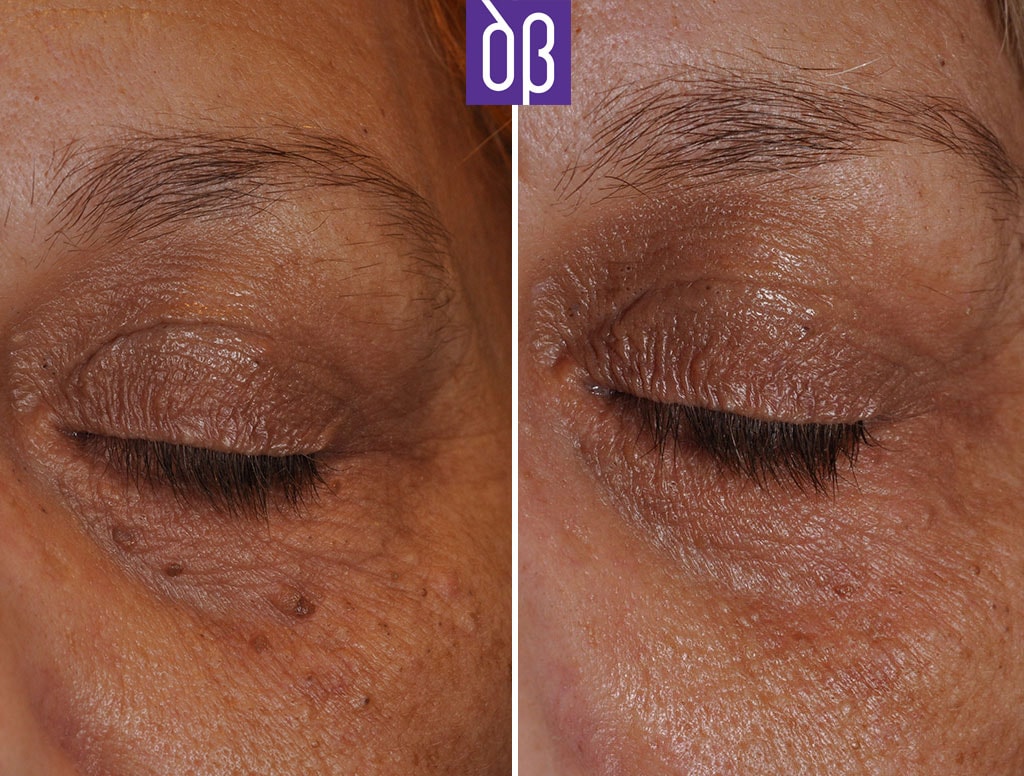
After removing the syringomas withCO2 laser in the treated areas , crusts of 1-3mm or minimal pink erosions appear that fall spontaneously over a period of days or weeks. During this period the patient can lead a normal life and only remember to use SPF 50 sunscreen. It is possible to use eye contours and makeup. In the studies carried out with this technique, there have been no cases of residual hypopigmentation or hyperpigmentation or subsequent scars .
Can syringomas reappear onceCO2 laser removed?
It is rare for the same treated lesions to reappear, and in follow-up studies of up to two years there have been no cases of recurrence. However, it should be known that the laser does not stop the tendency of the skin to form new syringomas, and it is possible that after a few years new syringomas that have appeared will have to be removed.
What other types of lesions can be removed with theCO2 laser?
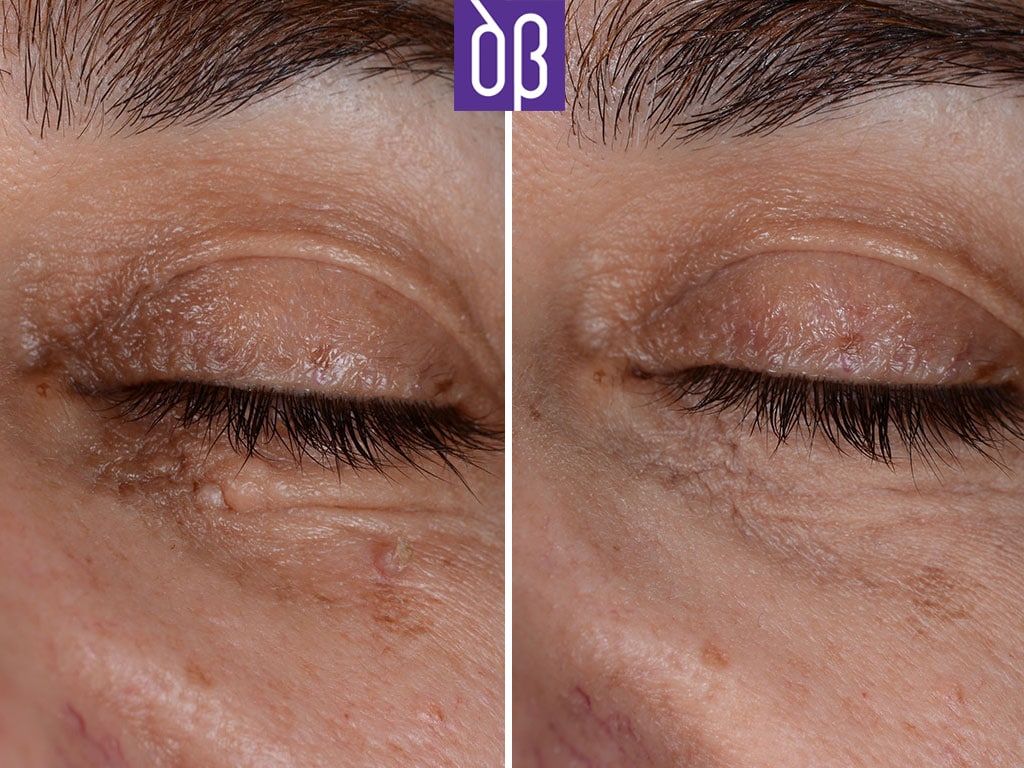
SuperpulsedCO2 laser treatment achieves excellent aesthetic results in the removal of milium cysts, seborrheic keratosis, fibroids , and other protruding lesions on the surface of the skin, especially in the most delicate areas of the body, such as around the eyes, nose, mouth, armpits, and genitals.
REFERENCES · Wang JI, Roenigk HH Jr. Treatment of multiple facial syringomas with the carbon dioxide (CO2) laser. Dermatol Surg. 1999 Feb; 25(2):136-9.