
Treatment of hypopigmented scars
What is a hypopigmented scar?
Hypopigmented scars are a relatively common complication after trauma, a surgical or cosmetic procedure or a burn. They consist of the appearance of white or light skin-colored macules (spots) in the area of the scar and/or around it. Its treatment is a therapeutic challenge, since there are few effective therapeutic options available at present.
Why do hypopigmented scars appear?
It seems that after the attack on the skin, there is an inhibition in the synthesis of melanin, the pigment that gives color to the skin. There is a deactivation of the enzyme necessary to manufacture melanin (tyrosinase), which can last months or years after the attack.
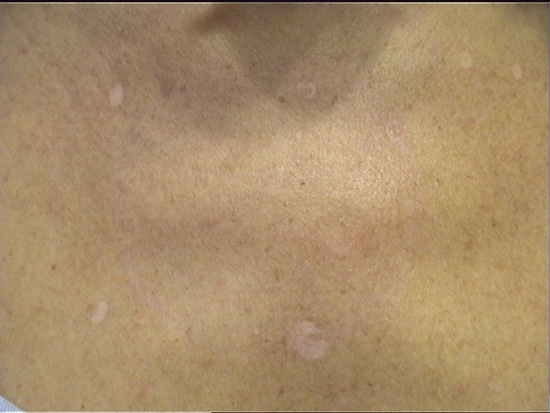
This disorder is temporary and the pigmentation returns.
How are hypopigmented scars commonly treated?
To date, different therapeutic options were available that were not free of potential complications: scar excision, micropigmentation, chemical peeling, dermabrasion, skin grafting or laser treatment.
What is new in the treatment of hypopigmented scars?
Very positive pigmentation responses have been described after the application of fractional non-ablative laser combined with a topical preparation of 0.03% bimatoprost . It is also possible to combine the laser with tretinoin cream (derived from vitamin A) or with topical pimecrolimus .
How is non-ablative fractional laser treatment performed?
It is divided into different sessions (between 4 and 6) that are separated by a period of approximately 4 weeks. The non-ablative fractional laser does not cause wounds or scabs on the surface of the skin, as it respects the epidermis (superficial layer) and only acts on the dermis. It produces a redness of the treated area lasting 2-6 hours, and the patient can carry out a completely normal rhythm of life. The laser sessions are combined with the topical treatment applied morning and night to the hypopigmented area.
What results are obtained with this treatment?
The published studies, although they are on a small sample of subjects, reflect that after one month of treatment more than 85% of patients achieve an improvement of more than 50% (a result much higher than that obtained with the options available to date) in hypopigmented scars without presenting any remarkable adverse effects.
REFERENCES
Massaki AB, Fabi SG, Fitzpatrick R. Repigmentation of hypopigmented scars using an erbium-doped 1,550-nm fractionated laser and topical bimatoprost. Dermatol Surg. 2012 Jul; 38(7 Pt 1):995-1001.