What are warts?
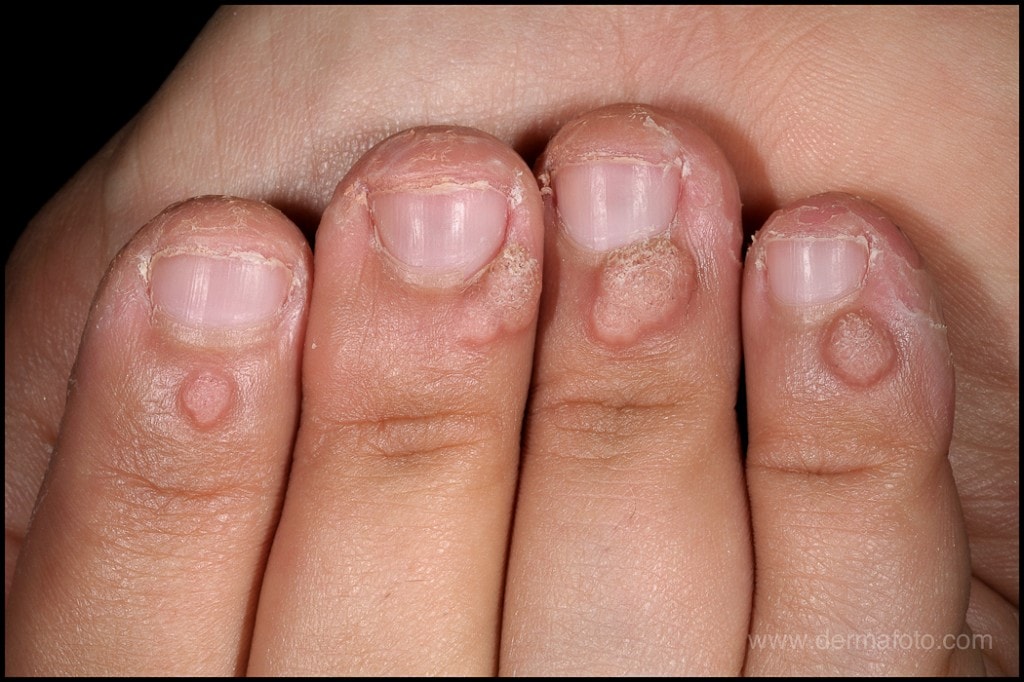
Warts are the product of skin infection with the human papillomavirus (HPV), and appear as keratotic papules (raised and scratchy lesions) in different areas of the body. They usually appear on the hands, feet, knees and elbows, although they can be located in any area.
What do warts look like?
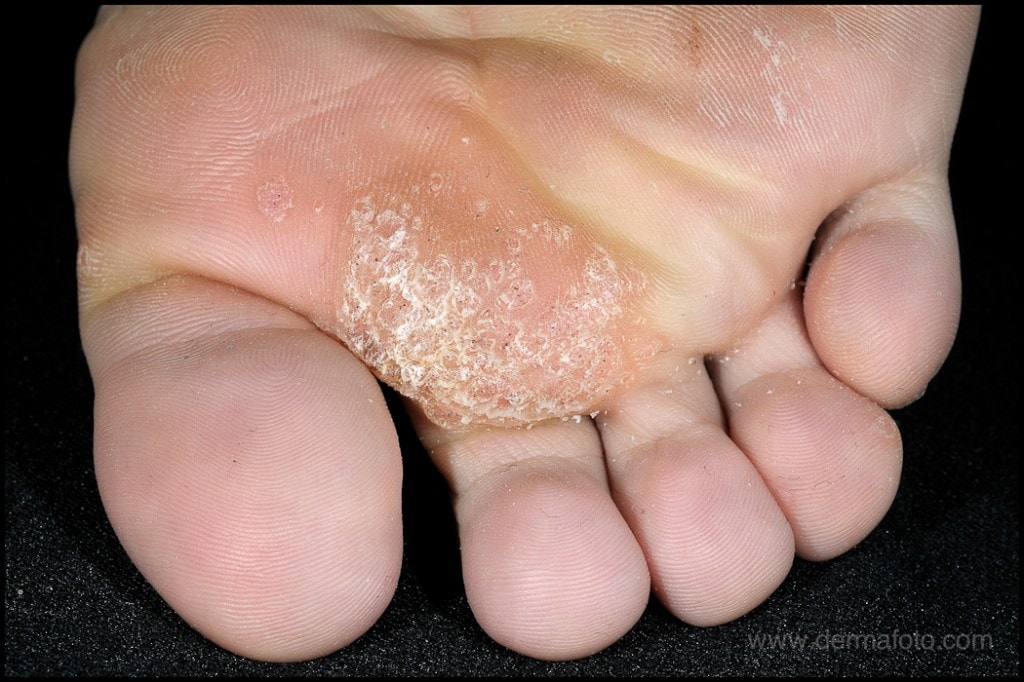
They manifest as exophytic keratotic papules (protruding lesions with a scratchy and slightly indurated appearance) in characteristic areas: the elbows, knees, the backs of the hands and palms and soles. It is not uncommon for them to appear around the mouth or nose, with a more threadlike appearance.
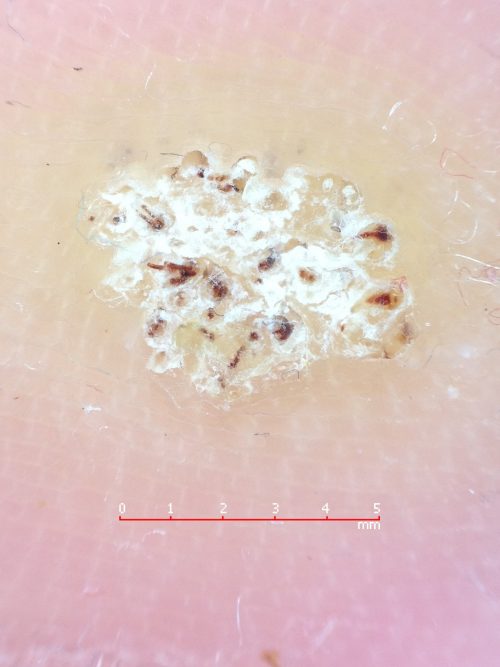
It is common for small black spots to be seen in the center of the lesion, which the patient usually interprets on the sole of the foot as a thorn that may have been stuck. Initially they are usually unique and normally, over time, they reproduce.
Why do warts appear?
Warts are an infection, therefore they are acquired by the contagion of another person through the inoculation of the HPV virus in the superficial layers of the skin. Contagion can be through physical skin-to-skin contact or with the inoculum of the virus from the outside (frequently, on pool floors or changing rooms).
Are warts common?
They are one of the most common reasons for consultation in dermatology. Up to 33% of school-age children suffer or have suffered warts, and it is estimated that 3.5% of adults have common warts.
How are warts diagnosed?
The doctor in charge of this diagnosis is the dermatologist. It is important to consult if a wart is suspected and really confirm the diagnosis, since it is not uncommon for other lesions to mimic the appearance of a wart.
In general, the diagnosis is simple for the experienced dermatologist and is made with observation, palpation and/or the use of the dermatoscope. Exceptionally, the need for a skin biopsy may arise, but it is never a routine procedure for its diagnosis.
TREATMENT OF WARTS
How are warts treated?
The therapeutic option is variable depending on the number and type of lesions, the patient’s preference and the treatments used previously. It is necessary to assess each case in particular.
In general terms, first-line treatment includes the use of keratolytic preparations (they dissolve the excess skin created by the wart), among which salicylic acid stands out. This type of drug physically removes a large part of the wart and irritates it, helping the patient’s immune system to resolve them naturally.
It is common for the same magistral formula to combine other drugs that prevent the virus from continuing to replicate, such as 5-fluorouracil. This type of formula allows a faster response and improves the effectiveness of the treatment, thus reducing its duration. The topical treatment of warts involves the patient, on a daily basis, applying the preparation prior to filing the lesion.
Secondly, cryotherapy with liquid nitrogen is recommended, which may or may not be accompanied by a (painless) decortication of the lesion using a scalpel. This treatment reduces the volume of the wart and produces irritation of the wart more quickly than first-line treatment, but it can only be performed in the consultation room – every 2-3 weeks – and cryotherapy is painful. Although it is the most popular therapy (“burning warts”), there is no scientific evidence that reflects a greater efficacy than first-line treatment, and it can cause unpleasant adverse effects (blistering from burns is the most frequent).
It seems that combining first- and second-line therapies simultaneously would increase the efficacy of each of them separately.
Finally, in the third line we would find the intralesional injection of Candidina. This substance, inoculated inside the wart, stimulates the patient’s immune system. They would act in a similar way to a vaccine. A monthly injection is given to a single lesion, up to a maximum of four. It is a convenient treatment, since it does not require the patient to carry out any therapy at home and only has to go to the clinic monthly. The disadvantages include the local discomfort caused by the injection (only during the procedure), the possibility that the wart will have erythema and oedema after treatment (swelling) and a minimal risk of presenting reactions such as fever and arthromyalgias, similar to those that can occur from any vaccine.
Although these are the most commonly used treatments, there are many other alternatives: occlusion using firm tape, tretinoin, etretinate, CO2 laser, cimetidine, zinc aexamate, imiquimod, photodynamic therapy… However, these are therapies that are reserved for cases that do not respond to the most effective treatments.
FREQUENTLY ASKED QUESTIONS
Are warts contagious?
Yes. As it is a superficial infection of the skin, there is the possibility of transmission to other people and to other areas of the body of the same subject (autoinoculation). Warts are transmitted by direct skin-to-skin contact.
If a wart bleeds, does that blood spread more warts?
No. Warts are spread by direct skin-to-skin contact, the human papillomavirus does not live in the blood.
Does having warts mean I have “low defenses”?
Not necessarily. Although it is true that in immunosuppressed subjects warts are more frequent, numerous and resistant to treatment, they usually appear in completely normal people without any immune disorder. When diagnosing common warts, if they are not numerous, it is not necessary to do any study of the patient’s immune system.
Can a wart appear after pricking myself with a thorn?
Yes, in the event that a virus inoculum occurs with the small trauma. This phenomenon is not frequent. Areas minimally traumatized by everyday life (fingers, hands, feet, elbows, knees) are the most predisposed to warts, as it facilitates the penetration of the virus into the superficial layers of the skin.
Are all warts the same?
No. The concept of “wart” refers to a lesion that is the product of infection by a virus, and the typical appearance of the lesion is the one mentioned above.
However, people often use the name “wart” to refer to any skin lesion that protrudes. Among the most frequent that cause confusion are those that we will discuss below. Fibroids or acrochordons are small projections of redundant skin that are often located in the folds of the neck, armpits and groin, and are the result of rubbing. They are nothing more than a local or aesthetic nuisance. Intradermal melanocytic moles or nevi are commonly called “warts”, being in fact benign proliferations of the cells that give the skin its color, the melanocytes. They usually manifest as exophytic brown papules, and do not usually cause symptoms. They can be easily removed in the consultation by cryo-shaving or with aCO2 laser.
Are common warts condylomas?
No. Common warts are caused by different subtypes of human papillomavirus (HPV) than those caused by genital warts. There is no possibility of transformation from one type of wart to another, since the viruses cannot change serotypes. The HPV subtypes that cause common warts are usually not suitable to infect the genital area and/or mucous membranes.
Are warts on the sole of the foot calluses?
No. A callus (heloma) is a thick layer of keratin produced by the skin to protect a continuously traumatized area, usually due to poor position of the sole of the foot. A wart is an infection by a virus and has no relation to what is exposed to helomas.
Why do warts have blackheads inside?
The blackheads correspond to small thrombosed capillaries, that are vessels that have been blocked by the action of the HPV virus, which causes warts.
Can plantar warts be treated in a podiatry office?
It is possible to do so, it is recommended to first confirm that the lesion is indeed a wart. The diagnosis is more accurate if it is made by Dermoscopy, a harmless test specifically performed by dermatologists.
Do warts need to be treated?
Theoretically, the patient’s immune system allows the infection to resolve in a variable time, which can be years. During this time it is possible that more lesions may appear and transmit them to other people nearby, so early treatment is usually recommended: it is easier to remove few warts.
Is it painful to treat warts?
Many possible therapies are currently available, most of which are comfortable and harmless for the patient.
REFERENCES
· Cardoso JC, Calonje E. Cutaneous manifestations of human papillomaviruses: a review. Acta Dermatovenerol Alp Panonica Adriat. 2011 Sep; 20(3):145-54.
· Dall’oglio F, D’Amico V, Nasca MR, Micali G. Treatment of cutaneous warts: an evidence-based review. Am J Clin Dermatol. 2012 Apr 1; 13(2):73-96.
ACKNOWLEDGEMENTS
To Dr. Leo Barco for the excellent clinical images, which you can find in dermafoto.com.