
Best Birth Control to Treat Acne
What is the best contraceptive to treat acne? In both men and women, the action of androgens is crucial in the origin of acne. Androgens are sex hormones with “male” action, and are present in both men and women.
They increase the production of sebum by the skin – thus, they can lead to acne; they increase the appearance of hair in certain areas – face, around the navel, nipples, forearms, legs; they reduce the density of hair in the central area of the scalp (androgenic alopecia); and they can cause menstruation disorders (anovulation or lengthening of the menstrual cycle).
Oral contraceptives are not only a method to prevent pregnancy, but they are drugs that can reduce the levels and action of androgens. As such, they are a therapeutic option in the acne of young women, whether or not they have imbalances in the amount of androgens.
Certain oral contraceptives reduce the levels of some androgens and also sensitivity to them (antiandrogenic effect). Anti-androgenic oral contraceptives are ideal in the case of acne in young women when they are indicated.
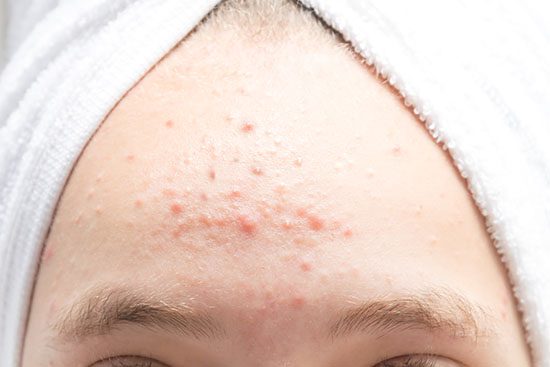
When is hormonal treatment considered in adult women’s acne?
The use of hormonal treatment for the management of acne in women is recommended when it meets any of these circumstances:
- It is accompanied by other signs of hyperandrogenism.
- Appears above 25 years of age
- It is distributed in the mandibular line.
- You experience a worsening with menstruation.
- It presents with comedones and seborrhea.
- It is resistant to conventional therapies.
How do contraceptives work to improve acne?
In general, oral contraceptives contain two drugs: an estrogen (ethinyl estradiol) and a gestagen (variable between different contraceptives).
Estrogen increases liver production of a protein called sex hormone-binding globulin (SHBG). This acts like a bus that retains androgens (free testosterone and dihydrepiandrosterone sulfate) inside, so they can exert less function in the tissues.
Contraceptives also inhibit the protein 5 alpha reductase – which transforms testosterone into dihydrotestosterone, the most potent androgen – and reduce the stimulation of pituitary hormones (gonadotropins LH and FSH) on the ovary and adrenal gland so that they produce fewer androgens.
Does any oral contraceptive serve as a treatment for young women’s acne?
No. Some oral anovulatory drugs may have androgenic action and cause acne to develop or worsen. Oral contraceptives that have androgenic action include combinations of ethinyl estradiol with levonorgestrel, gestodene, norgestimate, and desogestrel. This type of contraceptive is not suitable for the treatment of acne.
Likewise, those contraceptives that only contain one progestogen, such as most hormonal intrauterine devices (IUDs), patches and subcutaneous implants, have androgenic action and can cause or worsen acne.
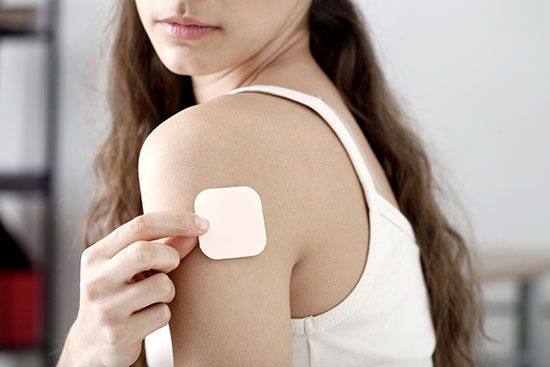
When does hormone treatment start to work in the management of adult acne and how long should the treatment take?
This type of treatment has a relatively slow mechanism of action, so it is possible that until 3-6 months after starting it there will be no improvement in acne. Although there are no clear recommendations on the duration of hormonal treatment for acne, it is considered that it should be long (at least one year). For this reason, it is possible that together with the contraceptive, during the first months it is decided to combine another medication (tetracyclines, isotretinoin) that can improve acne earlier.
What is the best oral contraceptive to treat acne in young women?
What is the best contraceptive to treat acne? As we have mentioned, it should ideally have antiandrogenic action, to control the role that androgens play on the production of skin sebum. In the past, the only antiandrogenic oral contraceptive was cyproterone acetate with ethinyl estradiol (Diane 35©). Nowadays, it tends to be used considerably less than before, since there are molecules of similar effectiveness and with a higher safety profile.
The most effective oral contraceptives for young women’s acne that are most commonly prescribed today are a combination of ethinyl estradiol with drospirenone or with dienogest. There are many commercial forms of ethinyl estradiol with drospirenone or with dienogest.
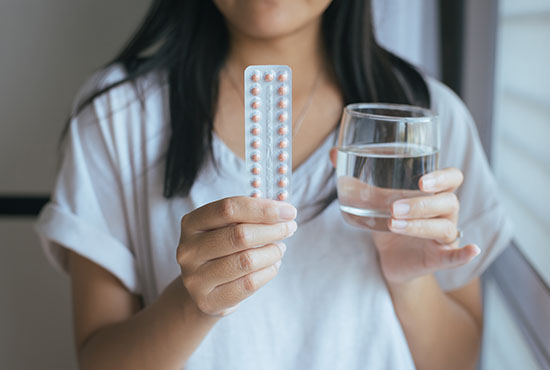
What are the characteristics of oral contraceptives containing dienogest or drospirenone?
The combination of ethinyl estradiol plus dienogest has an antiandrogenic profile, a phenomenon that justifies its indication in the treatment of acne in women of childbearing age. Its antiandrogenic activity potency is approximately 30% compared to cyproterone acetate. It does not have antimineralcorticoid action, which we will discuss below.
The combination of ethinyl estradiol with drospirenone also has antiandrogenic action, also 30% compared to cyproterone acetate. Drospirenone is a structural derivative of spironolactone (a diuretic), so it has antimineralcorticoid action: it facilitates the excretion of sodium and, therefore, does not increase fluid retention, unlike other contraceptives.
What are the benefits of birth control containing dienogest or drospirenone?
Birth control with dienogest or drospirenone has the following benefits:
- They regulate menstrual disorders.
- They reduce dysmenorrhea (pain caused by menstruation).
- Improves premenstrual syndrome (mood disturbance).
- They reduce the signs of hyperandrogenism (acne, hirsutism, alopecia).
- They treat ovarian cysts.
- They serve as a treatment for pelvic inflammatory disease.
- They preserve bone density.
- They treat endometriosis and uterine fibroids.
- They are treatment for benign breast diseases.
- They reduce the risk of colon, ovarian and endometrial cancer.
Drospirenone does not appear to increase weight, waist circumference, blood pressure, or fasting glucose levels. Data show an improvement in the triglyceride profile and total, LDL, and HDL cholesterol.
What adverse effects can oral contraceptives have in the treatment of acne in young women?
Both drospirenone and dienogest are extraordinarily safe and well-tolerated oral contraceptives. Drospirenone has been reported to have only a 0.1% chance of undesirable adverse effects and dienogest, without quantified figures, appears to be even lower.
The most frequent adverse effects are headache, menstrual irregularities, emotional lability and weight gain due to water retention (1-2 kg).
The most serious adverse effects are mainly an increased risk of thromboembolic phenomena (formation of blood clots), especially deep vein thrombosis in the lower extremities. The annual baseline risk of deep vein thrombosis in women is 1/10,000. With oral contraception, 3.4/10,000; and during pregnancy, 5 to 12/10,000.
The exact role of oral contraceptives in breast cancer risk is unknown. Some studies find that the risk is 0.24 times higher in women who use oral contraceptives – however, breast tumors in women who have taken contraceptives are less aggressive than those in those who have not used them – and other publications do not find any strong relationship between taking contraceptives and an increased incidence of breast neoplasms.
What are the contraindications to taking oral contraceptives?
The consumption of oral contraceptives is not recommended for the following antecedents:
- Cardiovascular risk factors.
- Severe high blood pressure.
- Embolism or deep vein thrombosis.
- Myocardial infarction.
- Diabetes with complications.
- Smoking and age over 35 years.
- Migraine and age over 35 years.
- Migraine with aura.
- Breast, endometrial, or liver cancer.
- Cholestasis during pregnancy.
- Abnormal liver function.
- Allergy to oral contraceptives.
- Pregnancy or breastfeeding.
- Major surgery with prolonged immobilization.
REFERENCES
· Regidor PA, Schindler AE. Antiandrogenic and antimineralocorticoid health benefits of COC containing newer progestogens: dienogest and drospirenone. Oncotarget. 2017 Aug 3; 8(47):83334-83342.
· Lam C, Zaenglein AL. Contraceptive use in acne. Clin Dermatol. 2014 Jul-Aug; 32(4):502-15.
· Trivedi MK, Shinkai K, Murase JE. A Review of hormone-based therapies to treat adult acne vulgaris in women. Int J Womens Dermatol. 2017 Mar 30; 3(1):44-52.