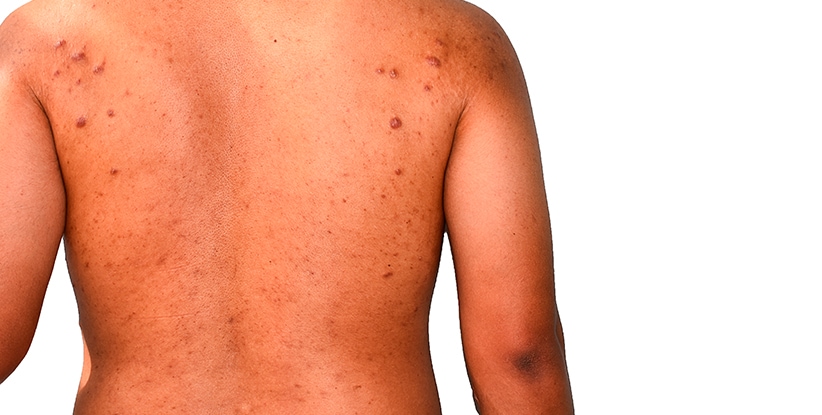
Keloids are scars that are excessively large in relation to the size of the original wound, and that exceed the limits of the original wound. They usually manifest as pink, pearly, smooth, protruding papules or plaques. Occasionally, they can cause pain and/or itching.
Back keloids are especially common in young men, and their main cause is having previously suffered from inflammatory acne . They are more common in genetically predisposed people, and especially in dark-skinned individuals.
There are numerous therapeutic options for hypertrophic scars and keloids, which are discussed in more detail in this post. Generally speaking, it is accepted that treatments that combine different techniques (e.g., cryotherapy, intralesional corticosteroids, and lasers) offer the best final results .
Specifically, for keloids of the back, Martin et al. propose a therapeutic method that combines three therapies simultaneously in the same session: intralesional corticosteroid injection, pulsed dye laser, and fractional CO2 laser.
Intralesional corticosteroids have mainly an anti-inflammatory action and reduce the volume of keloids through different mechanisms. It is a classic and simple treatment, and is usually the first universal therapeutic step in keloid therapy.
Pulsed dye, KTP or Nd:YAG lasers are devices that have an action on the vascular component of keloids, reduce the capillaries present in them and, therefore, reduce their blood supply. In recent years, it has become more and more common to reduce the vascular component in keloids and vascular lasers have a growing relevance in the therapeutic algorithm of hypertrophic scars and keloids, especially in their early stages or to reduce telangiectasias caused by the repeated use of corticosteroids. You can learn more about KTP’s laser for the treatment of scars here. And for Nd:YAG, click here.
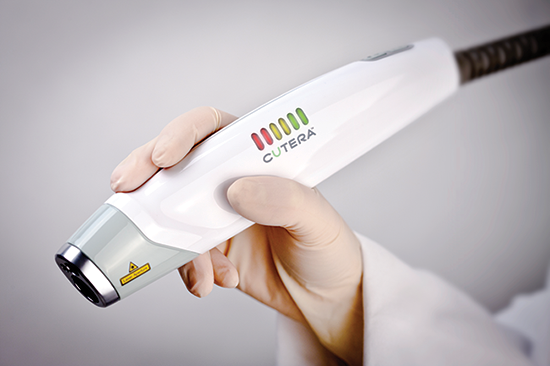
The fractional CO2 laser is used in dermatology for different pathologies that benefit from a rearrangement of the collagen in the treated area: acne scars, surgical scars, skin aging, xanthelasmas, etc. It emits heat columns to improve the arrangement of collagen in the dermis. After the procedure, small punctate crusts appear on the treated area that will come off in a few days.
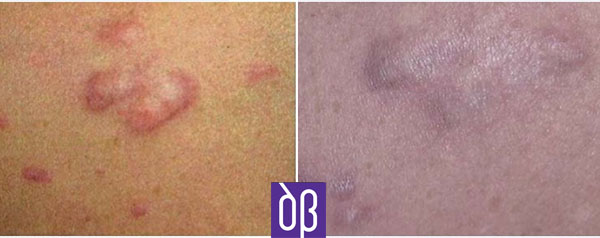
In the work of Martin et al., the following were used in the same session and in this order: intralesional injection of triamcinolone acetonide, pulsed dye laser and fractional CO2 laser. The patient had not responded to intralesional injections of corticosteroids, fractionated CO2 laser or non-ablative fractional laser used in isolation. After five sessions of the aforementioned combination therapy, the study demonstrated a very high efficacy in terms of symptoms and appearance of the keloids (total flattening and lightening of the color). In this work, the only adverse effect reflected is the hypopigmentation of the keloid, which in this case was positive since it was initially hyperpigmented.
Thus, it seems that the combination of different treatments with different mechanisms of action (anti-inflammatory, vascular and collagen rearrangement) is effective for both symptoms and signs, and is more effective than using the methods separately in the treatment of keloids of the back.
REFERENCES
· Martin MS, Collawn SS. Combination treatment of CO2 fractional laser, pulsed dye laser, and triamcinolone acetonide injection for refractory keloid scars on the upper back. J Cosmet Laser Ther. 2013 Jun; 15(3):166-70.