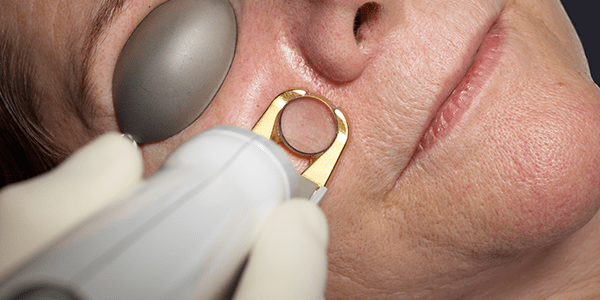
How are vascular lesions treated with lasers?
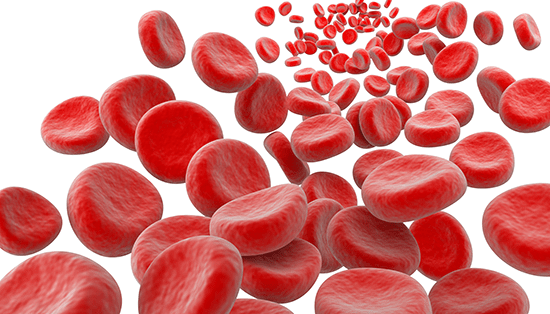
All vascular lesions that are observed on the skin (couperose, telangiectasias, spider veins, angiomas, ruby spots, capillary malformations, varicose veins…) consist of a blood vessel with the blood that circulates inside. This blood contains hemoglobin. Haemoglobin is capable of absorbing the energy of lasers that emit at certain wavelengths. The most commonly used are pulsed dye (595 nm), KTP (532 nm), Nd:YAG (1,064 nm). Pulsed light (500 – 1,200 nm) can also be used, which is not a laser but if filtered it is also capable of treating vascular lesions. Any of these lighting systems sends energy to the haemoglobin contained in the blood vessels, which absorbs it and allows the vessel walls to collapse by thermal effect without injuring the surrounding skin. Regardless of the laser used, it usually takes several sessions to achieve complete removal.
What are the advantages of one or another light system for treating couperose and capillaries on the face?
Both pulsed light and KTP laser can treat red and brown spots (lentigines), which are common on the face due to the passage of time and accumulated ultraviolet radiation. Therefore, pulsed light and KTP laser have a greater rejuvenating effect in this regard compared to other options. Pulsed dye lasers have classically been considered the best type of laser for treating vascular lesions due to their specificity. However, the main problem with pulsed dye is the frequent appearance of residual purple after the session. This means that colored spots are observed in the treated areas for several days. They are due to the explosion of blood vessels caused by laser energy. The fact that visible areas are usually treated, makes secondary purple a notable drawback when using the pulsed dye laser.
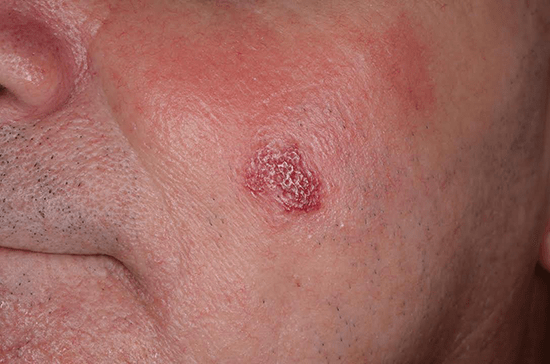
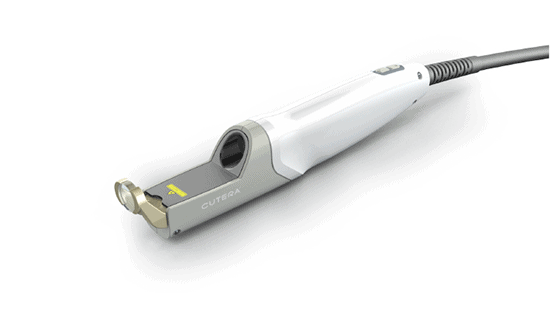
The KTP laser has a therapeutic effect virtually identical to that of pulsed dye but does not cause post-therapeutic purpura. However, it can cause a faint redness and slight swelling lasting 2-3 days. In general, the tolerance to KTP treatment is higher than that of pulsed dye.
Which laser is better for treating rosacea, couperose or facial spider veins: KTP or pulsed dye?
Theoretically, the KTP laser head has better cooling that cools the skin surface, and a larger shot size: it reduces the amount of energy for the same area and is therefore less aggressive.
In a study by Uebelhoer et al. in 2007, a comparison was made of couperose treated on half of the face with KTP laser and the other half with pulsed dye. A total of 3 treatments were performed, applied every 3 weeks. All treated patients experienced mild and transient redness and swelling on both sides that resolved within a period of 1-4 days. The duration of redness and swelling was slightly longer lasting on the side treated with KTP than with pulsed dye.
Of those who perceived differences in discomfort during treatment, which were less than half of the patients, 63% reported greater pain with the pulsed dye laser.
9% of the pulsed dye treatments experienced post-therapeutic purpura , while no cases with KTP laser appeared. One patient suffered a crusty wound that left no scar on the pulsed dye-treated side.
In terms of results, the KTP laser was more efficient than the pulsed dye laser for isolated telangiectasias and for diffuse redness. The side treated with KTP, after each session, was an average of 13% better than the side treated with pulsed dye.
The final result of the study showed a total improvement of 85% on the KTP-treated side and 75% on the pulsed dye laser-treated side. 93% of the patients appreciated that the KTP-treated side improved faster and faster, without knowing which side was treated with one or the other laser.
Another interesting aspect that emerges from the study is that the half of the face treated with KTP experienced a drastic improvement in terms of lentigines (brown sunspots), which did not happen with the side treated with pulsed dye. Therefore, the photorejuvenation power is superior with KTP laser.
What is the summary of the KTP laser that emerges from this study?
· The KTP laser appears to be more effective and efficient than the pulsed dye laser for the treatment of telangiectasias and couperose.
· The pulsed dye laser often causes residual purpura as a normal response to treatment, which is aesthetically uncomfortable for the patient. The KTP laser does not cause purpura, but the redness and swelling secondary to the treatment may last a few hours longer than with the pulsed dye laser.
· The KTP laser also acts on melanin and causes improvement of other signs of skin aging in addition to vascular lesions, such as solar lentigines.
· In terms of discomfort from the treatment during the session, which is minimal, the two devices are very similar.
REFERENCES
· N. Uebelhoer, DO, M. Bogle, MD, B. Stewart, CCRC, K. Arndt, MD & J. Dover, MD, FRCPC, FRCO; A Split-Face Comparison Study of Pulsed 532-nm KTP Laser and 595-nm Pulsed Dye Laser in the Treatment of Facial Telangiectasias and Diffuse Telangiectatic Facial Erythema. Dermatol. Sur., 33:441-448 (2007).

Click here for more information on telangiectasias, varicules and spider veins.

