
What is hyaluronic acid used for?
What is hyaluronic acid?
Hyaluronic acid is a natural molecule present in different tissues of our body: the skin, cartilage, the synovial fluid of the joints and the umbilical cord. It is a polysaccharide (union of different sugar molecules) whose function is to absorb water and provide elasticity to tissues. It performs this function by organizing itself into a gelled structure called the extracellular matrix.
Therefore, as it is part of some natural tissues of our body, hyaluronic acid is biocompatible and non-immunogenic (it has a minimal potential for allergic reactions), making it a material with an optimal safety and effectiveness profile for different medical uses.
What is the role of hyaluronic acid in the skin?
Hyaluronic acid makes up the extracellular matrix of the dermis, the middle layer of the skin. Immersed in this extracellular matrix are collagen and elastin fibers that, together, give the skin its natural texture, volume and elasticity . The presence in sufficient quantity and quality of collagen, elastin and extracellular matrix fibers makes the external appearance of the skin tense, turgid and with the volume typical of young tissues.
What changes take place in the skin when you age?
Variations occur in both the epidermis – the superficial layer of the skin – and the dermis – the middle layer. In the epidermis, there is a progressive thinning of its thickness and a greater tendency to dryness. In the dermis , there is a progressive fragmentation of collagen and a decrease in the density of the extracellular matrix. Together, these changes favour the external appearance of the skin towards sagging, loss of turgor and the appearance of wrinkles and furrows.
With chronic sun exposure, these changes are faster and actinic lentigines (dark spots) and telangiectasias (linear or spider-shaped vessels) appear, which make up the so-called skin photoaging or dermatoheliosis.
What can a filler with this substance bring to the skin?
Hyaluronic acid fillers aim to recompose the extracellular matrix that has been consumed over time. The new hyaluronic acid provides turgor, elasticity and even volume to the dermis where it is applied. This effect is immediate and lasts for a period of months (6 – 12 months) since hyaluronic acid has a high hygroscopic power – it absorbs water in the tissue where it sits.
An additional benefit of the application of hyaluronic acid is that it promotes the synthesis of new collagen in the dermis: the tension caused by the volume of the new hyaluronic acid on the fibroblasts activates their ability to manufacture new collagen fibers (neo-collagenogenesis). Likewise, the mechanical tension exerted during the microinjections for the application of the filler acts as a stimulus for the fibroblasts for the same purpose. Fibroblasts are a type of cell immersed in the dermis and whose main function is to synthesize collagen.
What is it used for on the skin?
Hyaluronic acid is used to improve some aspects of skin aging:
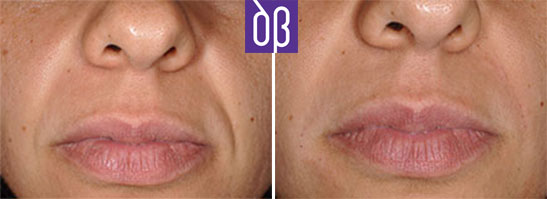
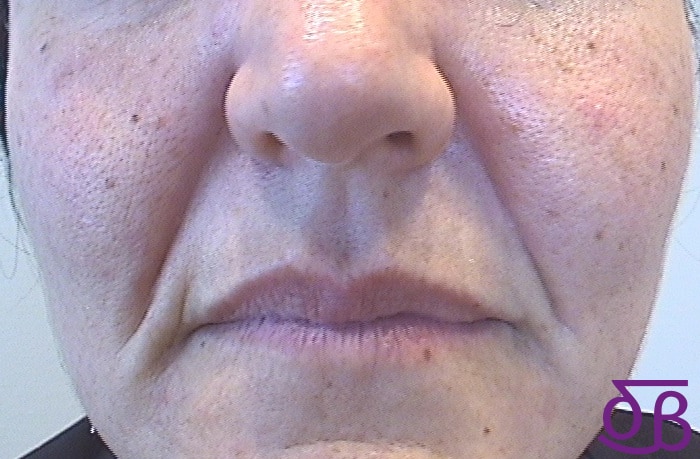
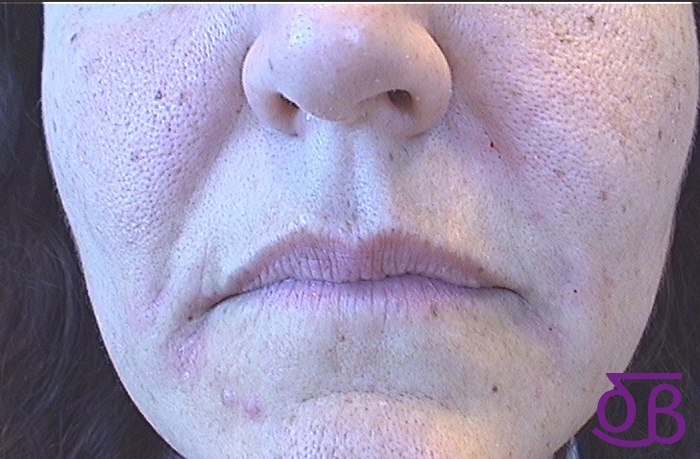
- Nasolabial folds and/or marionette lines.
- Perioral wrinkles (barcode).
- Adding volume to the malar arches (cheekbones).
- Soften subocular atrophy (dark circles).
- Define the contour and body of the lips.
In addition to the purely aesthetic indications already mentioned, it can be used with great versatility in the treatment of atrophic scars, since it will provide the volume lost in the scarring dermal tissue. In this case it is useful for acne, chickenpox, surgical or traumatic scars.
What is the application like?
To ensure its effectiveness, it is necessary for the dermatologist to choose, according to the patient’s preference and the area to be treated, a hyaluronic acid of appropriate density, since there are different options available. After studying the treatment area, an anesthetic cream is applied to it and left to rest for 30 – 40 minutes. It is applied by micro-injections in the area where the defect sits, and the procedure usually lasts a time interval of 10 – 25 minutes.
Is injecting hyaluronic acid fillers annoying?
There are different commercial preparations that, in addition to hyaluronic acid, contain a local anaesthetic. In addition, it is advisable to apply an anaesthetic cream to the area to be treated beforehand: by means of this simple measure it is possible to perform the filling without the patient perceiving practically any discomfort.
When is the effect of hyaluronic acid filler noticeable?
One of the main virtues of these fillers is that their effect is immediate. Hyaluronic acid produces an increase in the density of the dermis at the same time of application, so the benefit is instantly noticeable. It is true that during the two weeks after the procedure the material settles and absorbs the water from the tissue, so during this period there is an additional improvement to the immediate result.
How long does the effect of the filler last?
In general terms, the duration of hyaluronic acid is between 6 – 18 months in the treated tissue. There are different factors that make the range of duration so wide. Among the most important are the density of the product used, the area of application and the rate of the patient’s degradation metabolism.
Are hyaluronic acid fillers safe?
The application of hyaluronic acid is one of the procedures with the best safety and efficacy profile currently present. In the studies published during the advent of hyaluronic acid, a better response, satisfaction and greater safety were observed than with pure collagen fillers, so these have been progressively surpassed and replaced by hyaluronic acid fillers. In studies carried out on 262,000 patients, the rate of adverse effects was 0.06%.
What are the most common side effects of hyaluronic acid filler?
As mentioned, the rate of adverse effects of hyaluronic acid is minimal and most of them are mild and temporary. The most frequent adverse effect is the appearance of a minimal bruise in one of the punctures made during the procedure. It is usually of a minimal size, can be made to disappear by applying make-up and does not usually last more than a week. Immediately after the application of the treatment, it is normal for some redness spots to be observed, which disappear in a few hours. Very occasionally this redness can last a few days.
REFERENCES
Kontis TC. Contemporary review of injectable facial fillers. JAMA Facial Plast Surg. 2013 Jan; 15(1):58-64.