
The therapeutic field of acne scars is constantly evolving and new therapies and comparative studies between them are constantly appearing. This is because it is a very common disorder in the young population and for which there are many effective therapeutic modalities, whose objective is not only to improve the scars but also to cause the least adverse effects.
The year 2014 has left us with some particularly significant studies that represent a new approach to certain aspects. It is precisely these articles that have been selected for this blog post, in which we comment on the following five works:
1. Comparative study between fractional bipolar radiofrequency and non-ablative fractional laser for the treatment of atrophic acne scars.
This study treats 20 patients with skin phototype III-IV with atrophic acne scars. Half of the face is treated with radiofrequency and the other half with 1,540 nm non-ablative fractional laser. After one month, the therapeutic response and the rate of adverse effects are evaluated. No significant difference was observed in terms of the therapeutic effect achieved. The non-ablative fractional laser procedure was slightly more painful during the session but, compared to radiofrequency, it did not form as much flaking.
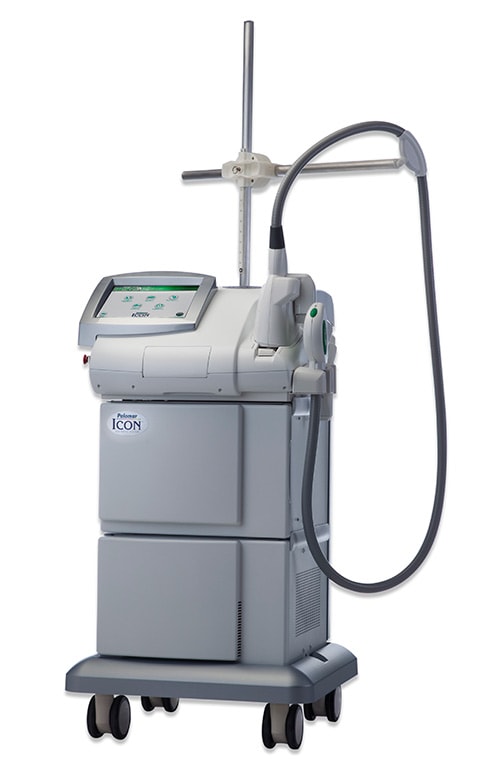
Conclusion. The efficacy of the 1540 nm fractional non-ablative laser is the same as that of bipolar fractional radiofrequency, although the latter is slightly related to greater scaly formation and crusting after the procedure.
REFERENCE
Rongsaard N, Rummaneethorn P. Comparison of a fractional bipolar radiofrequency device and a fractional erbium-doped glass 1,550-nm device for the treatment of atrophic acne scars: a randomized split-face clinical study. Dermatol Surg. 2014 Jan; 40(1):14-21.
2. Fractional CO2 laser for acne scars: comparison between different densities and working powers.
This work is especially interesting, since it studies which potency and treatment density (number of columns treated per surface area) are the most effective and with the fewest adverse effects for the treatment of atrophic acne scars. To this end, 20 patients with phototypes III-IV have been chosen, to whom the following is performed: 10 are applied 20 mJ of fluence with a density of 10% in the middle of the face and 20% in the other. The remaining 10 patients are given 10 mJ of fluence at a density of 10% in the middle of the face and 20% in the other half. All of them perform a single treatment session. It was observed that there were no differences in therapeutic response or patient satisfaction at 3 months, and that in the group with less fluency and less density there was a lower rate of complications (hyperpigmentation, erythema) and less lasting complications.
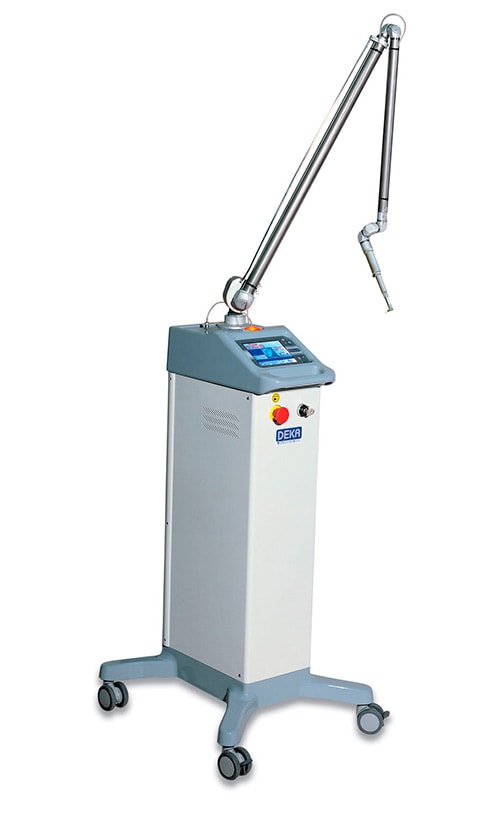
Conclusion. The use of low fluences and densities of treatment achieves the same therapeutic effect as high ones, but with a lower rate of complications.
REFERENCE
Yuan XH, Zhong SX, Li SS. Comparison study of fractional carbon dioxide laser resurfacing using different fluences and densities for acne scars in Asians: a randomized split-face trial. Dermatol Surg. 2014 May; 40(5):545-52.
3. Comparison between the use of trichloroacetic acid with the CROSS technique versus punctiform CO2 laser for the treatment of acne scars in ice pick.
Another very interesting study. 14 patients with ice pick scars received the treatment with a spiky CO2 laser on the scars and were compared with 14 patients who received the classic treatment of 35% trichloroacetic acid with the CROSS technique. 3 treatments were performed 3 weeks apart and the follow-up was done 3 months after completion. Both groups improved but the efficacy rates on the scar scales were significantly higher in the arm that was treated with the CO2 laser.
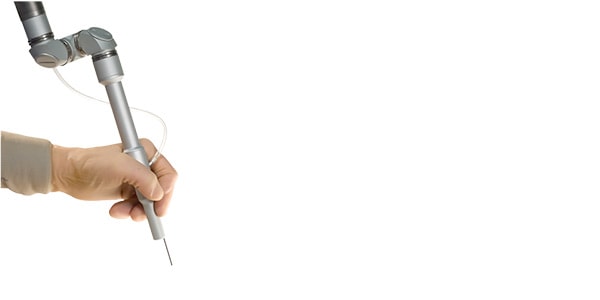
Conclusion. Ice pick scars caused by acne improve more with CO2 laser treatment applied in a pinpoint shape compared to trichloroacetic acid applied with the CROSS technique.
More details on techniques for treating ice pick scars here.
REFERENCE
Ahmed R, Mohammed G, Ismail N, Elakhras A. Randomized clinical trial of CO₂ LASER pinpoint irradiation technique versus chemical reconstruction of skinscars (CROSS) in treating ice pick acne scars. J Cosmet Laser Ther. 2014 Jan; 16(1):8-13.
4. Approval of a new filler material for the treatment of atrophic acne scars.
The FDA has approved a new permanent filler material for acne scars called collagen polymethylmethacrylate. 167 patients were treated in two sessions and evaluated after 6 months. A satisfactory response was obtained in 64% of cases, compared to 33% in the control group (saline injection). At 6 months, no remarkable adverse effects were observed.
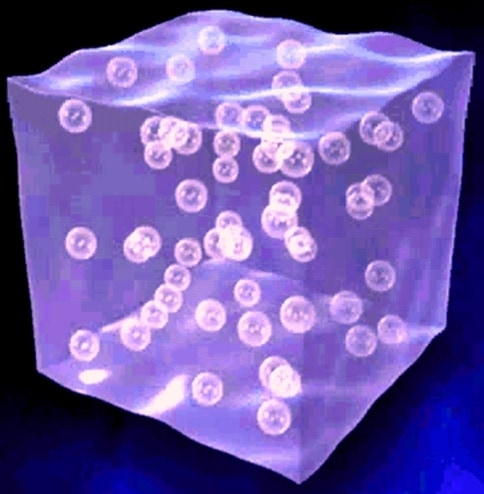
Conclusion. Collagen polymethylmethacrylate appears to be an effective and safe (at 6 months) permanent filler material for the treatment of atrophic acne scars.
REFERENCE
Karnik J, Baumann L, Bruce S, Callender V, Cohen S, Grimes P, Joseph J, Shamban A, Spencer J, Tedaldi R, Werschler WP, Smith SR. A double-blind, randomized, multicenter, controlled trial of suspended polymethylmethacrylate microspheres for the correction of atrophic facial acne scars. J Am Acad Dermatol. 2014 Jul; 71(1):77-83
PS: In the opinion of the author of the blog, it is necessary to be especially moderate with permanent fillers and the evaluation of adverse effects in a period of 6 months is excessively scarce. It is undoubtedly a promising treatment but it is necessary to observe with more time what are the adverse effects associated with this filler material.
5. Safety of invasive acne and pulsed light scar treatments in patients who are taking isotretinoin.
In this study, 55 patients who underwent different treatments during their therapy with isotretinoin at a dose of 0.5 mg/kg/day were collected and the results were compared in comparable patients who were not taking the drug. The therapeutic procedures performed were hair removal (with 1,064 nm Nd:YAG laser pulsed light or 980 nm diode laser), dermaroller, CO2 laser and radiofrequency with needles. The appearance of atypical scars, keloids, hypertrophic scars was not observed, nor did the complication rate increase compared to patients who did not take isotretinoin.
Conclusion. Under the hands of a specialized dermatologist, the treatment of acne scars and hair removal are safe using different therapeutic methods even if you are taking isotretinoin at a moderate dose.
REFERENCE
Chandrashekar BS, Varsha DV, Vasanth V, Jagadish P, Madura C, Rajashekar ML. Safety of performing invasive acne scar treatment and laser hair removal in patients on oral isotretinoin: a retrospective study of 110 patients. Int J Dermatol. 2014 Oct; 53(10):1281-5.
PS: in the opinion of the author of the blog, it is strictly necessary to perform these treatments by a dermatologist who is an expert in these techniques and in isotretinoin to manage the approach of potential adverse effects. It is not advisable to perform these treatments outside of a dermatology office specialized in this field.