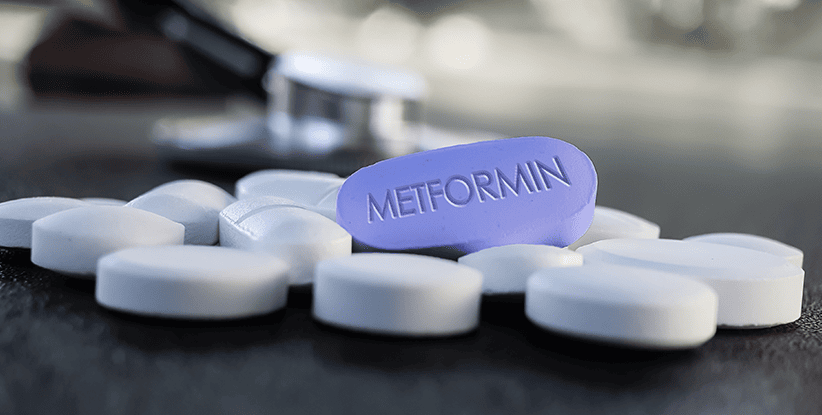
What is metformin?
It is an oral medication with a hypoglycemic and antiandrogenic mechanism. One of its main actions is to reduce the intestinal absorption of carbohydrates, which is why one of its indications is the control of glycemic levels in diabetes. However, it also has an anti-androgenic mechanism, regulating sensitivity to male hormones circulating in the blood and their production in the ovary, especially in the context of polycystic ovary syndrome (PCOS).
Why can it be used in the management of acne in women with polycystic ovary syndrome?
PCOS is a syndrome that can include different metabolic and hormonal manifestations, such as an excess of circulating androgens, increased sensitivity to them, reduced insulin sensitivity, overweight, increased risk of dyslipidemia, cardiovascular disease, infertility and uterine and ovarian cancer.
One of the clinical manifestations of hyperandrogenism is the appearance or chronification of acne in the woman’s adulthood. Metformin, by regulating the levels of some androgens and the tissue response to them, can be part of the treatment of PCOS and, secondarily, improve acne in this clinical context.
What actions does metformin have in the right clinical context, beyond the regulation of glycemic levels in diabetes?
- It promotes weight loss in PCOS and in overweight people with insulin resistance.
- Improves carbohydrate and lipid metabolism.
- It reduces the incidence of thromboembolic phenomena, ischemic heart disease and hypertension.
- It reduces the risk of infertility in PCOS and other hyperandrogenisms.
- It reduces the skin manifestations of hyperandrogenisms such as acne or hirsutism.
- It lowers the production of ovarian androgens by 20-25%.
- Improves the regularity of the menstrual cycle.
- It increases psychological well-being in women suffering from PCOS.

Is metformin a contraceptive?
No. It does not inhibit ovulation and, therefore, does not prevent pregnancy. In fact, in patients with PCOS – in which case there is an increased risk of infertility – it increases fertility and facilitates ovulation in patients with amenorrhea (lack of menstruation).
Is it a hormone treatment?
No, understood as a contraceptive or as a direct-acting antiandrogen such as flutamide or cyproterone acetate. However, it does make it easier for hormonal metabolism related to insulin and androgens to be more similar to normal when it is altered, as is the case with PCOS. In this syndrome there is usually insulin resistance and qualitative and/or quantitative hyperandrogenism, which are not desirable baseline states for health. Metformin regulates insulin resistance and has an antiandrogenic mechanism.
Can metformin help with the psychological symptoms associated with PCOS?
Yes. Patients with PCOS are more likely to suffer from low self-esteem, mood swings, depression, anxiety and even psychosis. In PCOS, acne and hirsutism are usually the markers that most commonly worsen a woman’s quality of life.
Can metformin help in the control of skin manifestations of PCOS?
Yes. By regulating the ovarian cycle, hydrocarbon, and androgenic metabolism, it can help control skin disorders such as acanthosis nigricans, acne, androgenic alopecia, and hirsutism.
What are the main side effects of metformin?
Basically, if you do not suffer from diabetes, gastrointestinal intolerance (nausea, vomiting, abdominal pain, diarrhea). This is because metformin reduces the absorption of carbohydrates at the intestinal level and these can cause abdominal discomfort. In general, it is recommended to take metformin with food and start the regimen with low doses, increasing them progressively, to achieve better tolerance from the beginning of treatment.
If I don’t have diabetes, will my blood sugar drop and I will have hypoglycemia?
It is extraordinarily unlikely if you have a normal diet and do not suffer from previous noticeable imbalances in glycemic metabolism. In fact, glycemic controls are not necessary in women taking metformin to regulate PCOS.
What are the main contraindications of metformin?
Hepatic or renal impairment or risk of lactic acidosis.

When can metformin be considered as the treatment of choice for acne?
In women with PCOS, especially when:
- It is accompanied by overweight.
- Oral contraceptives are not desired or contraindicated.
- There are cutaneous signs of hyperandrogenism.
- There are alterations in carbohydrate metabolism or insulin resistance.
- It coexists with amenorrhea.
Can metformin be combined with other acne treatments?
Yes. Either with topical or oral therapy with isotretinoin, oral contraceptives, the vaginal ring or spironolactone. In fact, metformin can take months to improve the skin manifestations of hyperandrogenism and it is not exceptional that, to accelerate the improvement of acne, it can be prescribed simultaneously with, for example, isotretinoin.
REFERENCES
- Shamim H, Jean M, Umair M, Muddaloor P, Farinango M, Ansary A, Dakka A, Nazir Z, White CT, Habbal AB, Mohammed L. Role of Metformin in the Management of Polycystic Ovarian Syndrome-Associated Acne: A Systematic Review. Cureus. 2022 Aug 27; 14(8):E28462. doi: 10.7759/cureus.28462.
- Yen H, Chang YT, Yee FJ, Huang YC. Metformin Therapy for Acne in Patients with Polycystic Ovary Syndrome: A Systematic Review and Meta-analysis. Am J Clin Dermatol. 2021 Jan; 22(1):11-23.
Do you want to make an appointment?
If you have questions about the treatment or want to book an appointment, you can:
- Call 93 715 56 08.
- Send a WhatsApp message to 620 92 86 11.
- Email info@coriumdermatology.com